What To Pack For A Maria Island Day Tour: No Shops, No Water Refills
Maria Island has no shops, no cafes and no potable water, so everything you eat, drink and carry out for the day goes in with you. Here is what to pack, what a guided day already covers, and where the carry-on limit bites.
Short answer
Carry all food and water for the day, sun protection, layers for a mean maximum between 12.8 and 21.5 degrees, and a bag for your rubbish, because there are no bins. The ferry allows one 7 kg carry-on on a same-day ticket. Lunch-inclusive tours such as the Cruise And Walk From Hobart, listed at A$365 per adult on the operator site, cover the midday meal and park entry.
Maria Island is a national park with no shops, no cafes and no drinkable tap water. The old building called the Coffee Palace is a museum, not a cafe, and there are no rubbish bins anywhere on the island, so everything you carry in also leaves with you. That single fact shapes the whole packing job: the day succeeds or fails on what is in the bag, not on what can be bought after arrival. The one exception sits offshore, because food, drinks, coffee, local beer and wine are sold on the ferry crossing, which takes about 30 to 45 minutes each way.
Guided days change the arithmetic. The Cruise And Walk From Hobart, listed at A$365 per adult on the operator site and rated 5.0 from 630+ reviews, starts at Franklin Wharf in Hobart, includes park entry and provides lunch, so its packing list is shorter than a ferry-and-walk-it-yourself day. The self-guided version is the opposite: you buy the park pass, carry the meal and manage the 7 kg carry-on limit on the same-day ferry ticket. All amounts below are Australian dollars, and fares and fees change over time. If the no-shops rule is the part that worries you most, the deeper background is in whether there are shops or food on the island.
What To Carry Onto The Island
The core list is all food and water for the day, a way to treat water if you top up, sun protection, warm layers, a rubbish bag and your park pass. There is nowhere to buy any of it once you land, the tap water is not potable without boiling or purifying, and no bins exist, so everything carried in is carried out.
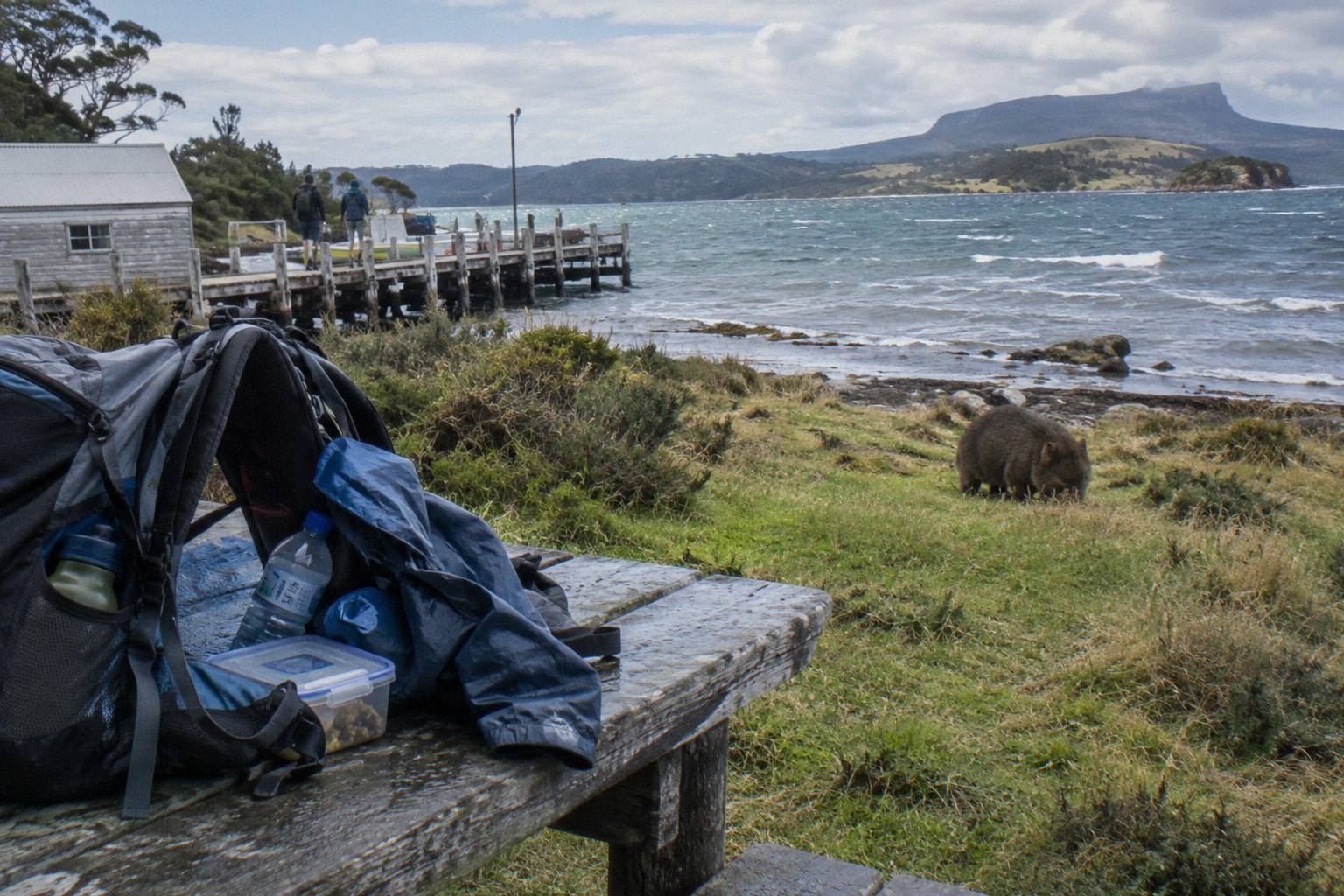
Start with water, and be generous with it. Parks advises bringing all drinking water, because the taps at the Darlington barbecue shelter and the Mess Hall supply water that must be boiled for one minute or treated before it is safe to drink. A walking day in summer conditions, on the longer tracks, uses more water than most people expect. If you plan to treat tap water rather than carry the full amount, pack a filter, purification tablets or the fuel to boil it, and know that the taps are limited to those few signed locations around Darlington.
Food comes next, and the same rule applies: everything for the day is carried in. A packed lunch, snacks with real energy in them and something for the walk back are the standard shape of it. The ferry sells food and drinks on board, which covers the crossing itself, but nothing transfers to the island beyond what is in your bag. The fuel for a long day out, especially if Bishop and Clerk or the Fossil Cliffs circuit is on the plan, belongs in the pack before you leave Triabunna.
| Item | Why | Notes |
|---|---|---|
| Water for the day | No potable supply without treatment | Boil one minute or purify tap water |
| Packed lunch and snacks | No shops or cafes | Food sold on the ferry only |
| Water treatment | Signed taps are not potable | Filter, tablets or boiling |
| Rubbish bag | No bins on the island | Everything carried out |
| Park pass | Required for entry, not in ferry fare | Buy online or at the Gateway |
| Sun protection | Exposed walking tracks | Hat, sunscreen, sunglasses |
| Warm layer and rain shell | Changeable conditions | Mean max 12.8 °C in July, 21.5 °C in January |
| Sturdy walking shoes | Graded gravel and rock tracks | Painted Cliffs crosses a rock platform |
The park pass deserves its own line on the checklist because it is the one item people forget in the rush to pack food. A valid parks pass is required for entry, it is checked at the Gateway before boarding, and it is not bundled into the ferry fare. It can be added at online booking or bought at the Gateway building beside the Triabunna wharf. A daily pass for someone arriving on foot, by bus or by cycle is from A$24.55 per person, and children under 5 enter free. Every guided product on the water except the scenic flight includes entry in its fare.
What A Guided Day Provides Versus What You Bring
A guided day shifts lunch, transport and park entry onto the operator, but never the water bottle, the layers or the rubbish bag. The Cruise And Walk From Hobart, the Cruise And Guided Walk With Picnic Lunch, the Grand Picnic Day Walk and the Winter Day Trip all include a meal, so your bag shrinks to personal gear. The self-guided ferry day keeps the full list: pass, lunch, water, everything.
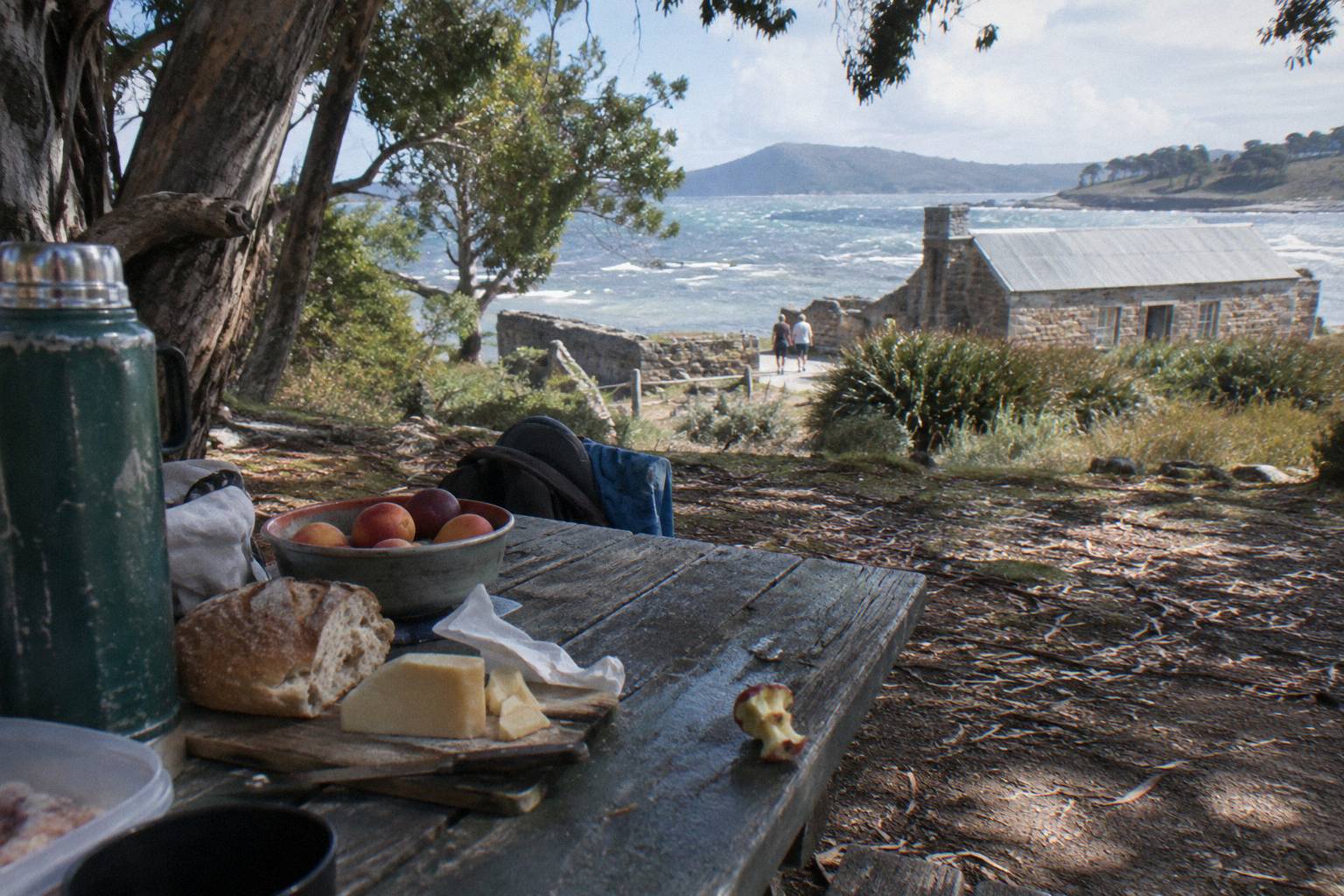
The lunch-inclusive products each handle the midday meal differently. The Cruise And Walk From Hobart includes lunch in its fare along with park entry and a 7:45am check-in at Franklin Wharf in Hobart. The Cruise And Guided Walk With Picnic Lunch, run by Pennicott Wilderness Journeys in the Maria Island Cruises family, serves a ploughman's-style picnic lunch, from about 10:00 to about 3:45pm. The Grand Picnic Day Walk from See Tasmania Tours runs about 10 hours with a maximum group of 8, and the Winter Day Trip, also from See Tasmania Tours, includes lunch with a glass of wine over roughly 8 hours.
The Active Day Tour From Hobart, run by Tours Tasmania and rated 4.8 from 240+ reviews, sits between the two worlds. It is a ferry day with the logistics absorbed: the crossing, park fees and a small-group walk of about 10 km are covered, with a Davey Street start in Hobart, earlier in summer than winter, and a return after about 10 hours. Its cancellation terms differ between its two booking pages, one free up to 2 days before and one non-refundable, so check the terms on the booking page you use. Its price for your date shows on the booking page.
| Day type | Provided | You still carry |
|---|---|---|
| Cruise And Walk From Hobart | Lunch, park entry, bus from Franklin Wharf, cruise on the operator's boat | Water, layers, sun protection, rubbish bag |
| Cruise And Guided Walk With Picnic Lunch | Picnic lunch, cruise, park fee | Water, layers, sun protection |
| Grand Picnic Day Walk | Lunch, land and sea transport, park fees, hotel pickup | Water, layers, walking shoes |
| Winter Day Trip | Lunch with a glass of wine, ferry, park fees, hotel pickup | Warm layers, water |
| Self-guided ferry day | The crossing only | Pass, lunch, water, everything |
What no operator can absorb is the island itself. Every product, guided or not, lands you in a place with unpatrolled beaches, exposed sections on the longer walks and no retreating indoors, because there is no shop, no cafe and no shelter beyond the Darlington barbecue area. The personal layer of the packing list, water, weather gear, sun protection and shoes that handle gravel and rock, travels with you regardless of how much of the day has been organised in advance.
Check-In Times And The 7 Kg Carry-On Rule
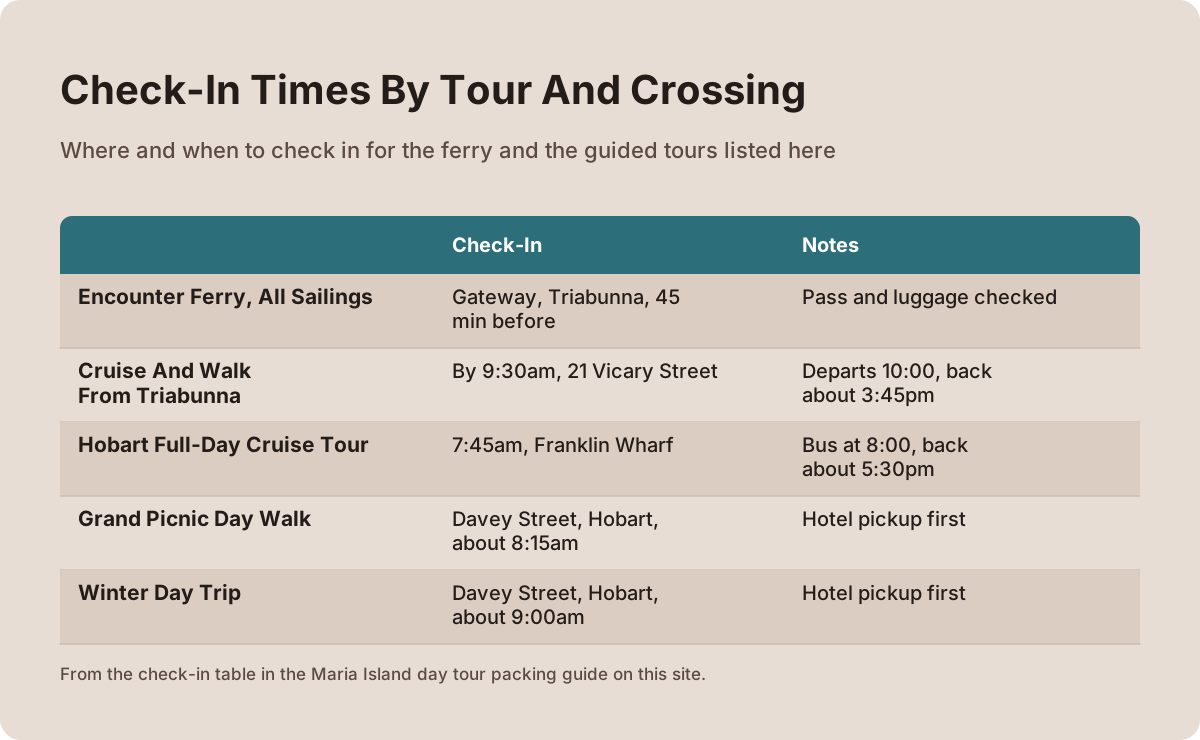
The ferry checks in at the Maria Island Gateway building beside Triabunna wharf at least 45 minutes before departure, where your pass and luggage are checked, and a same-day ticket includes one carry-on of about 7 kg. Guided cruise products have their own check-ins: 9:30am at 21 Vicary Street for the Triabunna cruise, and 7:45am at Franklin Wharf for the Hobart full day.
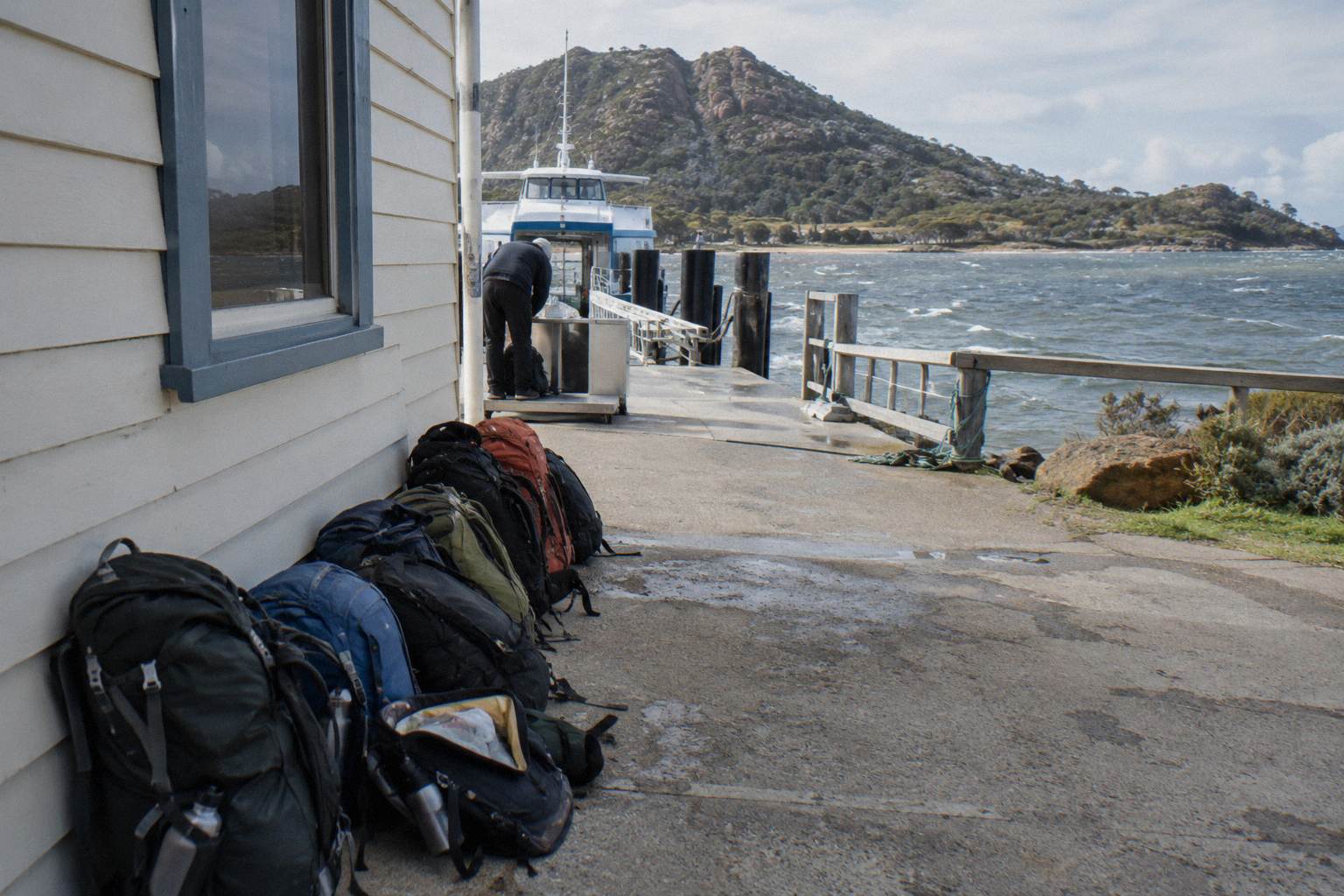
The Gateway opens 7 days, 7:45am to 3:30pm from September to April and 9am to 3:30pm from May to August. Arriving with the 45-minute buffer is not padding; it is when the pass check and the luggage check happen, and a sold-out departure cannot take extras. The summer timetable, September to April and every day except Christmas Day, runs to the island at 8:30, 10:00, 11:30 and 3:15pm, and back at 9:15am, 10:45am, 2:30pm and 4:15pm. From May to August there are no Tuesday or Thursday sailings, with crossings to the island at 10:00, 11:30 and 3:15pm. The full timetable background is in the ferry guide from Triabunna.
The 7 kg carry-on shapes how you pack. Extra luggage travels at A$11.00 per piece up to 17 kg, and a bicycle crosses as freight from A$20.00 with panniers removed and checked separately, at a maximum of 15 kg. For a day trip the arithmetic is simple: one well-packed bag per person, food dense rather than bulky, water as the heaviest single item. Overnight tickets allow the carry-on plus two pieces up to 17 kg, which is the difference between a day pack and a duffel.
| Product or crossing | Check-in | Notes |
|---|---|---|
| Encounter ferry, all sailings | Gateway, Triabunna, 45 min before | Pass and luggage checked |
| Cruise And Walk From Triabunna | By 9:30am, 21 Vicary Street | Departs 10:00, back about 3:45pm |
| Hobart full-day cruise tour | 7:45am, Franklin Wharf | Bus at 8:00, back about 5:30pm |
| Grand Picnic Day Walk | Davey Street, Hobart, about 8:15am | Hotel pickup first |
| Winter Day Trip | Davey Street, Hobart, about 9:00am | Hotel pickup first |
Guided ferry days from Hobart, the Grand Picnic Day Walk and the Winter Day Trip, start with hotel pickup and a Davey Street departure, so the check-in discipline shifts from wharf arrival to being ready at the door. Booking is essential on the ferry and early booking is advised, because passenger numbers may be limited at busy times and the skipper may delay or cancel in bad weather.
Water, Food And The No-Refill Reality
Plan on roughly two to three litres of water per adult for a full walking day, all of it carried, because the only taps on the island are at the Darlington barbecue shelter and the Mess Hall and none of that water is potable without boiling for one minute or purifying. There is no shop, no cafe and no refill station, and food is sold only on the ferry during the crossing.
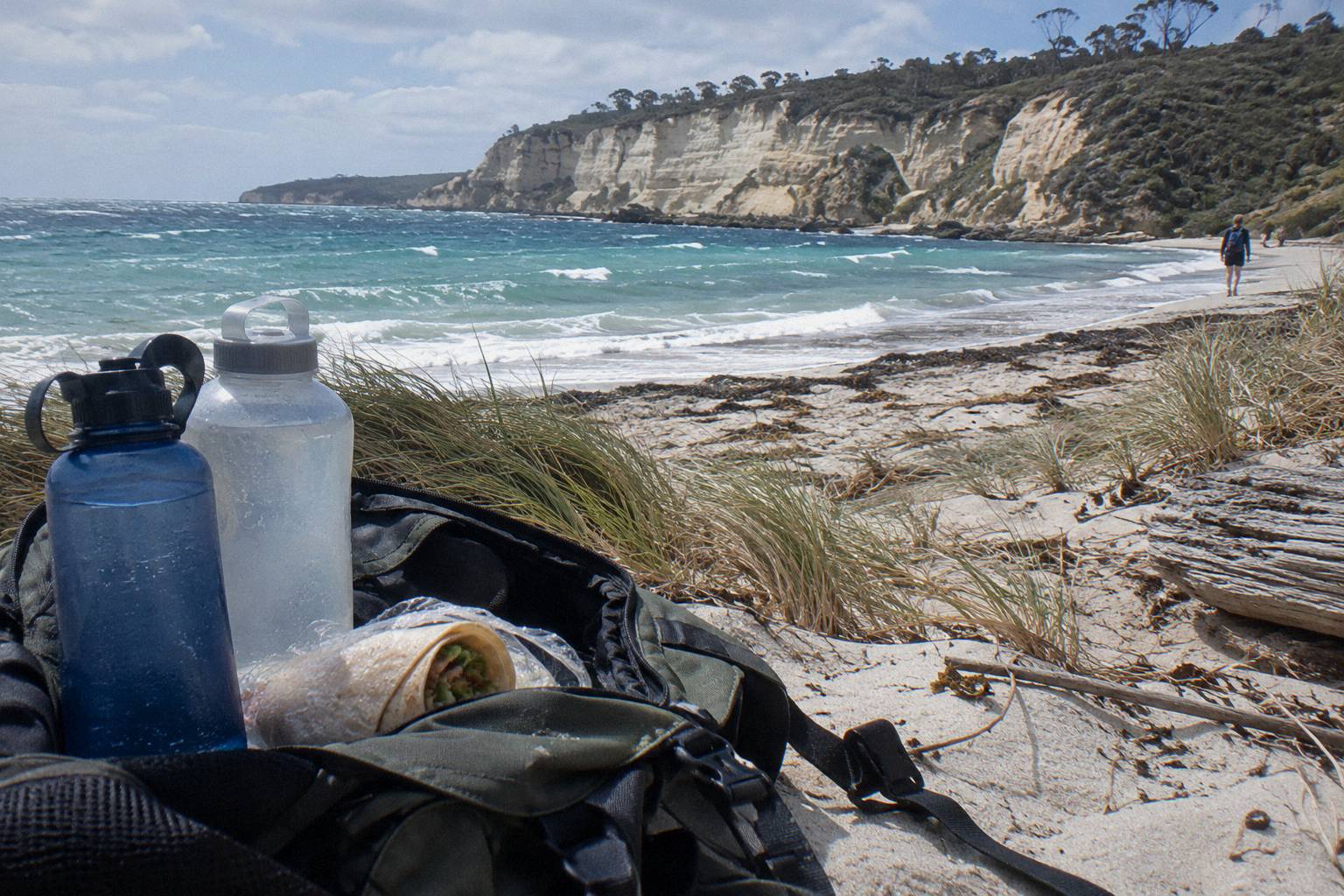
The treatment question is worth deciding before you pack rather than on the jetty. Boiling needs a stove and fuel, which most day visitors do not carry, so purification tablets or a filter are the practical route if you intend to top up at the signed taps. Anyone walking out beyond Darlington, to the Fossil Cliffs circuit at 4.5 km or the Painted Cliffs at 4.3 km return, should treat the taps as an emergency source rather than the plan, because they sit back in the township and the walking hours add up quickly.
The rubbish rule pairs with the food rule. Whatever wrappers, peels and leftovers the day produces stay in your bag until Triabunna, so a spare zip bag or a small liner earns its place from the first snack. The same discipline applies at the wildlife level: Parks asks visitors to keep 2 m from all animals and never feed them, which means nothing edible is left behind and nothing is offered, deliberately or accidentally.
Clothing And Layers: What The Island Climate Actually Does
Pack for a mean maximum of 21.5 °C in January and 12.8 °C in July, with overnight means as low as 7.5 °C, rain on an average of 76.9 rain days a year and an all-time high of 35.5 °C, which means layers, a rain shell and real sun protection in every season. These figures come from the Bureau of Meteorology's Maria Island station at Point Lesueur, recording from 2004 to 2026.
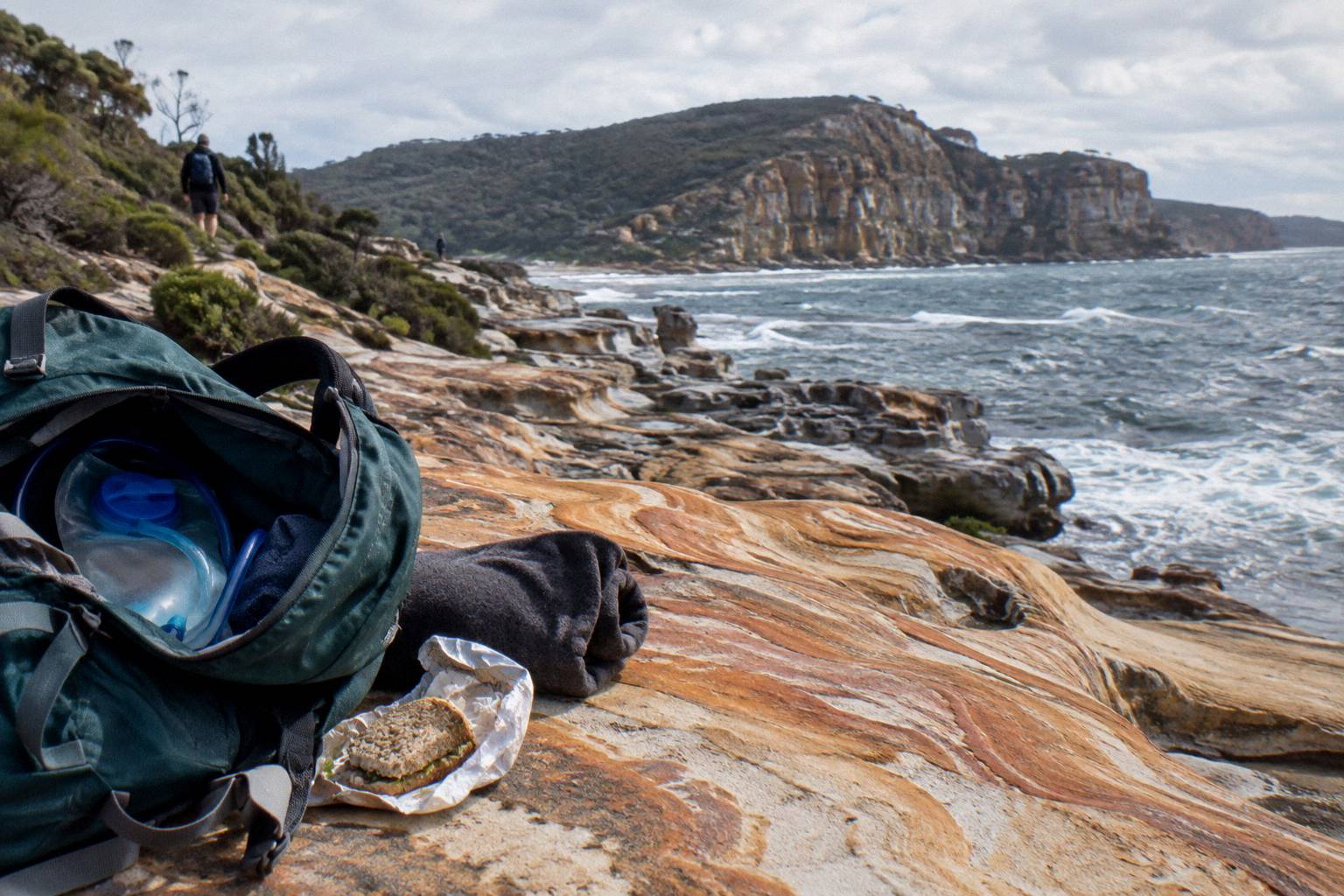
The monthly spread tells the packing story better than a season label. January and February sit at mean maxima of 21.5 and 21.1 °C, but December to February each still record days at or above 30 °C, so summer days need sun protection and enough water, not just a warm layer. Winter flips the problem: July's mean minimum is 7.5 °C, and the lowest temperature on record is 1.8 °C, which puts a warm hat and gloves inside a winter bag even though the walking itself generates heat. The seasonal context for choosing a date is covered in the weather and best-time guide.
Rain is the year-round constant. The station records 530.5 mm annually across an average of 76.9 rain days of a millimetre or more, spread through every month, with November the wettest at 58.2 mm on average. A rain shell rather than an umbrella is the right answer, because the exposed sections of tracks like Bishop and Clerk, Grade 4 with scrambling and a 620 m summit, make an umbrella useless exactly when it is needed. Sturdy shoes matter on the same logic: gravel, rock steps and, at the Painted Cliffs, a rock platform that is only safe near low tide and in calm seas. More of these guides are collected on Maria Island Tours.
The guided winter product takes its own approach to the cold months. The Winter Day Trip from See Tasmania Tours runs about 8 hours from a Davey Street start around 9:00am with hotel pickup, ferry and park fees included and lunch with a glass of wine, with free cancellation up to 24 hours before start. Even with lunch handled, the layer list stays: winter on the water and on exposed tracks is a different packing job from a summer picnic day.
Rubbish, Wildlife Rules And The Marine Reserve
Carry a dedicated rubbish bag, keep 2 m from every animal, never feed wildlife, and leave every shell and living thing where it lies, because the island is a national park with no bins, a no-take marine reserve along its north-west coast and a wildlife list that includes forester kangaroos, Bennett's wallabies, pademelons, Flinders Island wombats and Cape Barren geese.
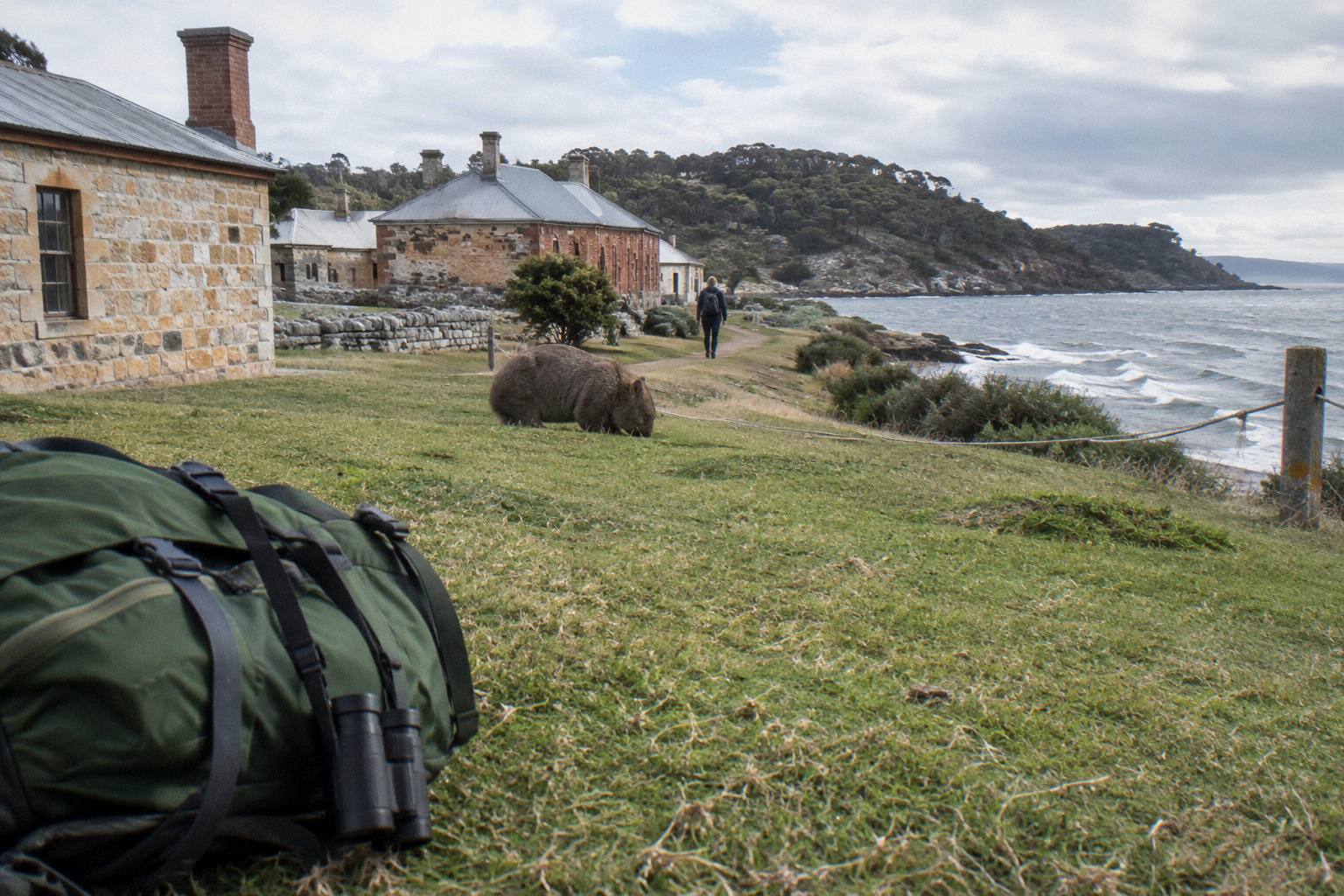
The wildlife rules change what goes in the bag more than most packing lists admit. Food that can be dropped or left, loose crumbs at a lunch stop, and open wrappers in an outside pocket all become hazards when pademelons and native hens work the picnic areas. Sealed containers and a pack that closes fully solve most of it. The 2 m distance rule is behavioral rather than material, but a longer lens instead of an approach for a wombat photo is a packing decision too. Wombats are common on the island but, like every species there, never guaranteed.
The marine reserve rules matter for anyone packing snorkelling gear. Fishing is not allowed in the no-take zone along the north-west coast, and visitors are asked not to collect shells or any living or dead material. Snorkelling and diving are possible in Darlington Bay and at the Painted Cliffs, so a mask and snorkel are legitimate cargo on a calm-weather day, provided nothing leaves the water with you. Beaches are unpatrolled throughout the island, and no source supports a claim of safe swimming, so treat any dip as your own judgment.
Tasmanian devils are part of the island's story rather than its lunch stops: 15 were introduced in 2012 as an insurance population against devil facial tumour disease, and no sighting is ever promised. Birds belong in the packing conversation too, with 11 of Tasmania's 12 endemic species recorded, including the forty-spotted pardalote, which makes binoculars one of the most useful non-essential items in the bag.
What Trips People Up On Packing Day
The four recurring failures are assuming water can be bought or refilled, treating the park pass as part of the ferry fare, packing to the 7 kg limit without weighing the water first, and forgetting that lunch on a self-guided day is a packed one. Each is a small omission that costs hours on an island with no shop, no cafe and no bins.
The pass problem is the most expensive in time. The ferry fare and the park pass are separate purchases, the pass is checked at the Gateway before boarding, and a daily pass for a visitor on foot is from A$24.55 per person with a valid pass required by law. It can be added during online booking, which is the cleanest fix. The same trap inverts on guided water products, where entry is included; the exception is the Wineglass Bay Scenic Flight, which does not include the pass.
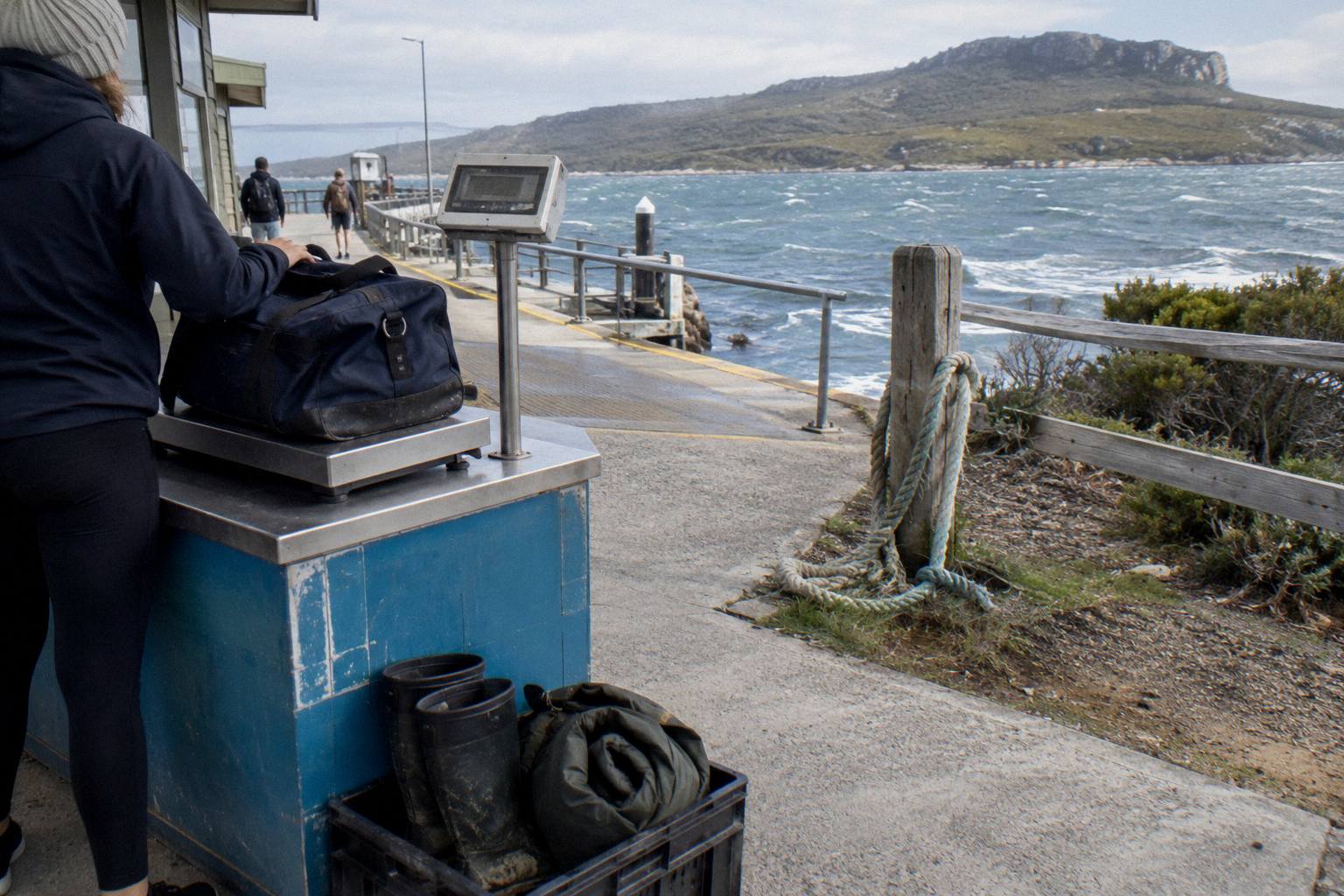
The water-and-weight problem is the second. Water is the heaviest thing in most day packs, roughly a kilogram per litre, so two to three litres plus a packed lunch plus layers lands close to the same-day carry-on allowance of about 7 kg before anything else is added. Weighing the packed bag at home settles it, and the A$11.00 per-piece extra luggage rate exists for the overflow. Booking everything early, ferry and tour alike, is the standing advice: departures sell out, numbers may be limited and the skipper can delay or cancel in bad weather.
Choosing Between A Shorter Bag And A Full One
If packing light matters more than packing everything, a lunch-inclusive guided day removes the meal, the pass purchase and the logistics from the bag, while a self-guided ferry day keeps them all and gives the widest choice of walking routes. The right answer depends on whether you want the island organised for you or organised by you.
The Cruise And Walk From Hobart is the fullest version of the organised day: a 7:45am check-in at Franklin Wharf in Hobart, a bus to Triabunna, the operator's own cruise rather than the public ferry, park entry, lunch and a guided Darlington walk, listed at A$365 per adult on the operator site and rated 5.0 from 630+ reviews, with free cancellation up to 24 hours before start. The duration does not appear consistently across its booking pages, and the meeting point shows at booking. More detail sits on the Cruise And Walk From Hobart tour page, where dates and current terms are visible before you commit. For anyone weighing the two approaches side by side, the decision factors are laid out in guided day versus doing it yourself.
The Active Day Tour From Hobart is the ferry-based middle path, rated 4.8 from 240+ reviews, about 10 hours with roughly 10 km of walking and a return to Hobart, ferry and park fees included. The Grand Picnic Day Walk is the small-group version, maximum 8 people, about 10 hours with land and sea transport, park fees and lunch all included from a hotel pickup. Each carries its own cancellation terms, so the terms on the booking page you use are the ones that count. Whichever shape you choose, the core personal list, water, layers, sun protection and the rubbish bag, never leaves your own bag.
If the day is self-guided, the packing job ends where it began: everything in, everything out, and the 45-minute Gateway check-in as the deadline that makes the whole list real. The island rewards the preparation quietly, because a bag packed for no shops, no potable water and no bins is simply a bag that lets the day be about the walks and the wildlife instead of what was forgotten.
Common Questions About Packing For A Maria Island Day Tour
What To Carry Onto The Island?
All food and water for the day, water treatment if you plan to use the signed taps, sun protection, warm layers, a rain shell, sturdy shoes, your park pass and a rubbish bag, because there are no shops, no potable tap water and no bins on the island.
Can You Buy Food Or Water On Maria Island?
No. There are no shops or cafes on the island and the taps are not potable without boiling for one minute or purifying. Food, drinks, coffee, local beer and wine are sold on the ferry during the crossing only, so everything for the day itself is carried in.
What Does The Ferry Allow You To Carry?
A same-day return ticket includes one carry-on of about 7 kg. Extra luggage travels at A$11.00 per piece up to 17 kg, and a bicycle crosses as freight from A$20.00 with a 15 kg maximum and panniers removed and checked separately. All fares are Australian dollars and change over time.
Do Guided Tours Provide Lunch?
Several do. The Cruise And Walk From Hobart includes lunch and park entry, the Cruise And Guided Walk With Picnic Lunch serves a ploughman's-style picnic, and the Grand Picnic Day Walk and Winter Day Trip both include a meal. The Active Day Tour From Hobart covers the ferry and park fees, and its price for your date shows on the booking page.
Do You Need To Carry Your Park Pass?
Yes, on a ferry day. A valid parks pass is required for entry and is checked at the Maria Island Gateway before boarding; it is not included in the ferry fare. A daily pass for a visitor on foot is from A$24.55 per person. Guided water products include entry, except the scenic flight.
What Clothing Should You Pack?
Layers for a climate with mean maxima from 12.8 °C in July to 21.5 °C in January, mean minima down to 7.5 °C, rain on an average of 76.9 rain days a year and occasional days above 30 °C in summer. A rain shell, a warm layer, sun protection and sturdy walking shoes cover every season.