Are There Shops Or Food On Maria Island For A Day Walk?
No shops or cafes exist on Maria Island: what to bring, where to buy food on the ferry, and which guided day trips include lunch.
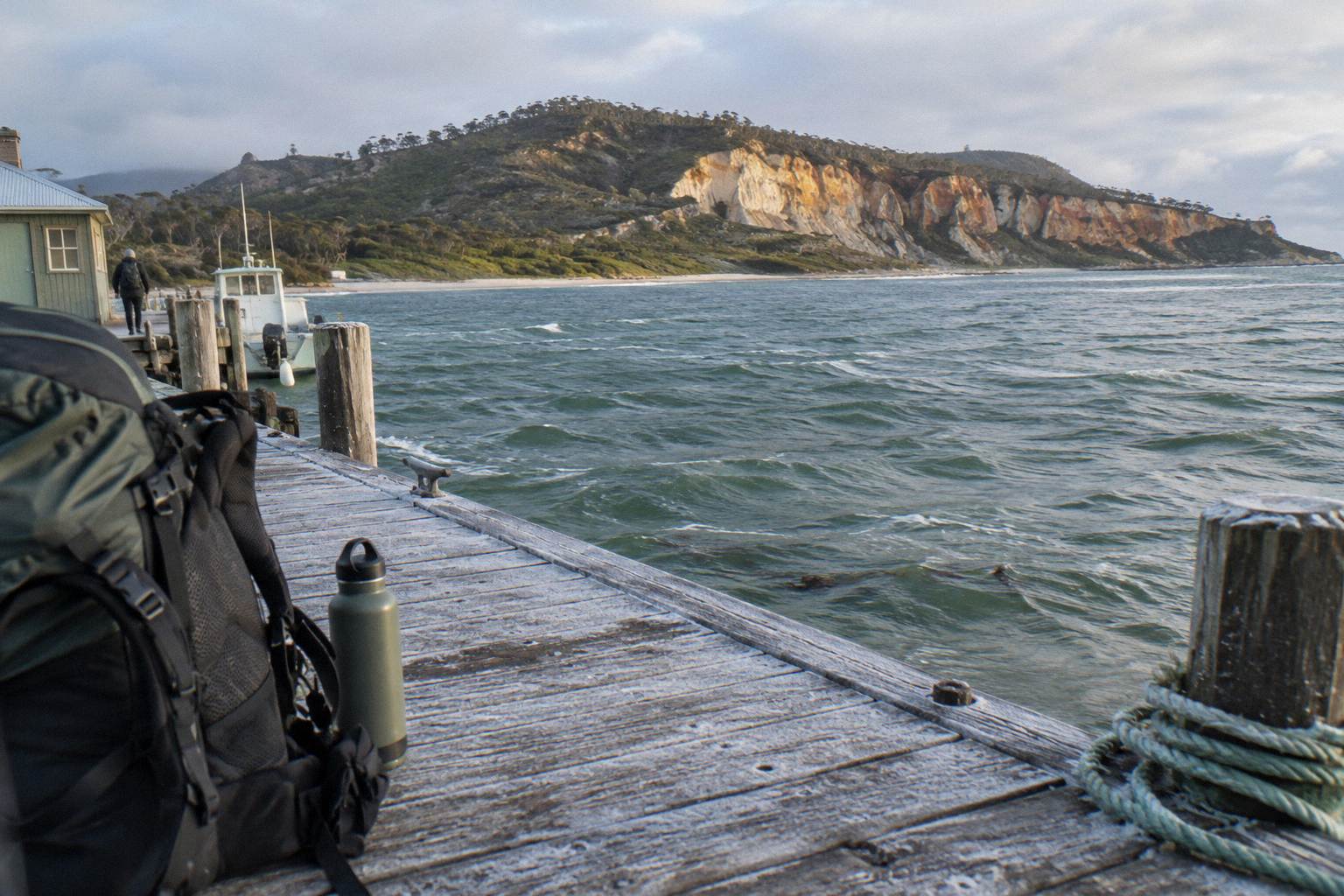
No, there are no shops, cafes or food outlets anywhere on Maria Island, and there never have been during the island's time as a national park. Every meal, snack and drink for a day walk has to be carried in on the ferry, bought on board the ferry during the crossing, or included as part of a guided day trip. The building visitors sometimes mistake for a cafe, the Coffee Palace in Darlington, is a museum.
That single fact shapes more day trips than almost anything else about the island. Walkers who arrive expecting to buy lunch discover instead that Darlington, the small settlement where the ferry lands, is a historic site with convict buildings, a campground and a barbecue shelter, but no retail of any kind. The island has been a national park since 1971, covers 115.5 square kilometres along 20 kilometres of coastline, and has no vehicle access and no permanent town. Rangers are the only people who stay. Everything a visitor eats has to come across the water with them.
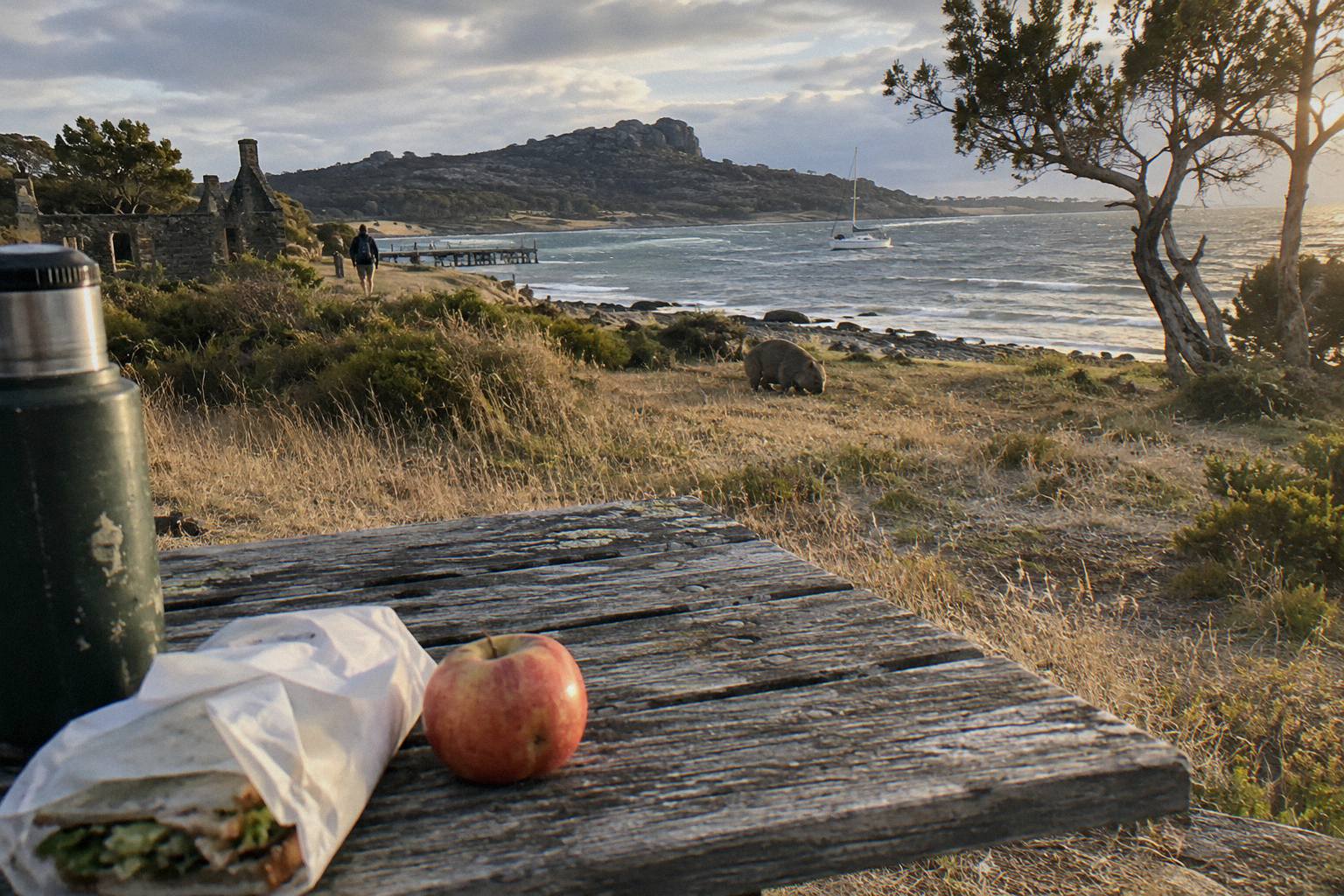
There are three practical answers to the food problem, and most day visitors pick one of them without realising they are making a choice. The first is to pack everything yourself, which is what independent ferry travellers do. The second is to buy food and drinks on the ferry, which works for snacks and coffee but is not a full lunch plan for a long walking day. The third is to take a guided day trip that builds the meal in, such as the Cruise And Guided Walk With Picnic Lunch, which serves a ploughman's-style picnic lunch as part of the day . For a fuller comparison of carried meals against catered ones, the guide to what to pack for a day tour works through the whole kit.
Parks and Wildlife is blunt about the situation on its own park page: bring food and water, carry your rubbish out, and treat tap water before drinking it. The official ferry operator repeats the same message on its what-to-bring page. Between the two of them, the rules are simple, and the rest of this article is about how walkers actually put them into practice, what each style of day trip provides, and where the common planning mistakes happen.
What Food And Drink Can You Buy On The Ferry?
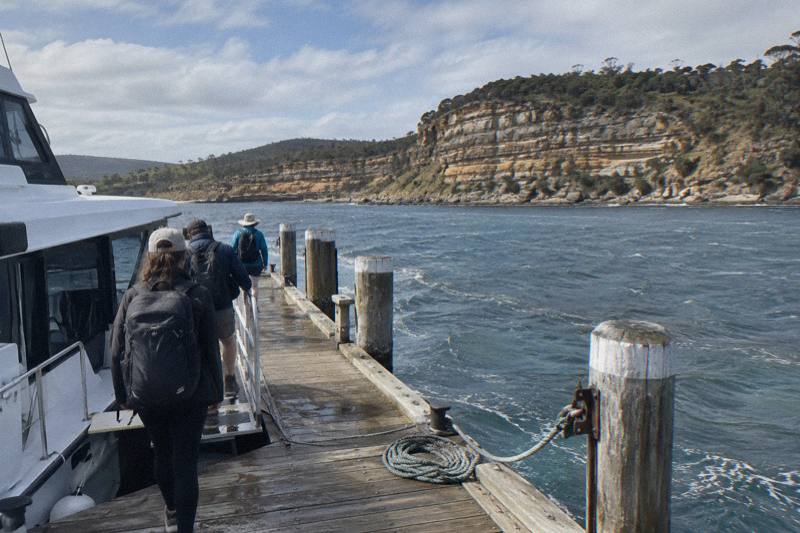
Food, drinks, coffee, local beer and wine are sold on the ferry during the crossing, which takes about 30 to 45 minutes between Triabunna and Darlington. That onboard counter is the only place on the whole route where money buys something to consume, so it works well for a coffee and a snack on the way over, but it is not a substitute for packing a lunch, because nothing is for sale once you step onto the island itself.
The ferry is the Encounter Maria Island service, the Parks and Wildlife Service's official ferry operator, running from Triabunna Wharf to Darlington. The onboard offering is genuine and worth knowing about: hot drinks, cold drinks, and local Tasmanian beer and wine are all available on the crossing. Families doing a morning sailing often treat it as breakfast, and the return leg in the late afternoon is a popular moment for a drink after a walking day. But the timing matters. A sailing that leaves Triabunna and arrives in Darlington under an hour later gives you a short window, and once you are off the boat and on a walking track, the next purchasable item is back on the mainland.
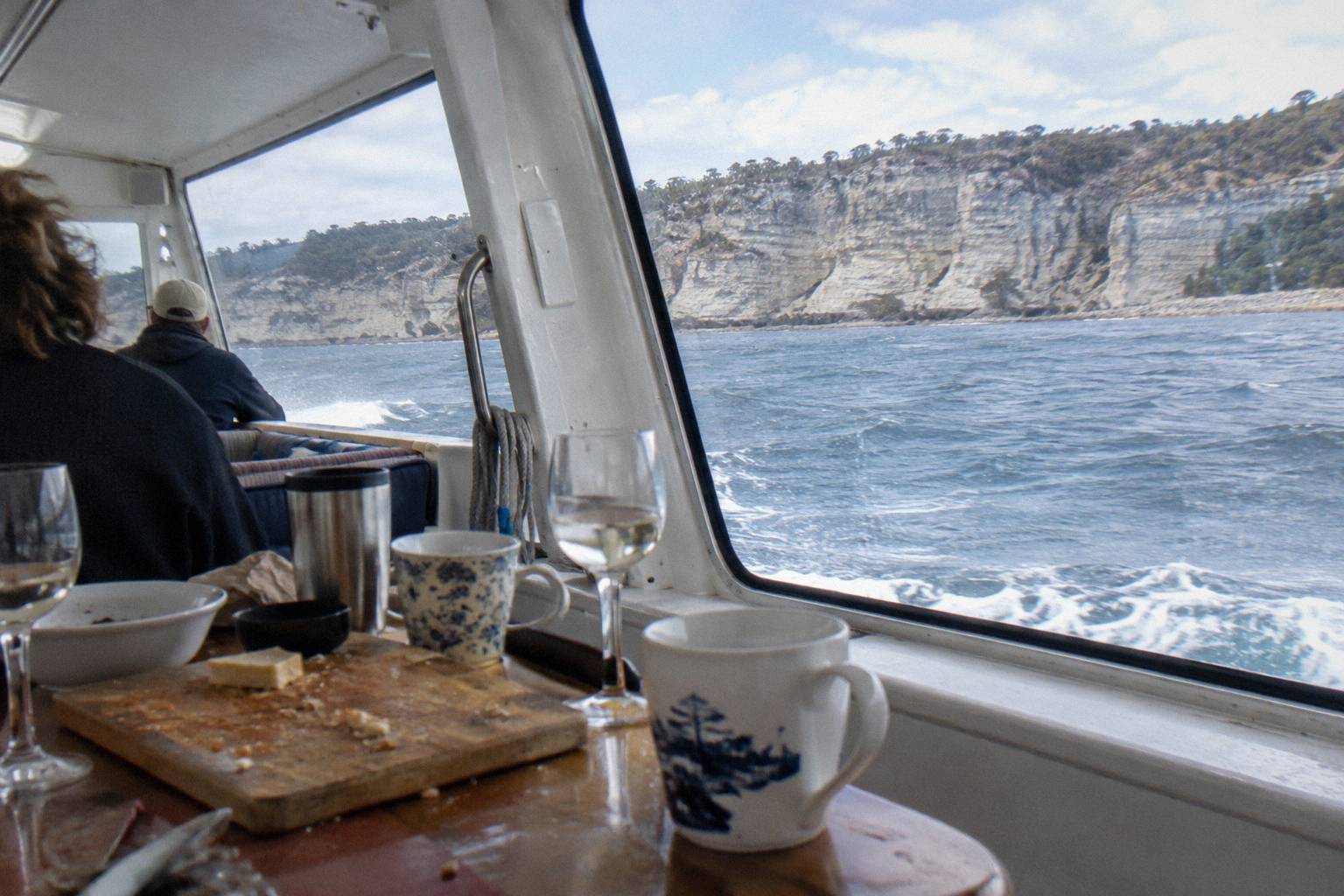
Guided cruise products change the picture. The cruise-and-walk trips run by the Maria Island Cruises family do not use the public ferry at all; they travel on the operator's own boat, and several of them include catering as part of the day. The Cruise And Walk From Triabunna starts at 21 Vicary Street in Triabunna with check-in around 9:30am, runs about 6 to 8 hours, and includes the landing and park fee; on its booking page you choose between a lunch-included version and a bring-your-own version, so the food question is decided at the moment of booking rather than on the day. Free cancellation applies up to 24 hours before start.
The distinction between ferry and cruise matters for food planning more than most visitors expect. Ferry travellers buy onboard or carry everything; cruise travellers are usually looking at a day where morning tea or lunch is already part of the product. Neither option puts a shop on the island. The operator's what-to-bring guidance is the reference for the ferry side: what the ferry operator says to bring covers food, water and luggage in one place.
Which Day Trips Include Lunch?
Several guided trips build food into the day: the Cruise And Guided Walk With Picnic Lunch includes a ploughman's-style picnic lunch, the Grand Picnic Day Walk includes a grand picnic as its centrepiece, the Winter Day Trip includes lunch with a glass of wine, and the Ile Des Phoques Boat Day Trip includes morning tea, drinks and a salad-bowl lunch. The Active Day Tour does not state a lunch inclusion, so carry food for that one.
The cleanest way to see the spread is side by side. The table below covers only what each trip's own details state about food, catering and the related inclusions that affect a lunch decision, such as pickup and park fees. Where a trip says nothing about food, the table says nothing either, and packing your own is the safe call.
| Day Trip | Food Stated | Start Point | Other Inclusions Stated |
|---|---|---|---|
| Cruise And Guided Walk With Picnic Lunch | Ploughman's-style picnic lunch | Boat from Triabunna, about 10:00 | Park side covered by the operator's cruise and landing |
| Cruise And Walk From Triabunna | Lunch version or BYO version, chosen at booking | 21 Vicary Street, Triabunna, check-in around 9:30am | Operator's own cruise; landing and park fee included; about 6 to 8 hours |
| Grand Picnic Day Walk | Picnic as the named feature of the day | Hobart hotel pickup, Davey Street start around 8:15am | Land and sea transport and park fees; small group of maximum 8; about 10 hours |
| Winter Day Trip From Hobart | Lunch with a glass of wine | Hobart hotel pickup, Davey Street start around 9:00am | Ferry and park fees; about 8 hours |
| Ile Des Phoques Boat Day Trip | Morning tea, drinks and a salad-bowl lunch | 21 Vicary Street, Triabunna | About 7.5 hours; seal colony leg by boat |
| Active Day Tour From Hobart | No food inclusion stated | Hobart, Davey Street | Ferry and park fees; about 10 hours; about 10 km of walking |
Ratings, where they exist, are printed with their counts: the Cruise And Guided Walk With Picnic Lunch rates 4.9 from 140 reviews, and the Cruise And Walk From Triabunna rates 5.0 from 230+ reviews. Prices for all of these show on the booking page for your date, and amounts across Tasmanian travel are in Australian dollars.
The picnic-lunch trip deserves a closer look for exactly the reader asking the food question. It runs on the Pennicott Wilderness Journeys side of the Maria Island Cruises family, departs Triabunna by boat around 10:00 and returns around 3:45pm, and folds the meal into the middle of the day so walkers are not managing their own supplies. Free cancellation applies up to 24 hours before start. You can check availability against your dates.
The Grand Picnic Day Walk takes the other approach to the same problem. See Tasmania Tours runs it as a small-group day of at most 8 people, about 10 hours door to door, with Hobart hotel pickup and a Davey Street start around 8:15am, land and sea transport and park fees included, and the picnic as the headline. For a walker whose main worry about a food-free island is simply not wanting to carry a pack of provisions up a track, it is the format that answers the worry most directly.
Where Do You Get Drinking Water On The Island?
There are a few signed taps at the Darlington barbecue shelter and at the Mess Hall, but the water is not potable as it comes out: Parks and Wildlife says to boil it for one minute or purify it before drinking. In practice that means most day walkers carry all the water they will drink, and treat tap water as a backup rather than a plan, especially on warm days when the walks run long.
The island's water situation catches out visitors who assume a settled bay means a serviced one. The taps exist and they are marked, which helps, but boiling water for a minute requires a stove or access to the gas hobs in the Mess Hall, and purifying requires tablets or a filter carried in. Neither is something most day walkers have with them. The reliable approach is to carry what you need from the start: a walking day on Maria Island that takes in one of the longer tracks, such as the 11 kilometre return Bishop and Clerk climb, can easily run four to five hours, and water planning has to match the walk, not the crossing. Everything else covered here is indexed on Maria Island Tours.
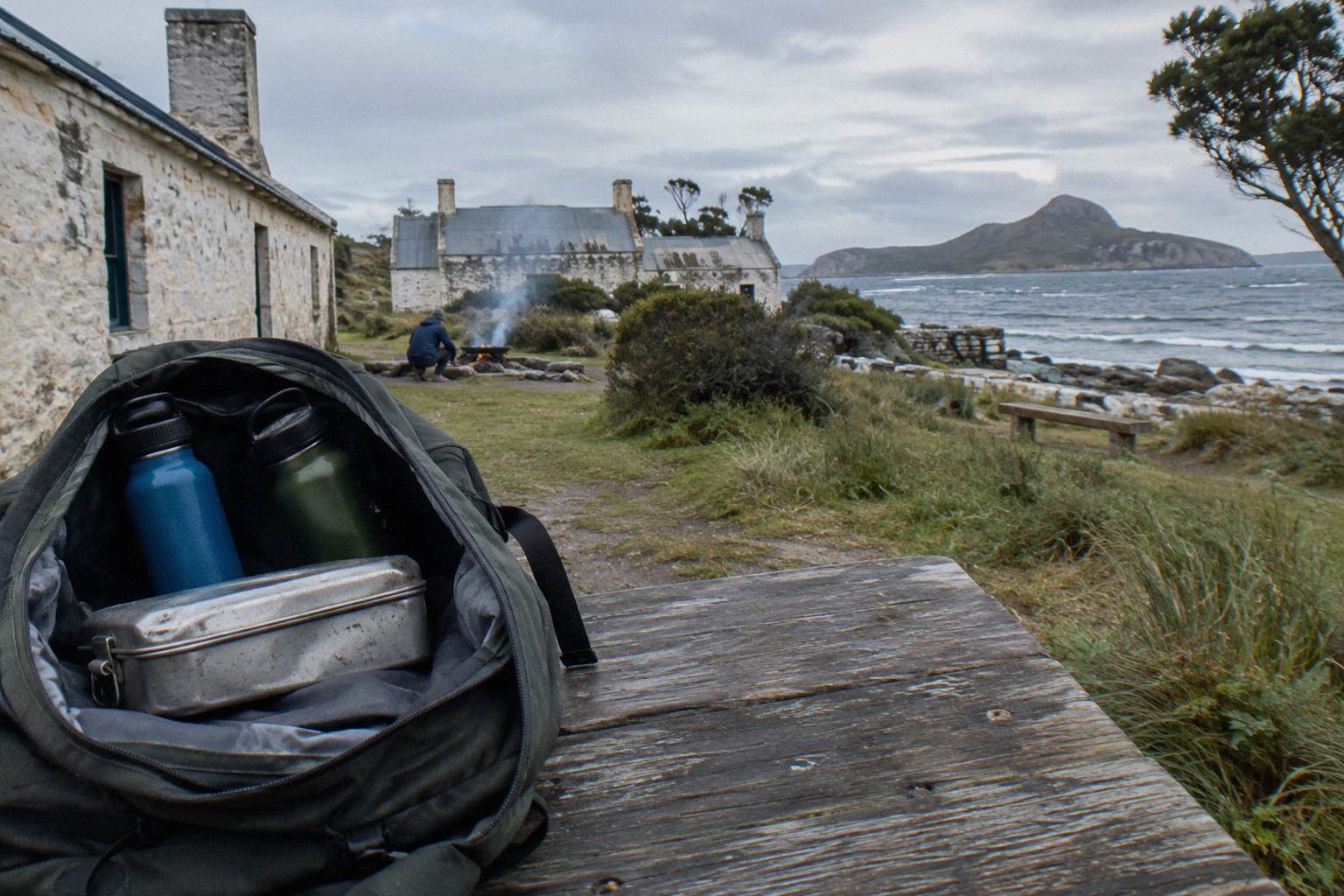
The ferry's food counter helps with drinks at the start and end of the day but not in between, because the boat is not waiting at the far end of a walking track. Rubbish works the same way: there are no bins on the island, and Parks asks visitors to carry everything out, including food scraps. A packed lunch that generates a pile of wrappers becomes a pocket problem by mid-afternoon, so simple packaging is a small kindness to your future self. The park's own guidance, on the official Maria Island National Park page, states the no-shops rule, the water treatment rule and the carry-out rule in one place.
For overnight visitors the stakes are higher again, since the bunkhouse has no electricity and every meal has to cross on the ferry. The guide to camping after a day walk covers that side of the food logistics, including the barbecue shelter with free gas barbecues behind the dunes at Darlington, which is the one genuinely food-friendly facility on the island: a covered place to cook what you carried.
What Should You Pack To Eat For A Day Walk?
Pack a full day of food and water as if nothing could be bought, because effectively nothing can: a substantial lunch, high-energy snacks, more water than you think you need given the tap-water treatment rule, and rubbish bags to carry the remains home. A same-day ferry ticket includes one carry-on of about 7 kilograms, so the food has to share that allowance with everything else for the day.
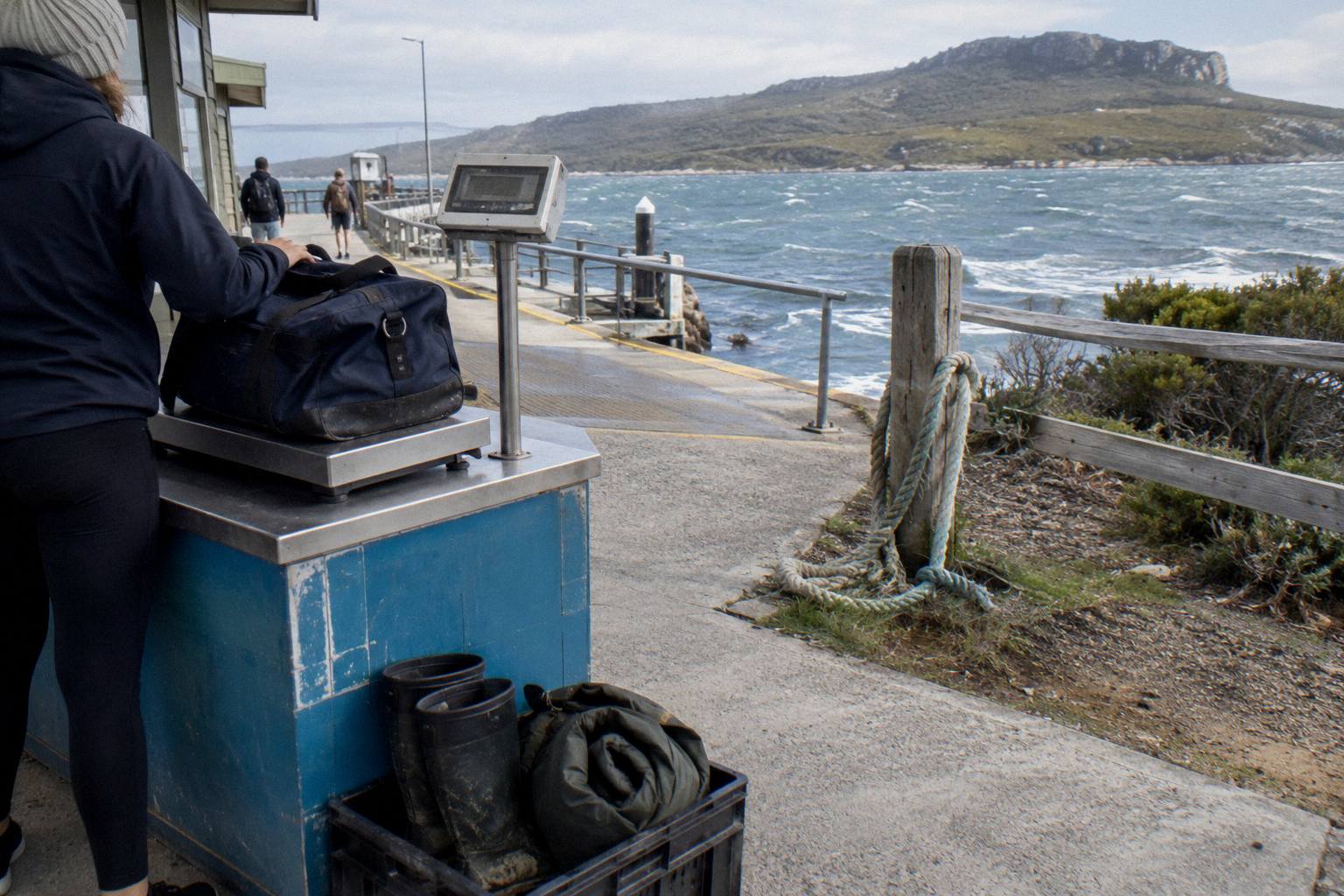
The luggage limit is the part that surprises people. A same-day return ticket on the ferry includes one 7 kilogram carry-on, and the park pass is separate and not included in the fare, from A$59.00 for an adult same-day return, with fares subject to change. Overnight travellers get more allowance, and a bicycle travels as freight from A$20.00 with a 15 kilogram cap and panniers checked separately. Food is dense and heavy, and a litre of water is a kilogram on its own, so the packing maths for a walking day is real. Cooler months make this easier; the January mean maximum at the island's weather station is 21.5 °C, while July sits at 12.8 °C, and a cold day suppresses both thirst and appetite.
There is also the matter of wildlife around food. The island's animals, from Bennett's wallabies and pademelons to Forester kangaroos and Cape Barren geese, are unafraid of people, and Parks asks visitors to keep 2 metres from all wildlife and never to feed it. An unattended lunch bag on a beach is an invitation, and feeding animals, however harmless it feels, is against the park rules and bad for them. Packing food that closes, in containers that seal, is part of island etiquette rather than mere tidiness.
A sample day pack for the ferry-and-walk approach, sized to the realities above, looks something like this:
| Item | Why It Matters On Maria Island | Sizing For A Walking Day |
|---|---|---|
| Lunch | No shops or cafes anywhere on the island | One substantial meal, sturdy enough to survive a pack |
| Snacks | Long tracks, 4 to 5 hours on the bigger walks | More than you would pack on a serviced walk |
| Water | Taps are signed but the water must be boiled or purified | Enough for the full day, plus a backup treatment method |
| Rubbish bag | No bins on the island, everything carried out | One bag, ideally two |
| Sealed containers | Wildlife is close and must never be fed | Lunch boxes that close properly |
| Warm layer | Weather can turn even in summer | One layer, any season |
Walkers who find that list heavier than they want can shortcut most of it with a catered trip.
Can You Cook Or Eat Anywhere On The Island?
Yes, in a limited sense: there is a covered barbecue area with free gas barbecues at the Darlington campground, and the Mess Hall at the bunkhouse has gas hobs, but both are cooking facilities for food you have carried in, not places to buy anything. There is no cafe, no kiosk, no restaurant and no shop anywhere on Maria Island, and the Coffee Palace is a museum.
The barbecue shelter is the most useful of these for day visitors who like a hot lunch, though its position behind the dunes at Darlington means it suits a bay-based day better than a long walking day. Campers and bunkhouse guests use the Mess Hall hobs for evening meals. Both facilities sit inside a small radius of Darlington, which is also where the jetty, the penitentiary bunkhouse and the tent sites are. Everything beyond that radius is track, coast and bush, with nothing to buy and nowhere to cook.
The name that misleads people most often is the Coffee Palace. It sounds like a cafe, and in the island's tourism past something of the kind operated there, but today it is a museum building within the World Heritage listed Darlington probation station, inscribed in 2010 as part of the Australian Convict Sites. Visitors walk through convict history there, not a menu. The heritage side of Darlington is well worth the time; the Darlington convict site walk covers what the buildings are and how to read them, and none of it involves lunch.
One more food-adjacent rule shapes the shoreline: fishing is not allowed in the no-take marine reserve zone along the north-west coast, and collecting shells or any living or dead material is prohibited, so the sea does not provide a backup lunch either. Snorkelling and diving are possible in Darlington Bay and at the Painted Cliffs for those who carry gear, but the marine reserve is strictly look-only.
What Trips People Up When Planning Food For The Island
The recurring mistakes are assuming the Coffee Palace is a cafe, planning to buy lunch on the ferry without checking sailing times, forgetting that tap water must be boiled or purified, packing more food weight than the 7 kilogram carry-on allows, and leaving rubbish behind because there are no bins. Each of these is avoidable with one decision made before the ferry terminal.
The ferry-timing mistake deserves its own sentence. The summer timetable runs four sailings each way, and the winter timetable three with no Tuesday or Thursday sailings from May to August, so a plan that depends on buying a coffee at a specific moment can quietly fail when the sailing that suits your walk leaves at 8:30am. The ferry from Triabunna guide has the full timetable and check-in detail, including the 45-minute-early check-in at the Gateway building beside the wharf.
The water mistake is the one with consequences. Boiling for a minute or purifying sounds manageable in a kitchen and is awkward on a headland, and the signed taps are clustered at Darlington rather than out on the tracks. Carrying the day's water from the start, with a small backup treatment method, solves it completely.
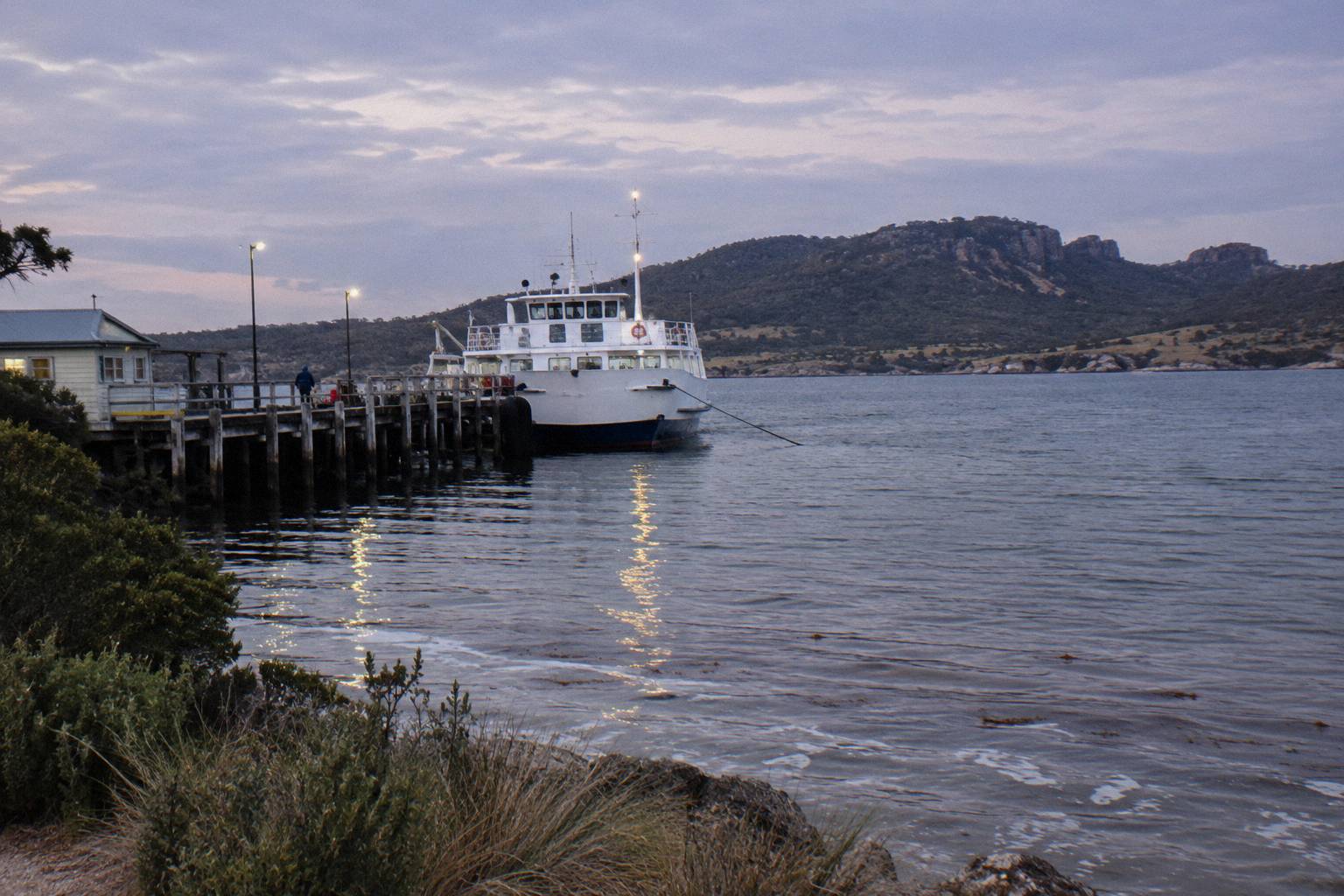
The luggage mistake is arithmetic. Food plus water plus walking layers plus a rain jacket, all inside a 7 kilogram same-day carry-on, needs choosing rather than throwing things in. The guided day trips sidestep it entirely, which is a quiet part of their appeal for travellers who would rather not start a walking day as a packing puzzle.
Common Questions About Food And Drink On Maria Island
Are There Any Shops On Maria Island?
No. There are no shops, cafes, kiosks or food outlets anywhere on the island. Everything you eat has to be carried in, bought on the ferry during the crossing, or included on a guided day trip that serves lunch.
Is There Food At Maria Island?
Only what visitors bring or what a guided trip includes. The ferry sells food, drinks, coffee, local beer and wine on board, but once you step off at Darlington there is nothing for sale anywhere on the island.
Can You Buy Lunch On The Ferry To Maria Island?
Yes, food and drinks are sold on the ferry during the crossing, which takes about 30 to 45 minutes. It suits a coffee and a snack, but it is not a full lunch plan for a walking day, since nothing further is for sale once you land.
Is The Tap Water On Maria Island Safe To Drink?
Not as it comes out of the tap. Parks and Wildlife says the water must be boiled for one minute or purified before drinking. There are signed taps at the Darlington barbecue shelter and the Mess Hall, but most day walkers carry all the water they need.
Do Any Maria Island Day Trips Include Lunch?
Yes. The Cruise And Guided Walk With Picnic Lunch includes a ploughman's-style picnic lunch, the Grand Picnic Day Walk is built around a picnic, the Winter Day Trip includes lunch with a glass of wine, and the Ile Des Phoques Boat Day Trip includes morning tea, drinks and a salad-bowl lunch. The Cruise And Walk From Triabunna offers a lunch-included version at booking.
Where Can You Cook Food On Maria Island?
There is a covered barbecue area with free gas barbecues at the Darlington campground, and gas hobs in the Mess Hall at the penitentiary bunkhouse. Both are for food you have carried in; no food or fuel is sold on the island, and all rubbish must be carried out.
The food-free island is not a flaw; it is part of why the place feels the way it does. Plan the meal before the wharf, and the rest of the day takes care of itself.