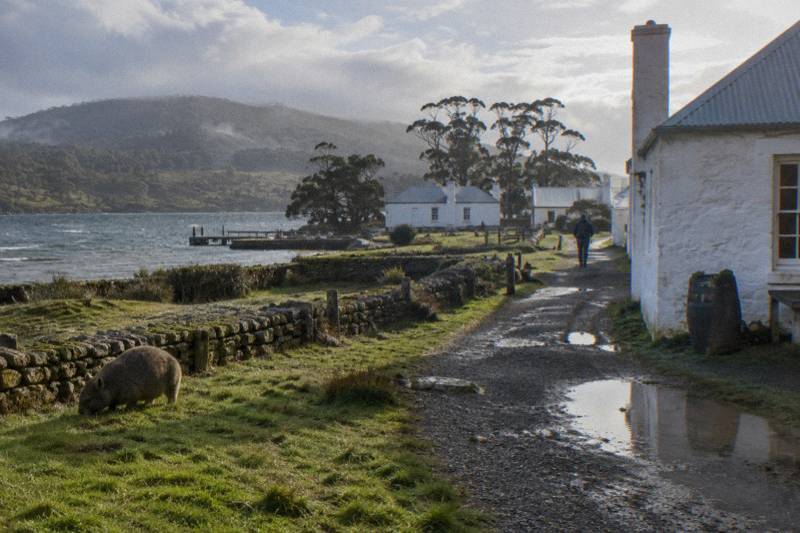
Maria Island In Winter: Does The Ferry Run And Is A Day Walk Worth It
The winter ferry timetable, cold-month temperatures and the guided days that still run when the summer crowds leave Maria Island.
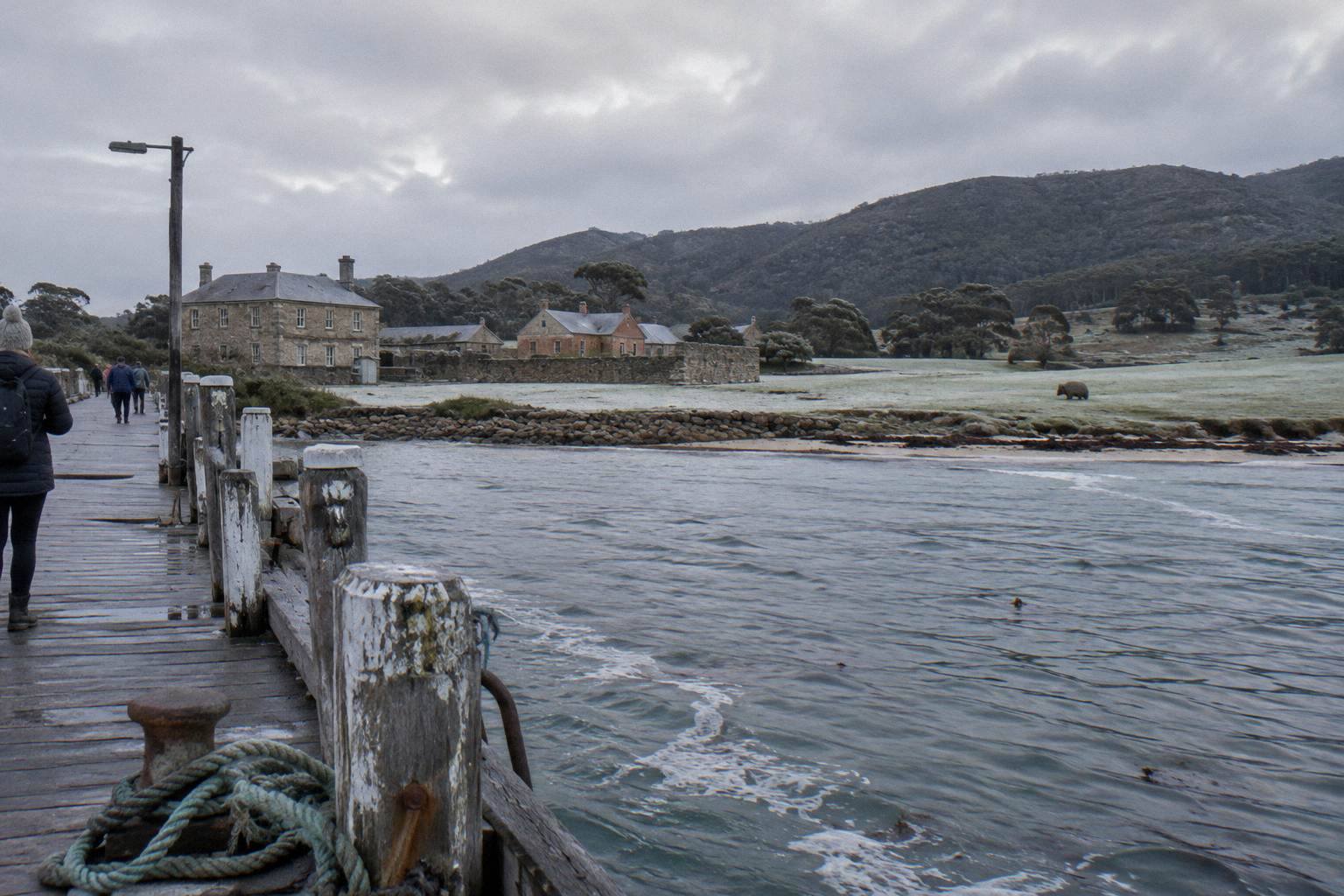
Yes, the ferry runs all winter and a day walk is worth it. From May to August it sails three times each way between Triabunna and Darlington, with no departures on Tuesdays or Thursdays. Winter daytime maxima sit between 12.8 and 13.5 degrees, the short Darlington-area walks stay open year round, and the season falls inside whale migration windows; the guided Winter Day Trip From Hobart includes the ferry, park fees and lunch.
The quiet months change the rhythm of the island rather than closing it. The ferry operator, Encounter Maria Island, is the Parks and Wildlife Service's official ferry operator, and between May and August its timetable thins from four sailings each way to three. That reduction is the single biggest planning fact: pick a Tuesday or a Thursday in July and there is no sailing at all, no matter how good the weather looks.
Winter brings its own payoffs. Humpback whales travel northward between May and July and southern right whales between June and September, so a crossing in those months carries a genuine possibility of passing animals, though nothing on the water is ever guaranteed. The island's wildlife does not hibernate, either: pademelons, Bennett's wallabies and forester kangaroos are all active through the cold months, and wombats graze most reliably in the low light at either end of a short winter day.
All three pick up in Hobart and all three include your park entry, which removes the one fee the ferry fare alone never covers.
Before the detail, one framing fact worth repeating: Maria Island has no cars, no shops and no cafes, whatever the season. Everything you eat and drink on a winter day walk travels with you, and the water on the island is not potable without boiling. A thermos is not a luxury in July; it is part of the kit.
What The Winter Ferry Timetable Actually Looks Like
From May to August the ferry runs three sailings each way rather than the summer four, and it does not sail at all on Tuesdays or Thursdays: departures leave Triabunna for Darlington at 10:00, 11:30 and 3:15pm, and return from the island at 10:45am, 2:30pm and 4:15pm, with every sailing subject to demand and safe sailing conditions. The crossing itself takes about 30 to 45 minutes. Sailings run every other day of the week through winter, and the full daily summer schedule returns from September to April.
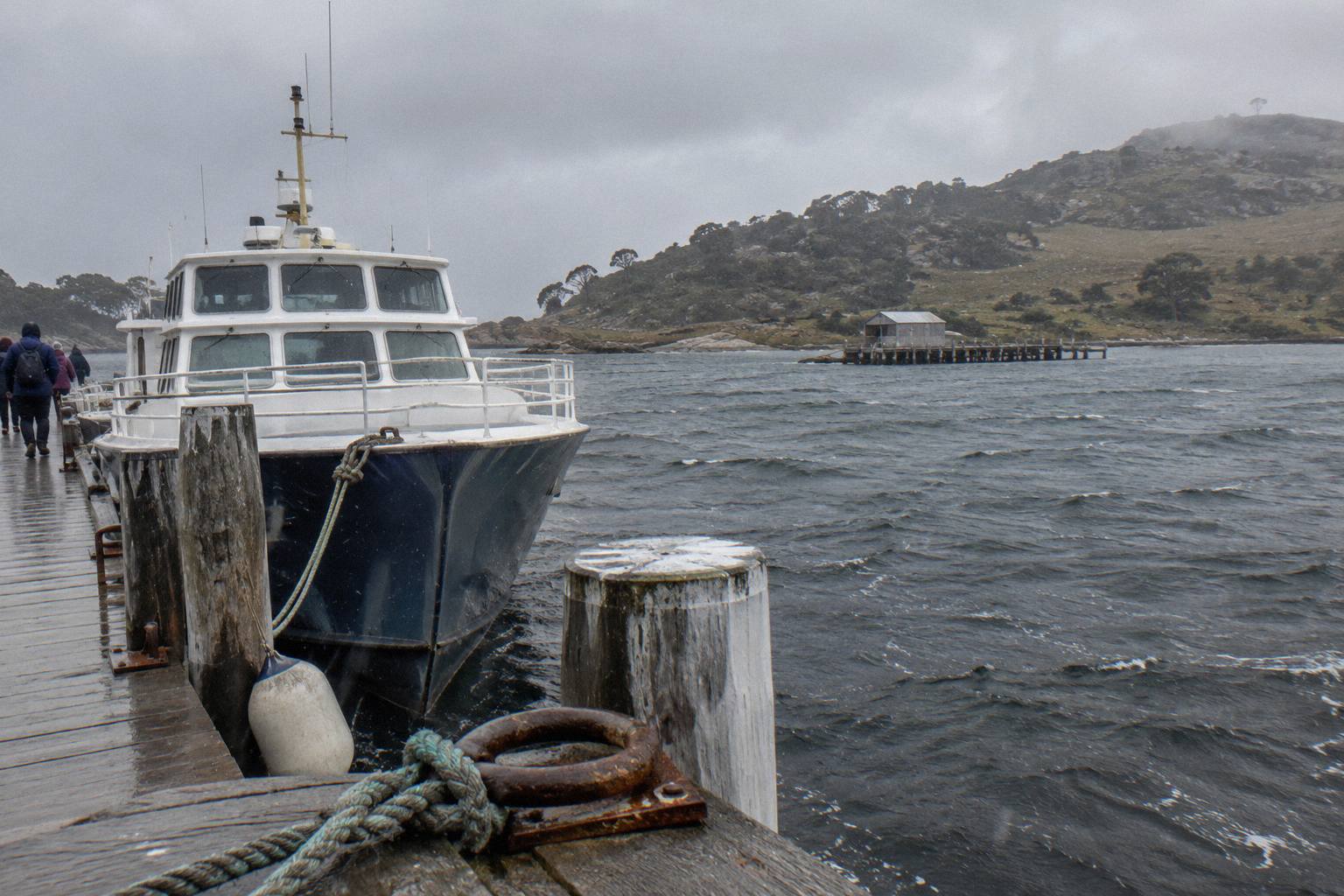
Check-in happens at the Maria Island Gateway building beside the Triabunna wharf, at least 45 minutes before departure, and your park pass and luggage are checked there. In winter the Gateway opens at 9am and closes at 3:30pm, an hour later start than its summer opening. The practical effect is that a 10:00 sailing means arriving at the wharf by around 9:15am at the latest.
| Winter sailing (May to August) | To Maria Island | Back to Triabunna |
|---|---|---|
| First | 10:00am | 10:45am |
| Second | 11:30am | 2:30pm |
| Third | 3:15pm | 4:15pm |
Fares are the same figures winter and summer: a same-day return from A$59.00 for an adult, A$47.50 concession, A$36.50 for a student or a child aged 4 to 16, and infants aged 0 to 3 travel free, with overnight returns from A$70.00 for an adult (fares change; all amounts on this page are Australian dollars). The same-day ticket includes one 7 kg carry-on. A park pass is not included in the fare: a daily pass costs A$24.55 per person arriving on foot, and you can add it at booking or buy it at the Gateway. Full fare details are published on the official ferry fares page.
Booking matters more in winter, not less, because fewer sailings concentrate demand. Passenger numbers can be limited at busy times, sold-out departures cannot take extras, and the skipper may delay or cancel a sailing in bad weather. Live times show when you book, and early booking is the operator's own advice. For the fuller picture on routes, luggage and the drive down, the Triabunna ferry guide covers the mechanics of the crossing in detail.
How Cold Is Maria Island In Winter, Really
Winter on Maria Island is mild rather than brutal: Bureau of Meteorology Maria Island station records show mean daily maxima of 13.1 degrees in June, 12.8 in July and 13.5 in August, with mean minima of 8.2, 7.5 and 7.7 degrees, and the coldest temperature ever recorded at the station is 1.8 degrees. Rain falls on roughly six to seven days a month at the 1 mm threshold, which still leaves the majority of winter days dry.
The station sits at Point Lesueur and has been recording since 2004, so these are averages drawn from close to two decades of local measurements rather than mainland projections. The shape of a winter day matters more than the averages: July nights and mornings are cold, but a 12.8-degree afternoon in still air is comfortable walking weather for anyone with a windproof layer, and the low winter sun on the Painted Cliffs rock platform arrives at a raking angle the summer crowds never see.
| Month | Mean max (C) | Mean min (C) | Mean rain (mm) | Mean rain days 1 mm+ |
|---|---|---|---|---|
| May | 15.3 | 9.8 | 42.8 | 6.1 |
| June | 13.1 | 8.2 | 50.9 | 7.0 |
| July | 12.8 | 7.5 | 31.6 | 6.1 |
| August | 13.5 | 7.7 | 38.9 | 6.8 |
| September | 15.2 | 8.5 | 41.2 | 6.0 |
Two weather notes shape a winter walk more than the temperature. First, the Painted Cliffs are safest within two hours of low tide and only in calm seas, and tide times do not follow the ferry timetable, so a winter visit needs the two checked together. Second, upgrade works at Darlington are under way and showers are unavailable, which matters if you had pictured a warm-up at the end of a muddy day. The underlying data lives with the Bureau of Meteorology station records, and seasonal guidance for choosing between months is gathered in the weather and best-time guide.
Which Trips Still Run In The Winter Months
Yes, guided trips still run through winter. The Winter Day Trip From Hobart is designed for the season, lasting about 8 hours with hotel pickup, a 9:00am start on Davey Street, ferry and park fees, and lunch with a glass of wine included. The Cruise And Walk From Hobart uses the operator's own boat, costs at A$365 per adult on the operator site, is rated 5.0 from 630+ reviews, and offers free cancellation up to 24 hours before. The two cruise-based days do not use the public ferry at all, so their schedule does not hinge on the winter timetable.
That last point deserves emphasis because it is not obvious. Maria Island Cruises runs daily except Christmas Day, on its own vessel from Triabunna, so the Cruise And Walk From Hobart and its Triabunna sister trips keep a seven-day rhythm straight through July. The ferry-based days, the Winter Day Trip and the Active Day Tour, ride the Encounter timetable, which means their operating days exclude Tuesdays and Thursdays in the deep cold. Maria Island Tours keeps the full set of these products side by side, because the winter difference between "own boat" and "public ferry" is a real one for itinerary planning.
| Trip | Start point | Uses | Winter notes |
|---|---|---|---|
| Winter Day Trip From Hobart | Hobart pickup, Davey Street about 9:00am | Public ferry | About 8 hours, ferry and park fees included, lunch with a glass of wine, free cancellation up to 24 hours before |
| Cruise And Walk From Hobart | Franklin Wharf check-in, bus to Triabunna | Operator's own cruise | A$365 per adult on the operator site, 5.0 from 630+ reviews, park entry included, free cancellation up to 24 hours before |
| Active Day Tour From Hobart | Hobart, Davey Street | Public ferry | About 10 hours, about 10 km of walking, 4.8 from 240+ reviews, ferry and park fees included |
Cancellation terms deserve a careful read on the Active Day Tour, because its two booking pages show different terms, one free up to 2 days before and one non-refundable, so check the terms on the booking page you use and rely on nothing else. The Winter Day Trip is more forgiving, with free cancellation up to 24 hours before the start, which matters when a winter forecast can swing inside a week.
The first tour in the table exists precisely for the months you are weighing. If a low-effort winter day with someone else handling the ferry booking, the park pass and the food sounds like the right shape, the Winter Day Trip From Hobart pairs a short day with an early finish back in Hobart.
Is A Winter Day Walk Worth The Effort
For most visitors, yes: the wildlife is as active as at any time of year, the wombats and kangaroos favor the low light of short winter days, whale migration is passing, the Heritage-listed Darlington precinct is open year round, and the trade-offs are shorter daylight, three sailings instead of four and cold mornings around 7.5 to 8.2 degrees. The deciding factor is whether your walking ambitions fit the daylight window rather than the temperature.
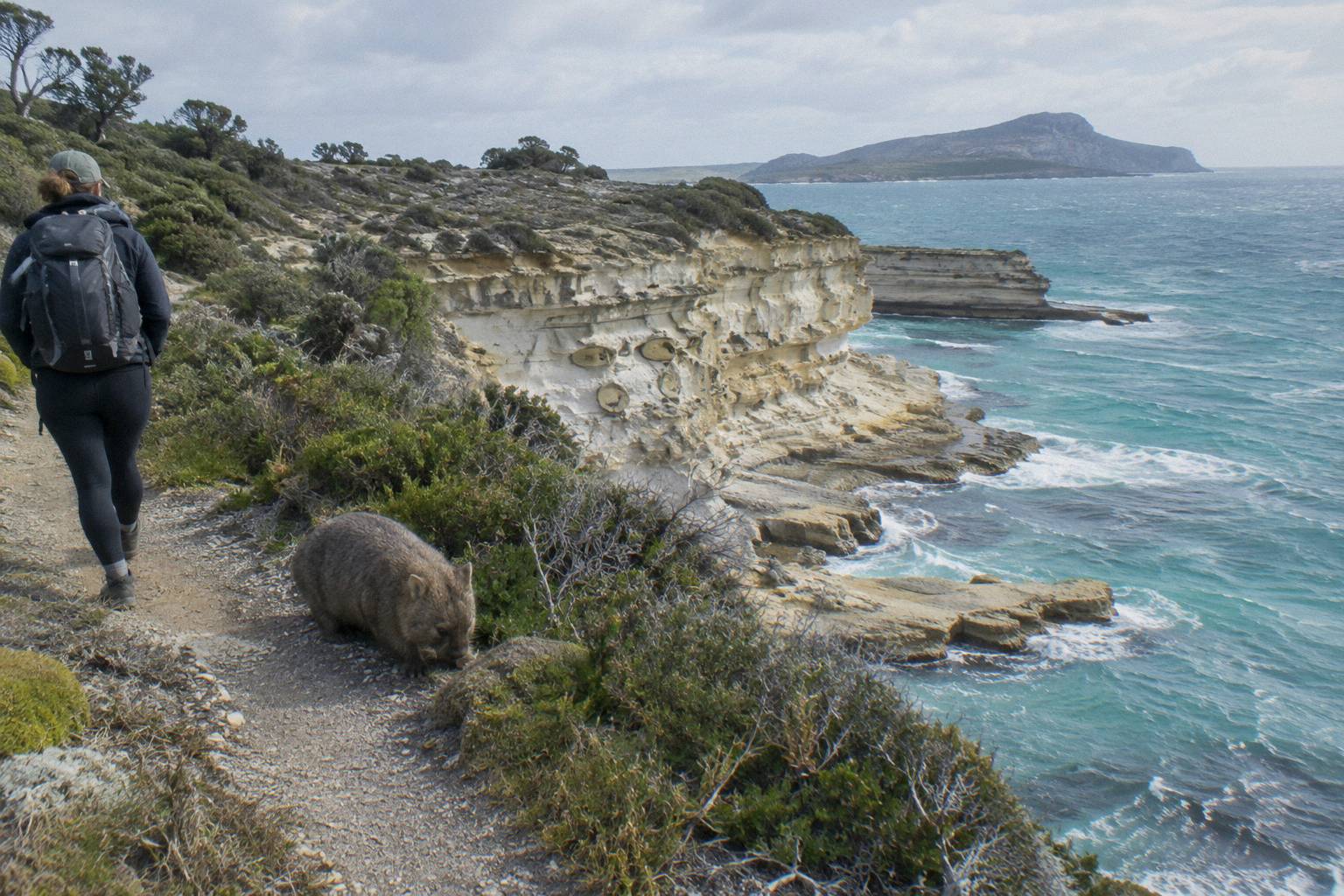
Do the arithmetic on time before anything else. A 10:00 sailing puts you in Darlington before 11:00; the 2:30pm return gives roughly three and a half hours on the island, and the 4:15pm return closer to five. The Darlington Township Walk at 1 km, the Painted Cliffs at 4.3 km return and the Fossil Cliffs at 4.5 km all fit comfortably inside even the shorter window. Bishop and Clerk at 11 km return is a 4 to 5 hour proposition that only fits the later sailing, and only for walkers who move steadily; Mount Maria at 16 km is effectively out of reach on a same-day ticket and generally needs an overnight stay.
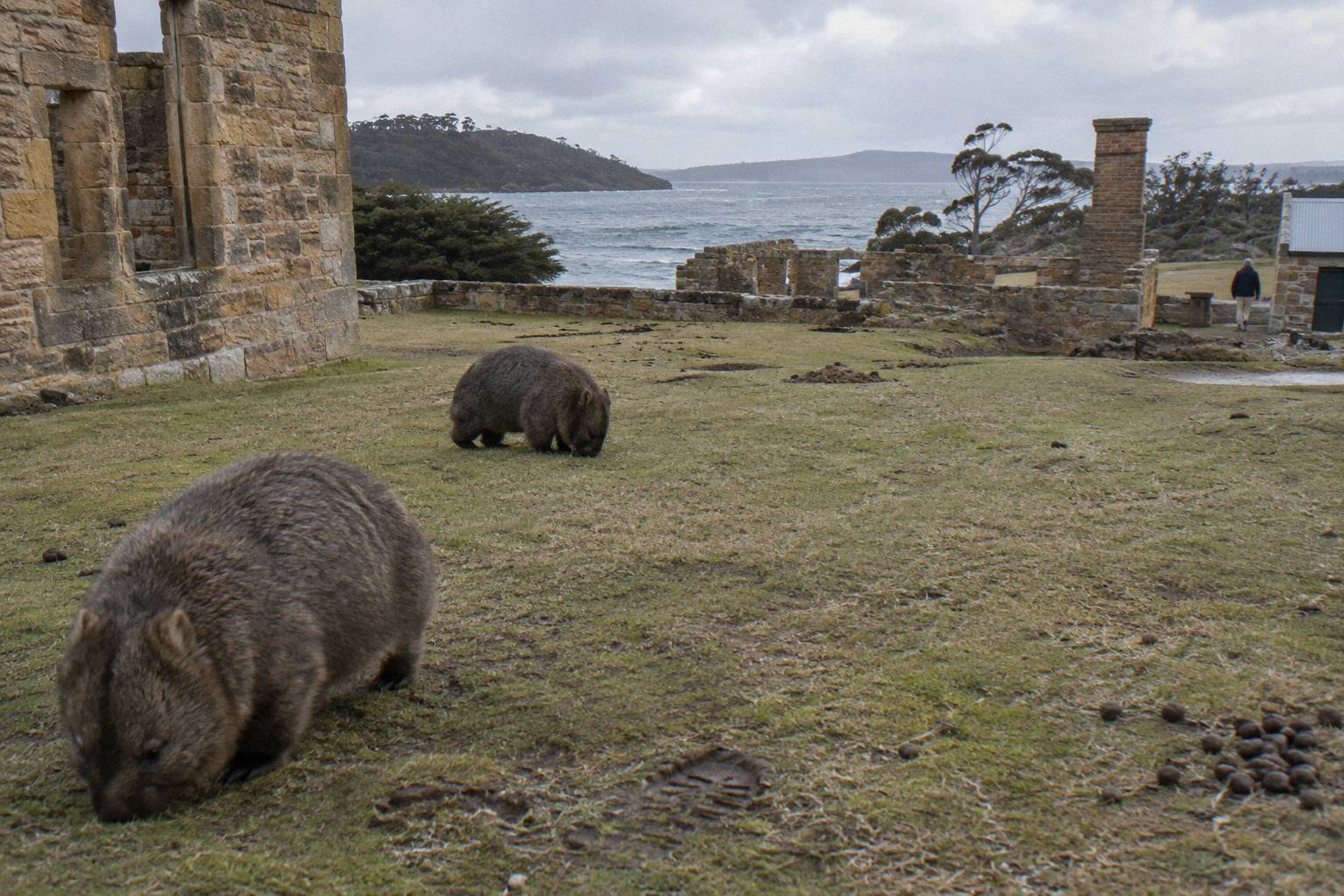
Wildlife is the strongest winter argument. Parks lists forester kangaroos, Bennett's wallabies, pademelons, Flinders Island wombats and Cape Barren geese on the island, and wombats in particular feed in the open more as the day cools, though no sighting of anything is ever guaranteed. The Tasmanian devils here are a small insurance population, 15 animals introduced in 2012, and treating a devil as a likely encounter would be a mistake in any season. The species Parks actually documents, and the sensible expectations for each, are set out by Parks and Wildlife Service on the national park page.
The heritage layer is season-proof. Darlington's convict probation station buildings date from as early as 1824, the settlement joined the Australian Convict Sites World Heritage inscription in 2010, and Parks describes it as the most intact convict probation station in Australia. Rain, within reason, does not close stone walls, and a quiet July Tuesday crowd-free arrival is the kind of experience the peak months simply cannot offer, on the days the ferry runs.
For a fuller weighing of both sides across the whole year, the island worth-visiting discussion covers the argument in every season.
What Trips People Up On A Cold-Weather Visit
The mistakes are predictable and avoidable: booking a Tuesday or Thursday and finding no ferry exists, planning the Painted Cliffs without checking low tide, assuming shops or drinking water exist on the island, packing for the midday maximum instead of the 7.5-degree morning, and forgetting that showers are unavailable while Darlington upgrade works continue. Each one costs a visitor a chunk of their single day, and none takes more than a few minutes to avoid.
The day-of-week trap is the cruellest because it survives careless planning on any booking engine: the winter calendar simply has holes in it. If your heart is set on the 3.5-Hour Scenic Cruise, a boat-only Triabunna trip that runs about 10:00 to 14:00, or on any of the Triabunna cruise-and-walk days, those run on the cruise operator's own vessel and its daily-except-Christmas-Day rhythm, so the weekday trap does not apply. It applies to everything that rides the public ferry, including the Winter Day Trip and the Active Day Tour.
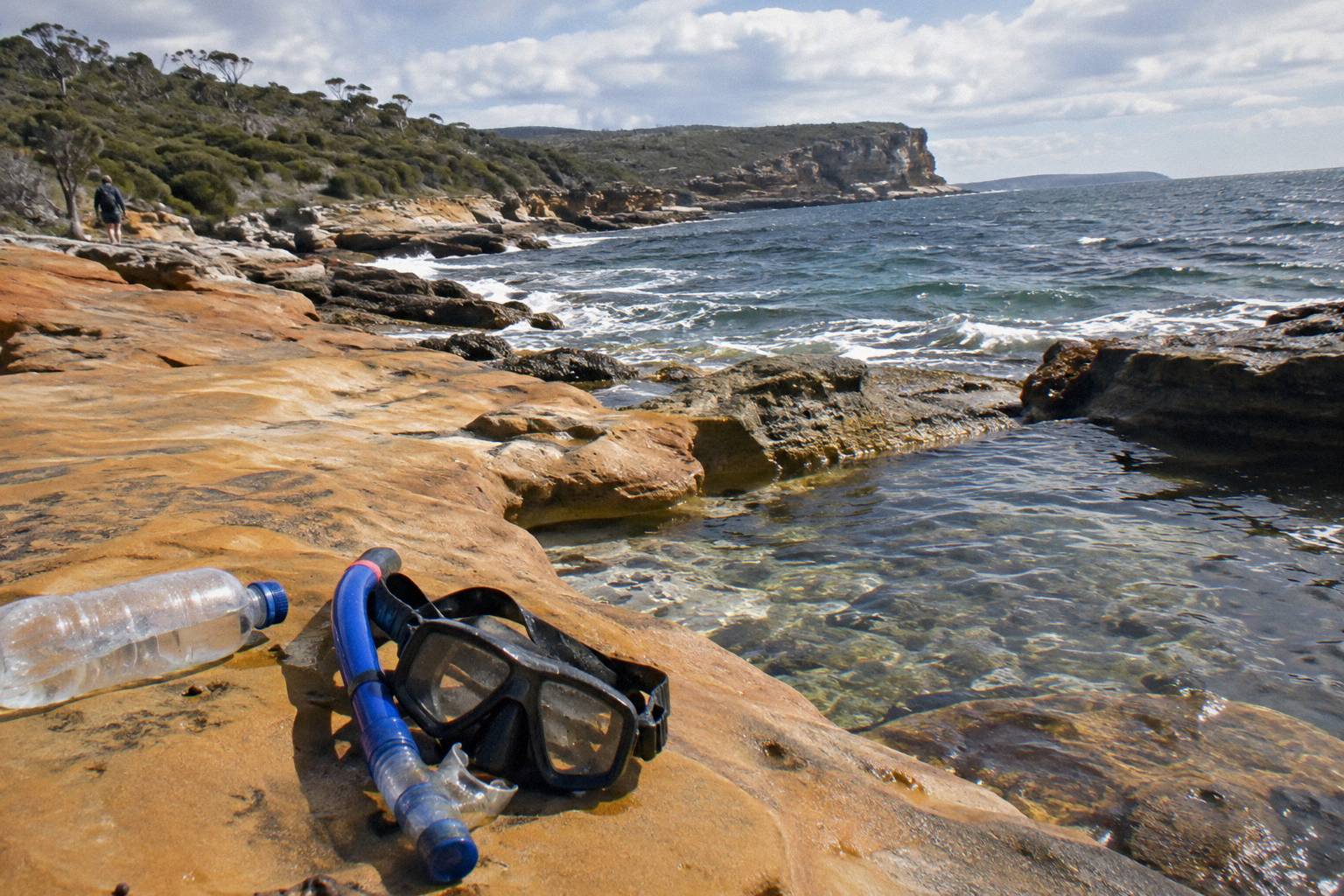
The tide trap comes second. The Painted Cliffs platform is safest within two hours of low tide and only in calm seas, and a winter low that falls at 6am or 9pm is useless to a day visitor. Check the tide table against your sailing times before you commit to the walk as your island priority; the Fossil Cliffs circuit, with fossils about 300 million years old, has no tide dependency and makes a dependable winter fallback.
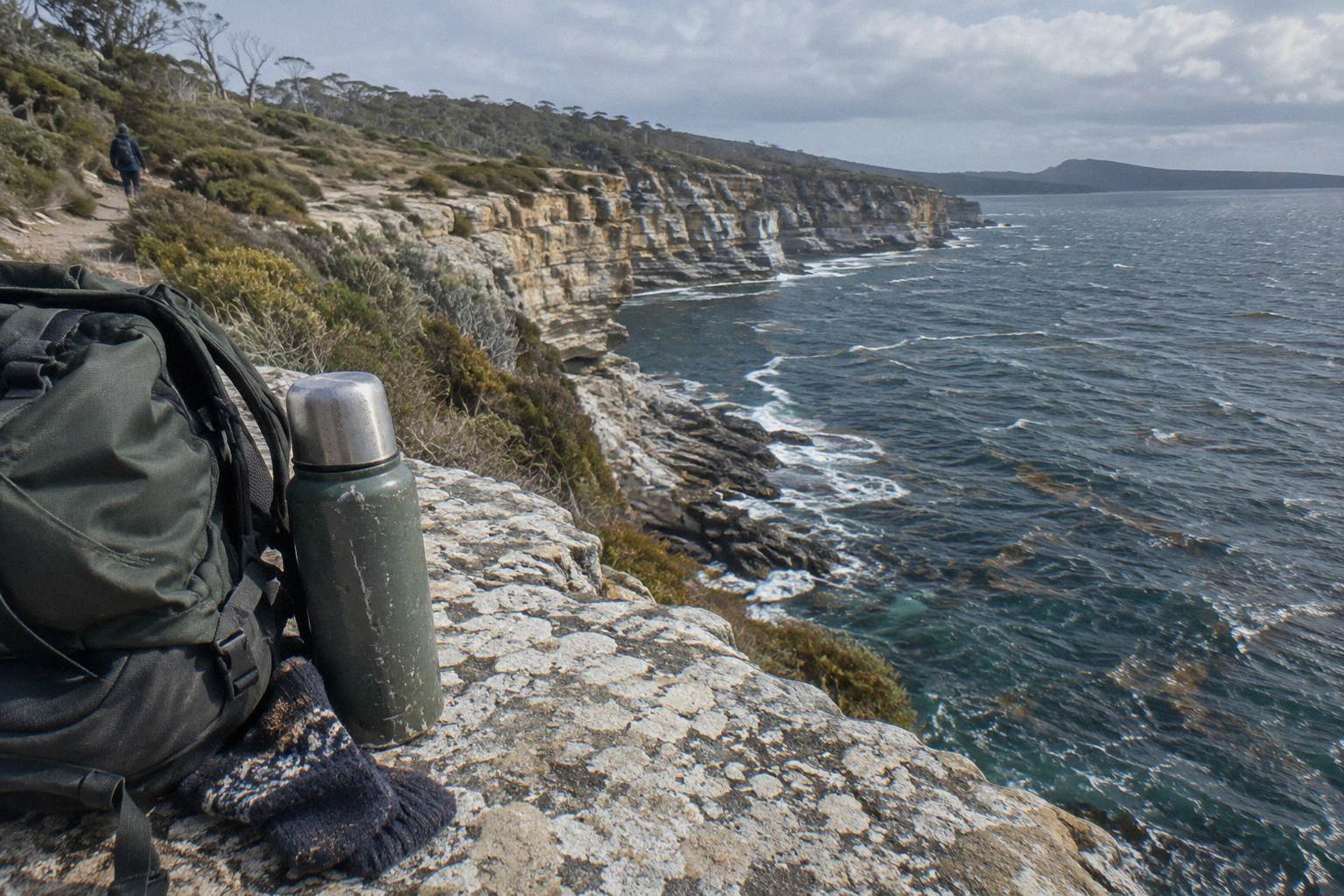
Food and water come third. There are no shops and no cafes on the island, the water is not potable without boiling for one minute, and the only place to buy anything is on the ferry itself, which sells food, drinks, coffee and local beer and wine but is not a substitute for a packed lunch and a full bottle. Winter walking burns energy faster than a summer stroll of the same length; pack as though the walk were one grade harder than it looks on paper.
Layering is the last habit worth naming. A morning that starts at 7.5 degrees and peaks at 12.8 spans a range a single jacket cannot serve, and the Bishop and Clerk track is exposed above the treeline whatever the forecast said at sea level. Windproof outer, warm mid-layer, and something for your hands: that combination covers the record of every winter the station has measured.
For the Active Day Tour, the season also changes the clock: the Tours Tasmania day starts earlier in summer than in winter from its Davey Street base, runs about 10 hours and returns to Hobart, with ferry and park fees included and a small group covering about 10 km of walking. It suits a winter visitor whose walking ambition outgrows the short self-guided circuits but who still wants the ferry logistics handled, and you can check availability alongside the tour details.
Common Questions About Maria Island In Winter
Maria Island Ferry Timetable: What Changes In Winter?
From May to August there are three sailings each way, to the island at 10:00, 11:30 and 3:15pm and back at 10:45am, 2:30pm and 4:15pm, and there are no sailings on Tuesdays or Thursdays. From September to April the timetable expands to four sailings each way and runs every day except Christmas Day.
Is The Ferry Cancelled Often In Winter?
All sailings depend on demand and safe sailing conditions, and the skipper may delay or cancel in bad weather, but no cancellation frequency figure exists for the route. Booking is essential, sold-out departures cannot take extras, and live times show at booking.
How Cold Does Maria Island Get In Winter?
Mean daily maxima run 13.1 degrees in June, 12.8 in July and 13.5 in August, with mean minima between 7.5 and 8.2 degrees, from Bureau of Meteorology Maria Island station records. The lowest temperature ever recorded at the station is 1.8 degrees.
Can You See Whales From The Ferry In Winter?
Possibly. Humpbacks travel northward May to July and southern right whales June to September, and both pass the island's waters, but sightings vary daily and nothing on the water is guaranteed. The cruise operator says whales appear during migration season without promising them.
Which Walks Can You Finish On A Winter Day Trip?
The Darlington Township Walk at 1 km, the Painted Cliffs at 4.3 km return and the Fossil Cliffs at 4.5 km circuit all fit between the 10:00 sailing and either return sailing. Bishop and Clerk at 11 km return takes 4 to 5 hours and only fits the 4:15pm return for steady walkers.
Is There Anywhere To Eat Or Warm Up On The Island In Winter?
No. There are no shops or cafes, the water is not potable without boiling, and showers are unavailable at Darlington while upgrade works are under way. Bring all food and drink for the day; the ferry sells food, drinks, coffee and local beer and wine.