Maria Island Camping: Darlington Campground Versus A Guided Day Trip
A tent site at Darlington costs A$18.00 per site per night and puts you inside the national park after the day crowds leave, but every meal, every litre of water treatment and every kilogram of gear crosses on the ferry with you. A guided day trip costs more up front and returns you to Hobart the same evening.
Short answer
Camping at Darlington is A$18.00 per tent site per night (maximum 6 people), with free gas barbecues, toilets and trolleys at the jetty, and no booking required for the site itself. The ferry crossing is about 30 to 45 minutes each way. A guided day tour from Hobart, by contrast, takes about 10 hours and returns you the same night.
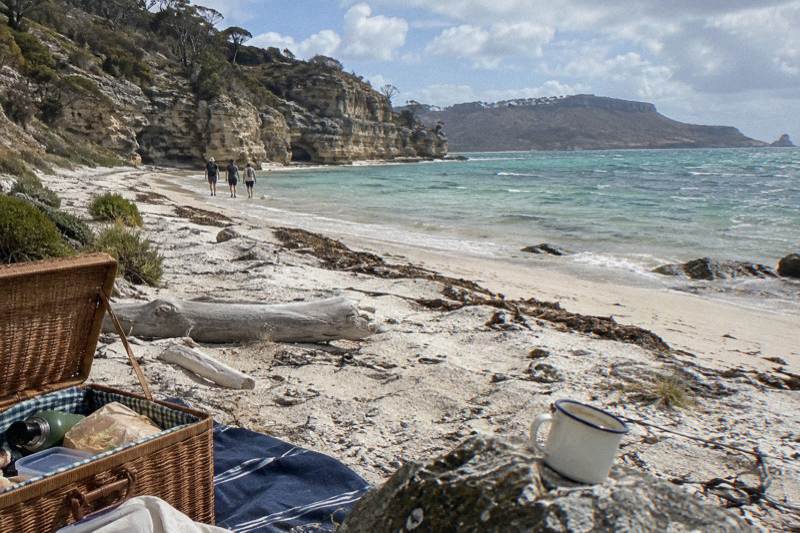
The last ferry of the afternoon pulls away from the Darlington jetty and takes almost everyone with it. What is left behind is a national park with no shops, no cars and no electricity in its oldest buildings, a campground behind the dunes at A$18.00 per tent site per night, and a quiet that day visitors never quite meet. Camping on Maria Island is cheap in dollars and expensive in planning: every meal, every piece of bedding and every drop of drinking water has to cross on the ferry with you, because the island sells none of it. A guided day tour asks for the opposite trade. The Active Day Tour From Hobart bundles the ferry and park fees, walks about 10 km with a small group at a moderate pace, and has you back in Hobart with nothing carried but a daypack. All amounts below are Australian dollars, and fares and fees change.
What Camping At Darlington Actually Involves
Camping at Darlington means a tent site behind the coastal dunes at A$18.00 per site per night for up to six people, with free gas barbecues under a covered area, toilets nearby and trolleys at the jetty to move your gear. There is no shop, no cafe and no electricity at the sites, tap water is not potable without boiling, and no rubbish bins exist anywhere, so everything you carry in leaves with you.
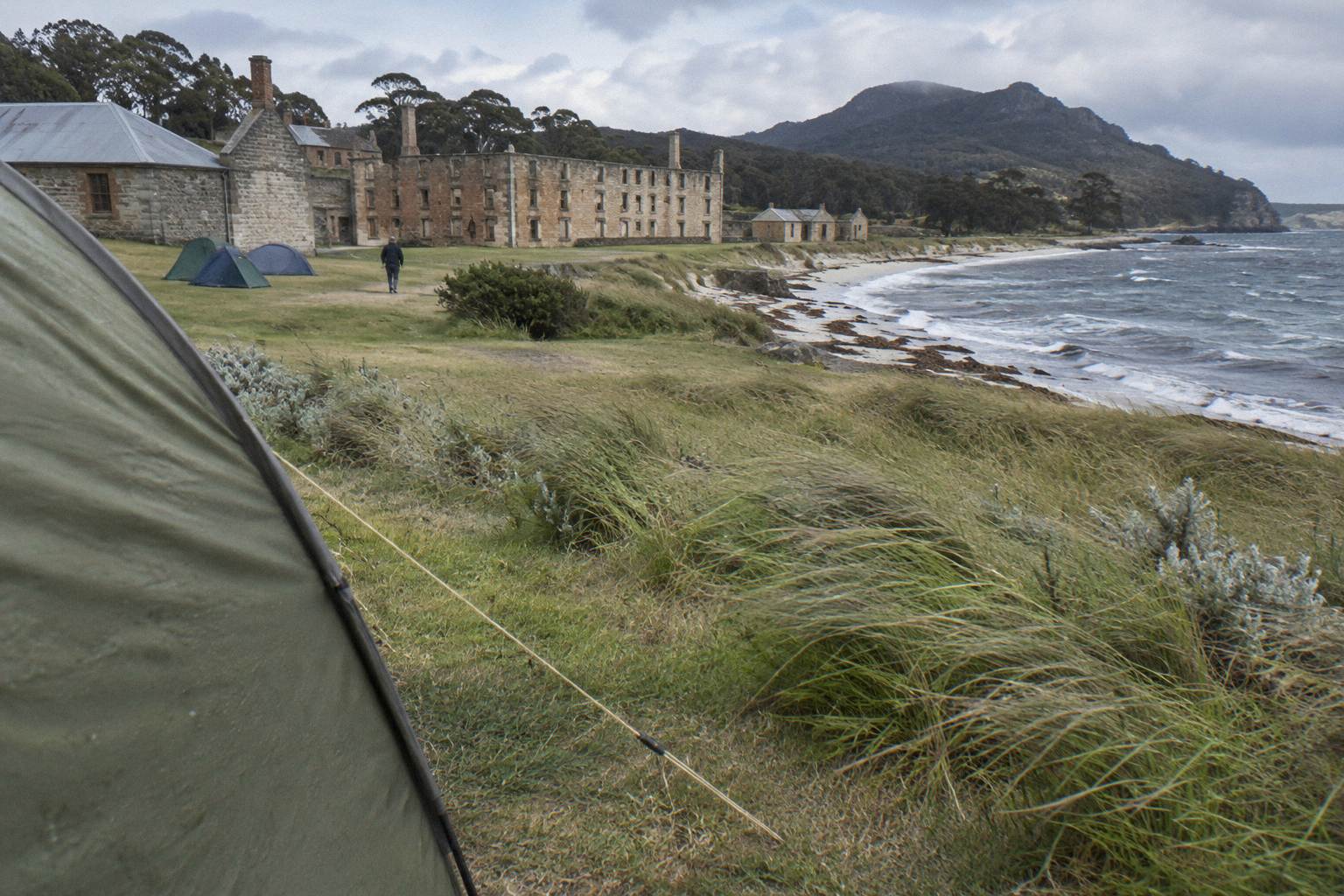
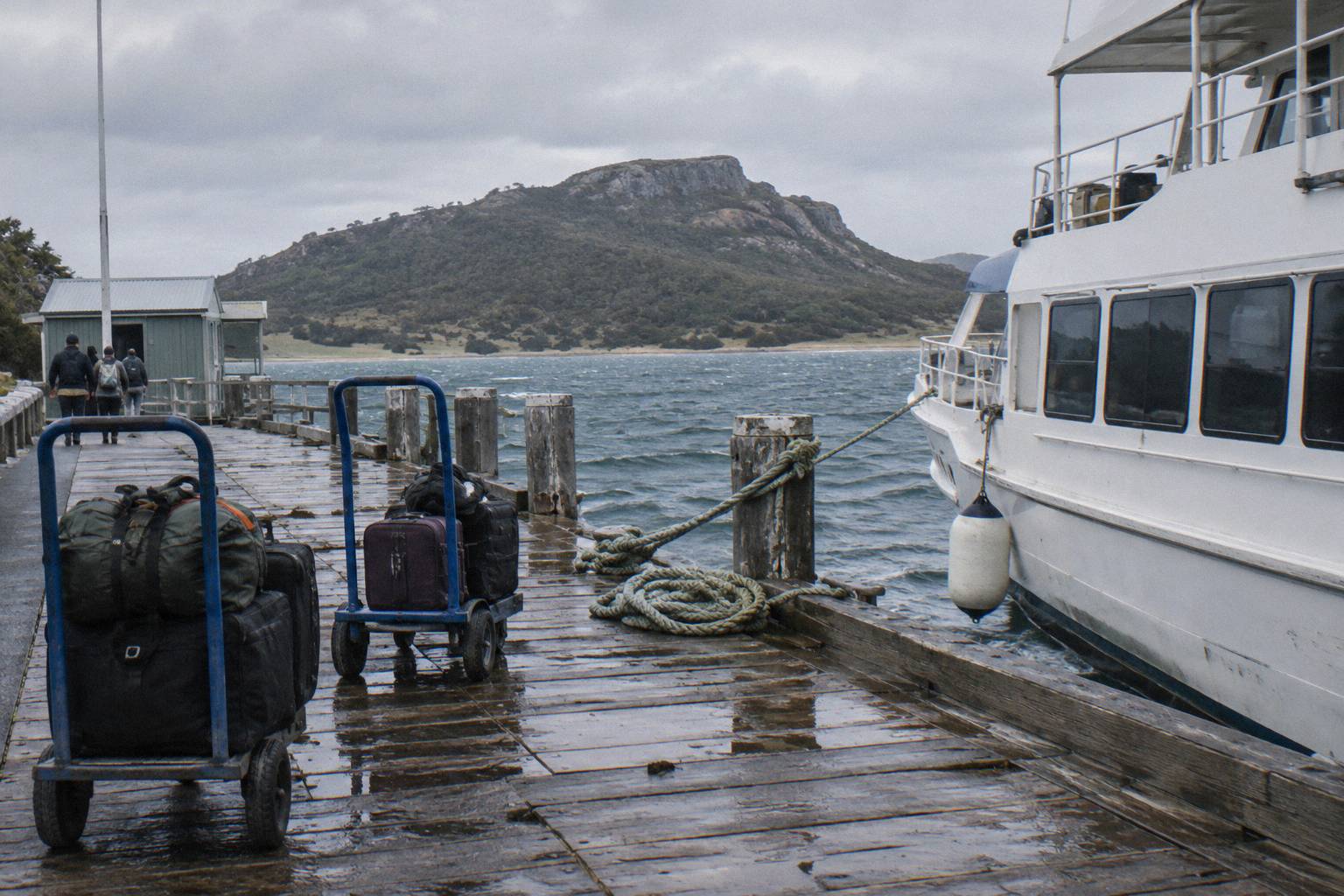
The campground sits a short walk from where the ferry berths, sheltered behind the dunes that separate the tent sites from the shore. Parks and Wildlife describes tent camping behind the dunes, a covered barbecue area with free gas barbecues, toilets and trolleys at the jetty. Those trolleys matter more than they sound: the ferry's luggage limits are strict, and a family's worth of tents, sleeping bags and food moves far faster on wheels than on shoulders. Sites take up to six people, and the fee is charged per site rather than per person, which makes a full tent dramatically cheaper per head than a family of ferry day fares.
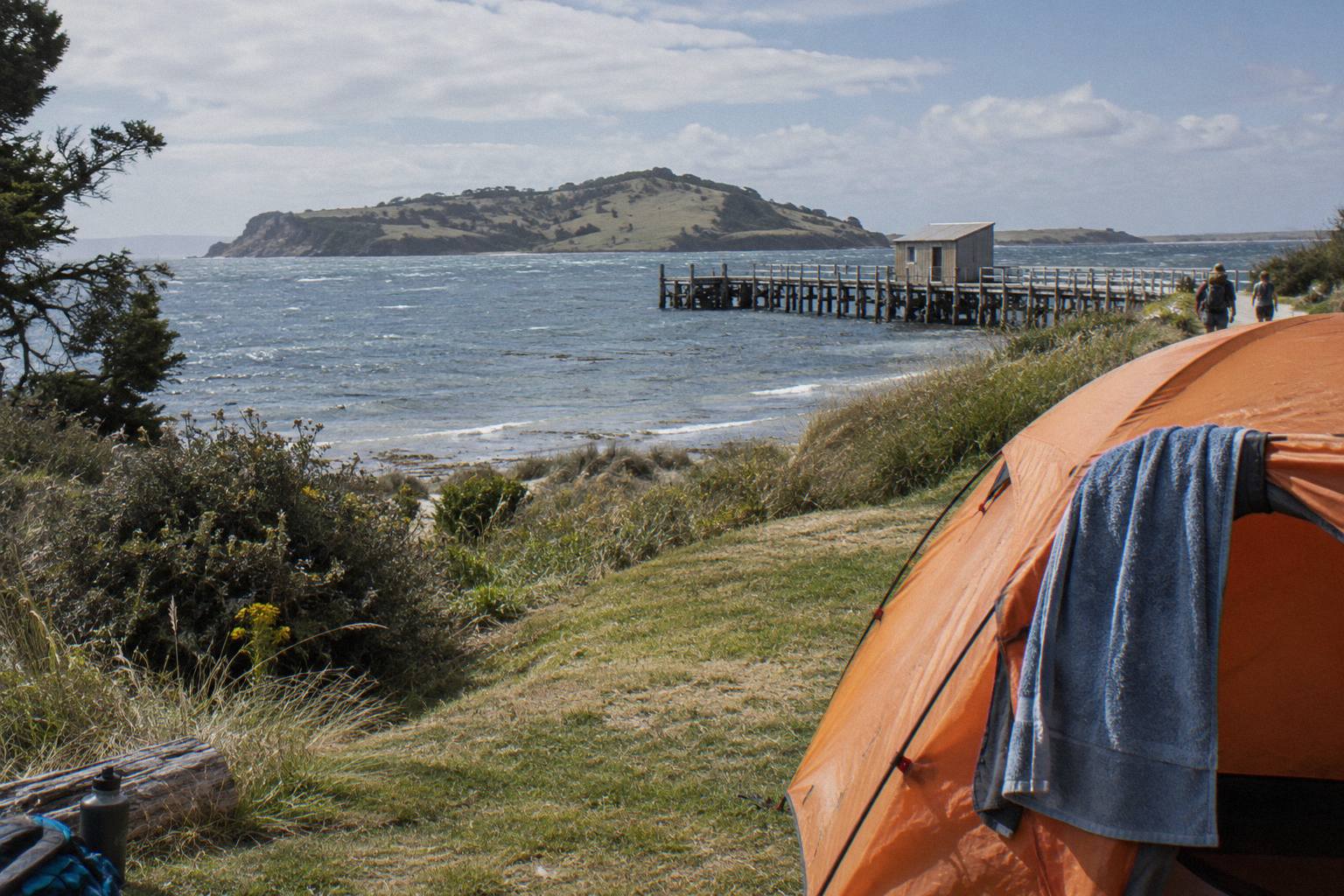
What the campground does not have shapes the whole trip. There are no shops and no cafes on the island, so every meal is carried in. Water from the taps is not drinkable as it comes: it must be boiled for one minute or purified, and the signed taps are limited, found at the Darlington barbecue shelter and the Mess Hall. Showers are unavailable while upgrade works run at Darlington, and Parks has not described those works as finished, so plan on going without. Rubbish bins do not exist either; carry out everything you carry in.
The works themselves are worth understanding before you book. Water, wastewater and electrical upgrades are under way in Darlington, which is why the showers are off, and the ferry operator and Parks give different completion windows for them. Nothing about the campground is closed by the works, but a trip sold to you as a shower-and-hot-water weekend will disappoint. Treat the site as a back-to-basics camp: toilet, barbecue, tent, stars.
A seasonal campfire ban also applies on the island. That means no campfire cooking and no fire-based warmth, so the free gas barbecues under the covered area are the only cooking heat at Darlington unless you bring your own stove. Check the Parks Maria Island page for the current fire restrictions before you pack.
| Item | Camping Reality At Darlington |
|---|---|
| Tent site fee | A$18.00 per site per night, up to 6 people |
| Booking the site | No camping booking required, fees apply |
| Cooking | Free gas barbecues in a covered area; no campfires during the seasonal ban |
| Toilets | Yes, near the campground |
| Showers | Unavailable while upgrade works run |
| Drinking water | Tap water must be boiled one minute or purified |
| Rubbish | No bins; carry out everything |
| Electricity | None at the sites |
| Shops or cafes | None; bring all food |
What A Night On The Island Costs Versus A Day Visit
An overnight stay uses an adult return ferry ticket from A$70.00 plus A$18.00 per tent site per night, against a same-day adult ferry fare from A$59.00, and neither includes the park pass, which starts at A$24.55 per person arriving on foot. A guided day tour folds the ferry and park fees into one price, which shows on the booking page, and avoids every luggage question entirely.
Look at the individual line items for two adults camping one night. Each overnight ferry return is A$70.00 per adult; the tent site adds A$18.00 per site; each daily park pass is A$24.55 per person. The same two people on a same-day ferry would each pay the A$59.00 adult fare instead, on top of the same passes. Camping buys the sunset, the dawn wildlife and the emptied-out campground for that difference, which is a genuinely personal call rather than a bargain.
The park pass is the piece people forget most often. A valid parks pass is required for entry, is checked at the Gateway before you sail, and can be added at online booking or bought at the Gateway building itself. Children under 5 enter free, a holiday pass valid across all Tasmanian parks for up to two months costs A$49.20 per person arriving on foot, bus or cycle, and the Seniors Card concession is 20 percent. If you already hold a current annual pass, none of the daily figures apply to you.
Guided days change the equation structurally rather than marginally. The Active Day Tour From Hobart includes the ferry and park fees in its one price, rated 4.8 from 240+ reviews, and its price for your date shows on the booking page. The Cruise And Walk From Triabunna, rated 5.0 from 230+ reviews, uses the operator's own boat with the landing and park fee included. And the Grand Picnic Day Walk, a small-group day of about 10 hours with a maximum of 8 guests, includes land and sea transport plus park fees. None of them asks you to boil water or carry a tent.
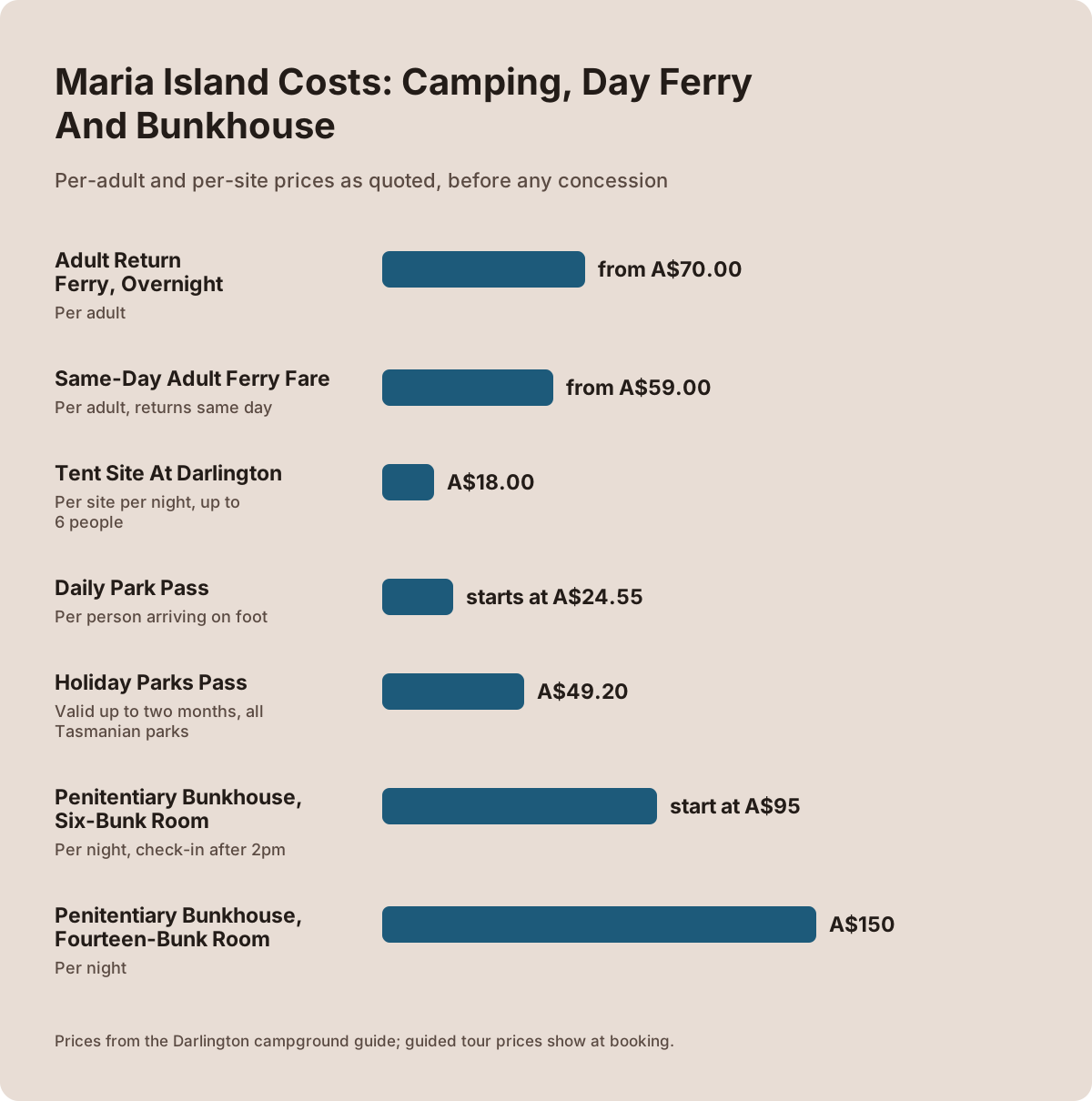
There is a middle option that is neither tent nor tour: the Penitentiary bunkhouse in Darlington, covered in detail in the guide to the Maria Island Penitentiary bunkhouse. Its rooms start at A$95 per night for a six-bunk room and A$150 for the fourteen-bunk room, with no electricity and check-in after 2pm. That is a roof and a mattress for roughly five to eight times the tent fee, and it books out up to six months ahead, so it needs earlier commitment than the campground does.
If the tent option still appeals after the sums, the money was never the reason to camp anyway. The reason is time: the hours between the last ferry's departure and the first one back the next morning, when the campground empties of everyone but the people who chose to stay.
Camping Versus A Guided Day Trip: The Real Effort Trade
Camping trades a night of comfort for about eighteen unsupervised hours on the island, while a guided day trip trades that freedom for zero logistics: one booking covers transport, fees and route-finding. The Active Day Tour walks about 10 km with a small group and returns to Hobart; camping leaves the itinerary entirely to you across two days.
The honest comparison is not dollars, it is effort and what you get for it. A camper leaving Hobart early drives 86 km to Triabunna, about 1 hour 15 minutes via the Tasman Highway, checks in at the Gateway at least 45 minutes before departure, crosses in about 30 to 45 minutes, hauls gear by trolley to a site, sets up, then plans walks, meals and water around a timetable with fixed return times. Multiply every decision by the fact that there is no shop to rescue a forgotten stove. The reward is a second dawn on the island and the long evening light with almost nobody there.
A guided day compresses all of that into one transaction. The Active Day Tour From Hobart starts on Davey Street, earlier in summer than in winter, runs about 10 hours, includes the ferry and park fees, and walks about 10 km at a moderate fitness level in a small group. The Grand Picnic Day Walk does its own version with hotel pickup and a maximum of 8 guests over about 10 hours. Nobody boils water, nobody checks a tide chart at dawn, and nobody carries a tent. What you give up is the overnight itself.
| Factor | Camping At Darlington | Guided Day Trip From Hobart |
|---|---|---|
| Time on island | Overnight, about 18 to 20 hours | About 10 hours door to door |
| Transport to arrange | Drive or shuttle to Triabunna, ferry booking | Included, Franklin Wharf check-in |
| Park pass | A$24.55 per person daily, bought separately | Included in the tour |
| Walking plan | Yours to build around ferry times | Operator leads, about 10 km on the Active Day Tour |
| Meals | All carried in, gas barbecues only | Depends on the trip; the Grand Picnic includes transport and fees |
| Luggage | Carry-on plus two pieces to 17 kg overnight | Daypack only |
| Cancellation | Ferry terms; sailings can be delayed by weather | Active Day Tour terms differ between booking pages, so check the one you use |
| Sleep | Tent behind the dunes | Your own bed the same night |
Weather sits on both sides of the ledger. The skipper may delay or cancel a ferry sailing in bad weather, and every sailing depends on demand and safe conditions. A camper whose return sailing slips loses a night of mainland plans; a day tripper loses the day. Neither option controls the sea, so build slack into whichever you choose, and see the guide to what to pack for a Maria Island day tour for the layering logic that applies doubly to campers.
Luggage Rules That Decide How You Camp
A same-day ferry ticket includes one carry-on of about 7 kg, while an overnight return ticket allows that carry-on plus two pieces of luggage up to 17 kg each, and a bicycle travels as freight from A$20.00 with panniers removed and checked separately. Extra luggage is charged per piece, so an over-packed camp pays twice: once in fees and once at the trolley.
The jump from the 7 kg carry-on to the overnight allowance is the single biggest practical difference between the two kinds of trip, and it defines what kind of camping is possible. Two 17 kg pieces per person will carry a four-season tent, sleeping bags, bedding, a stove, food for two days and a water filter without drama. They will not carry a camp kitchen, a folding table and a case of wine, and the freight charges reward restraint. Pack as if every additional kilogram will be walked, trolleyed and re-stowed twice, because it will.
| Ticket Or Item | Allowance | Notes |
|---|---|---|
| Same-day return | One carry-on about 7 kg | The day-tripper baseline |
| Overnight return | Carry-on plus two pieces up to 17 kg | The camper's allowance |
| Extra luggage | Charged per piece, up to 17 kg | Keep the count low |
| Bicycle | From A$20.00 freight, max 15 kg | Panniers removed, checked as luggage |
| Own e-bike | Regular freight rates | No charging on the island |
| E-scooter | Not permitted | No exceptions |
| Car | Not permitted | The island has no vehicle access |
Food planning deserves its own sentence in your notes. There are no shops, the Coffee Palace is a museum rather than a cafe, and the water needs boiling, so the practical menu is food that needs no refrigeration and either no cooking or the free gas barbecue. The ferry does sell food, drink, coffee and local beer and wine on board, which covers the crossing and a small treat, but plan as if it will not cover a night. Campers who treat the ferry's kiosk as a supply run come back disappointed.
One more thing worth saying plainly: a camper does not need to give up the guided experience altogether. Some visitors camp at Darlington one night and take the Cruise And Walk From Triabunna on the other day, since it starts from 21 Vicary Street in Triabunna with check-in around 9:30am and includes the landing and park fee. That hybrid needs a car left in Triabunna, where parking is free per the operator, but it splits the island into a wild night and a guided day.
Free Campsites At Frenchs Farm And Encampment Cove
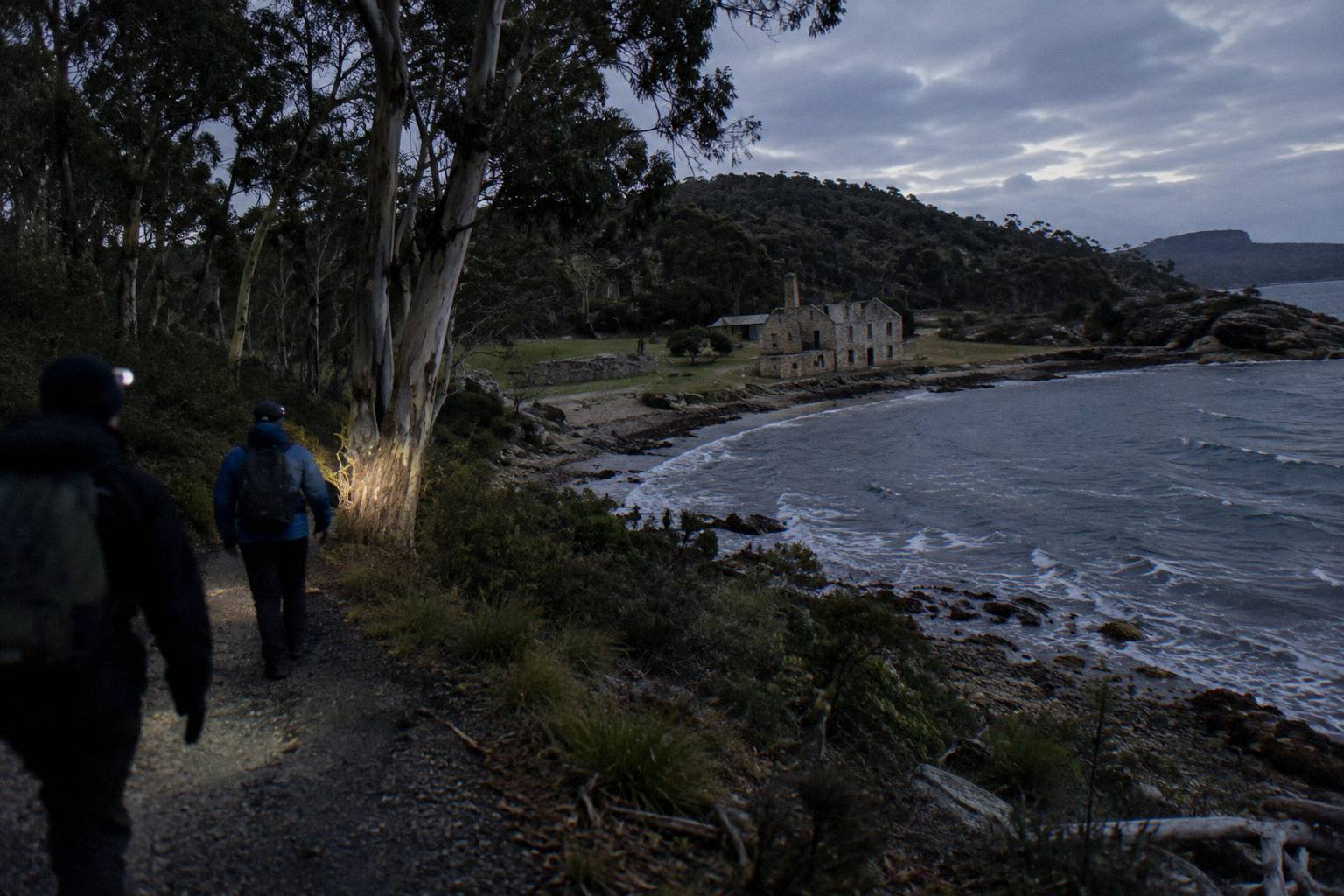
Beyond Darlington, the ferry operator names free campsites at Frenchs Farm and Encampment Cove, reached on foot along tracks of 22 km and 26 km return respectively from the township. These sites have no fees and no facilities to speak of, and the walk in is the point: they suit campers who want distance and quiet more than barbecue shelters and trolleys.
Frenchs Farm is a 6 hour walk, 22 km return, Grade 3, and Encampment Cove is an 8 hour walk, 26 km return, also Grade 3. Those figures come from the Parks walking times, and they matter because a night at either site is a walking trip with camping attached, not a campground with walks nearby. Everything said about carrying in food and water applies with interest, because there is no barbecue shelter and no trolley at the far end, only what you carry.
The comparison with Darlington is therefore not really about price. Darlington at A$18.00 per site buys proximity, toilets, barbecues and the ferry at your door. The free sites buy isolation and a genuine multi-hour hike each way. Families and first-time island campers belong at Darlington; the Frenchs Farm option belongs to walkers who already know their pack weight and their pace, and who have read the guidance on Maria Island walks, guided and self-guided before committing to the distance.
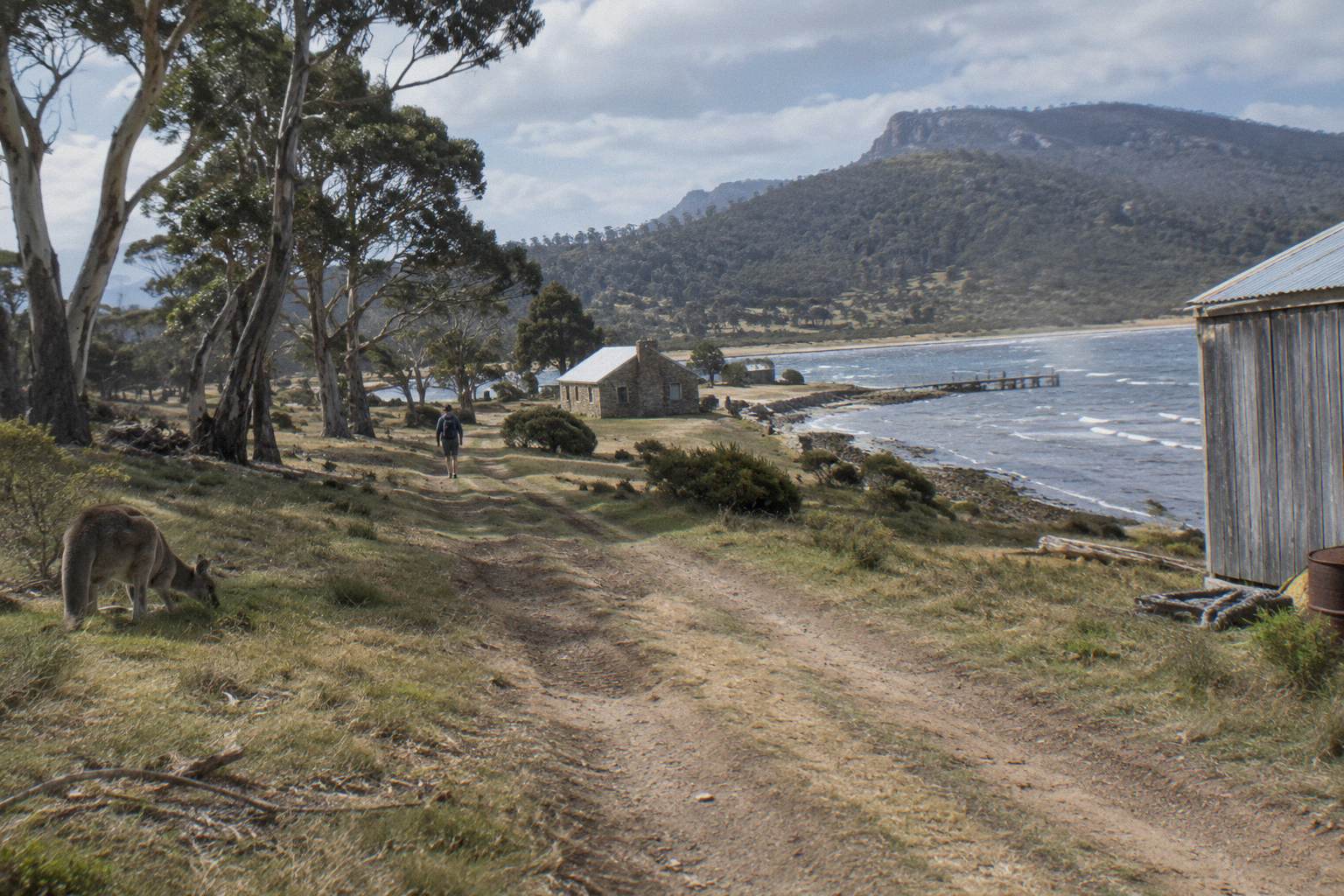
A word on wildlife around the remote sites. The island's animals are unbothered by people and present across the whole park, from pademelons and Bennett's wallabies to forester kangaroos and Cape Barren geese, and Parks asks visitors to keep 2 m from all wildlife and never to feed them. Store food accordingly at any campsite, secured rather than left in an open tent, less for the animals' safety around your dinner than for the habit feeding creates. Sightings of anything, including the famous wombats, are never guaranteed, so camp for the place rather than for a promised encounter.
Ferry Timetables And Getting Your Tent To The Island
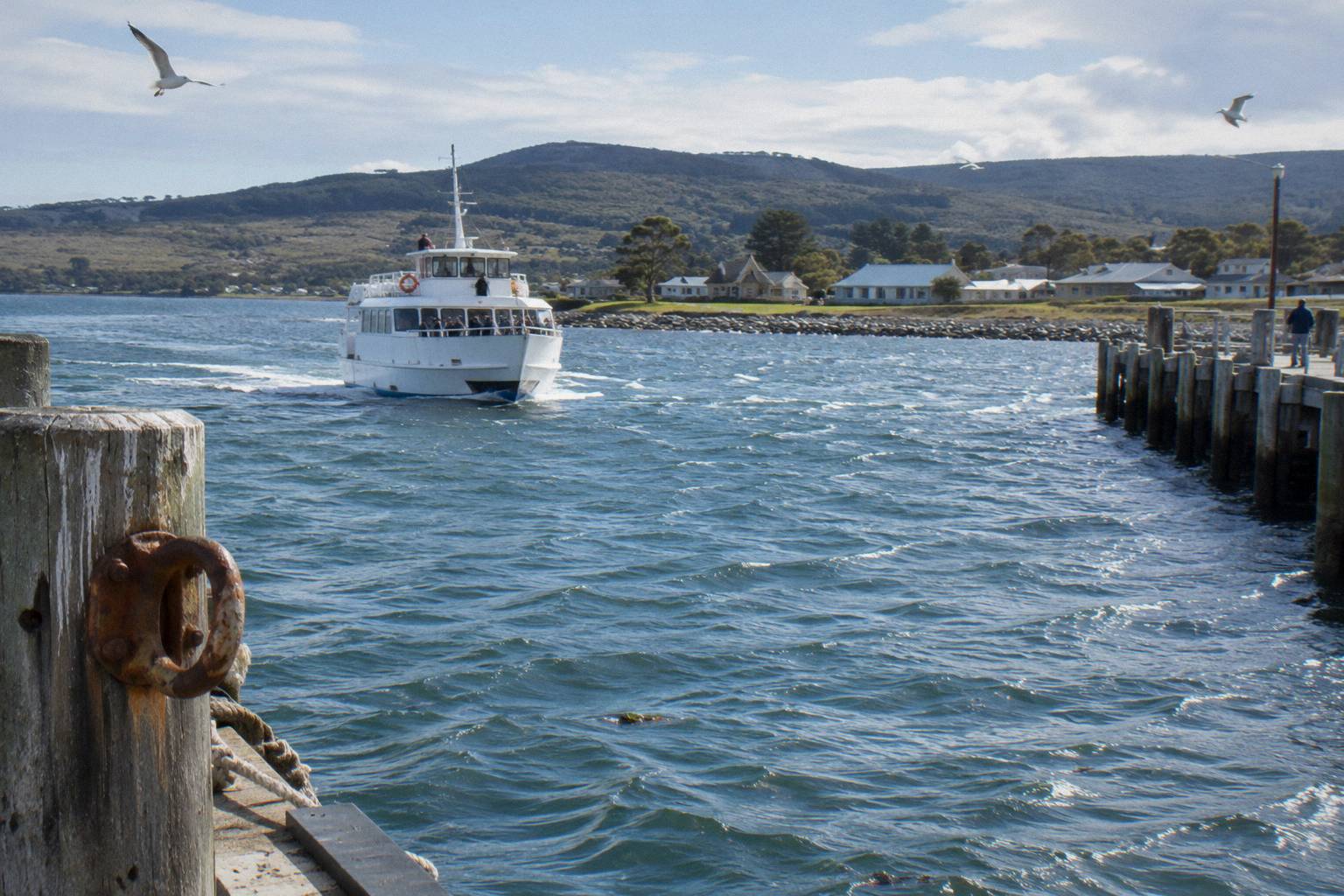
From September to April the ferry runs every day except Christmas Day, with sailings to the island at 8:30, 10:00, 11:30 and 3:15pm and returns at 9:15 and 10:45am, 2:30 and 4:15pm; from May to August there are three sailings each way and none on Tuesdays or Thursdays. Booking is essential, check-in at the Gateway closes 45 minutes before departure, and every sailing depends on demand and safe conditions.
Those winter gaps decide some trips by themselves. A Tuesday-to-Wednesday winter camp is impossible under the timetable, and a camper who sails out on a Monday cannot come back until Thursday, which turns a one-night plan into a three-night one. In summer the four sailings each way give you a late-afternoon arrival and a mid-morning departure, which fits a classic one-night camping structure neatly: out on the 3:15pm, home on the 10:45am, with the long evening and early morning as the payoff. Live times show at booking, so treat the printed timetable as the frame rather than the promise.
The Gateway building beside the Triabunna wharf is where the journey actually starts. It is open 7 days, 7:45am to 3:30pm from September to April and 9am to 3:30pm from May to August, and parks passes and luggage are checked there. Arrive with your pass already bought online and your luggage already inside the allowance, and the check-in is short. The full logistics of the crossing, the fares and the shuttle from Hobart are laid out in the guide to the Maria Island ferry from Triabunna.
For campers without a car, the shuttle question is bigger than it looks. A dedicated daily shuttle runs from Brooke Street Pier in Hobart to Triabunna most months of the year, with times and the price shown at booking, and Triabunna parking is free for those who drive the 86 km themselves. But a tent, two 17 kg bags and a bicycle freight booking make any transfer more complicated than a daypack does, so confirm the shuttle's luggage policy before you build a camping trip around it.
One guided format intersects with this timetable in a useful way. The Grand Picnic Day Walk from Hobart runs about 10 hours with hotel pickup and a Davey Street start around 8:15am, includes land and sea transport and park fees, and keeps its group to a maximum of 8. It shows what a fully managed day looks like against the camper's self-managed two, and free cancellation up to 24 hours before start removes some of the planning risk on the guided side.
What Trips People Up When They Camp Here
Most camping disappointments on the island trace to four causes: assuming the showers work, planning around a Tuesday or Thursday winter sailing that does not exist, packing past the luggage allowance, and trusting tap water without boiling it. Each is avoidable with one piece of knowledge, and none is obvious from the shoreline on arrival day.
The shower assumption is the most common. Upgrade works are running at Darlington, showers are unavailable for their duration, and neither the ferry operator nor Parks describes the works as finished. Campers who plan to wash off a day of walking find a campground that cannot host that plan. The works also touch water and electrical systems, so treat every facility beyond toilets and barbecues as something to verify rather than assume.
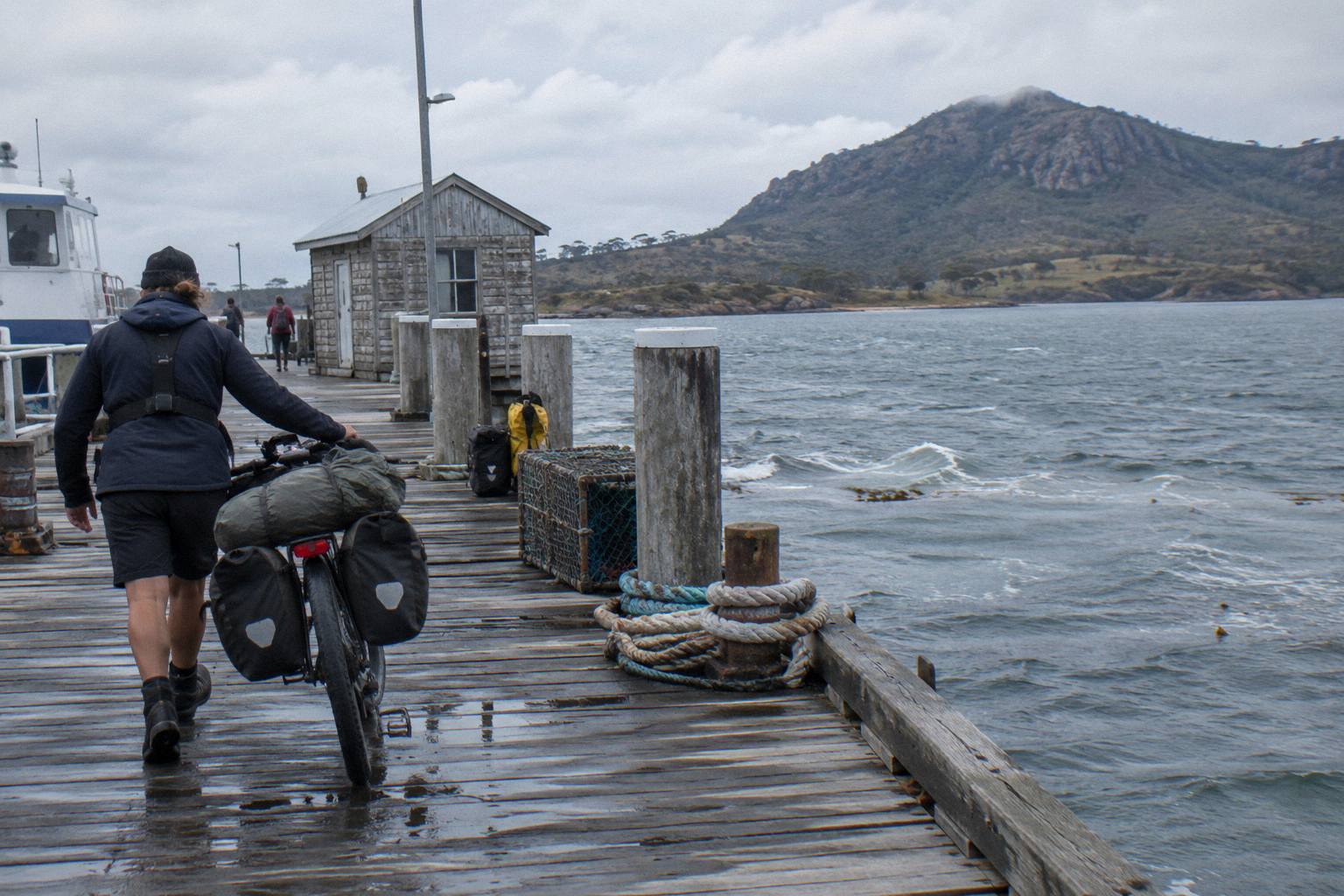
The timetable assumption bites in winter. From May to August there are no Tuesday or Thursday sailings at all, and the remaining schedule runs three crossings each way. A camper can strand themselves an extra two nights without ever missing a boat, simply by choosing the wrong weekdays. Cross-check your dates against the seasonal schedule before booking anything non-refundable, and remember the skipper can delay or cancel in bad weather regardless of season.
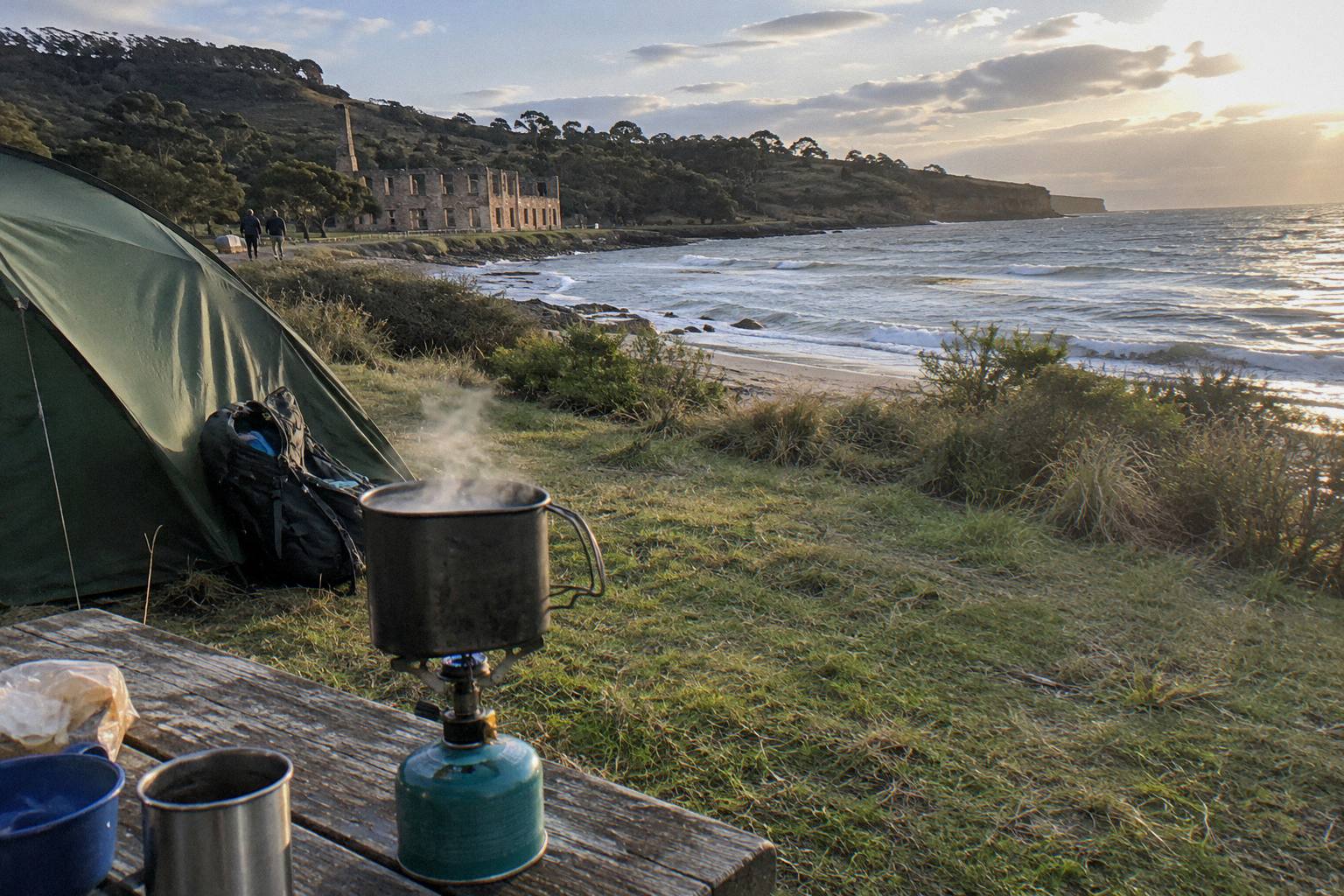
The luggage and water assumptions are quieter but just as decisive. Freight charges apply past the allowance, a bicycle is its own freight line from A$20.00, and panniers come off and travel as checked luggage. Water from the taps must be boiled for one minute or purified before drinking; limited signed taps exist at the barbecue shelter and the Mess Hall, and relying on a filter you have never used is a poor place to test it. None of these problems are expensive to solve in Hobart, and all of them are expensive to solve on an island with no shop.
Finally, the wildlife expectation needs managing rather than the animals do. The island's devils are a small insurance population of 15 introduced in 2012, and wombats, seals and whales are all possible rather than scheduled. Camp because the place rewards a night, not because a sighting is owed to you.
Who Should Camp And Who Should Book A Day Trip Instead
Camp if you want the island after 4:15pm and before 8:30am, can carry your kitchen and bedding within two 17 kg pieces, and accept no showers and no shop; book a guided day if you want the walks, the commentary and the fees handled, and value your own bed that night. The two options are not competitors, they are different products that happen to share a shoreline.
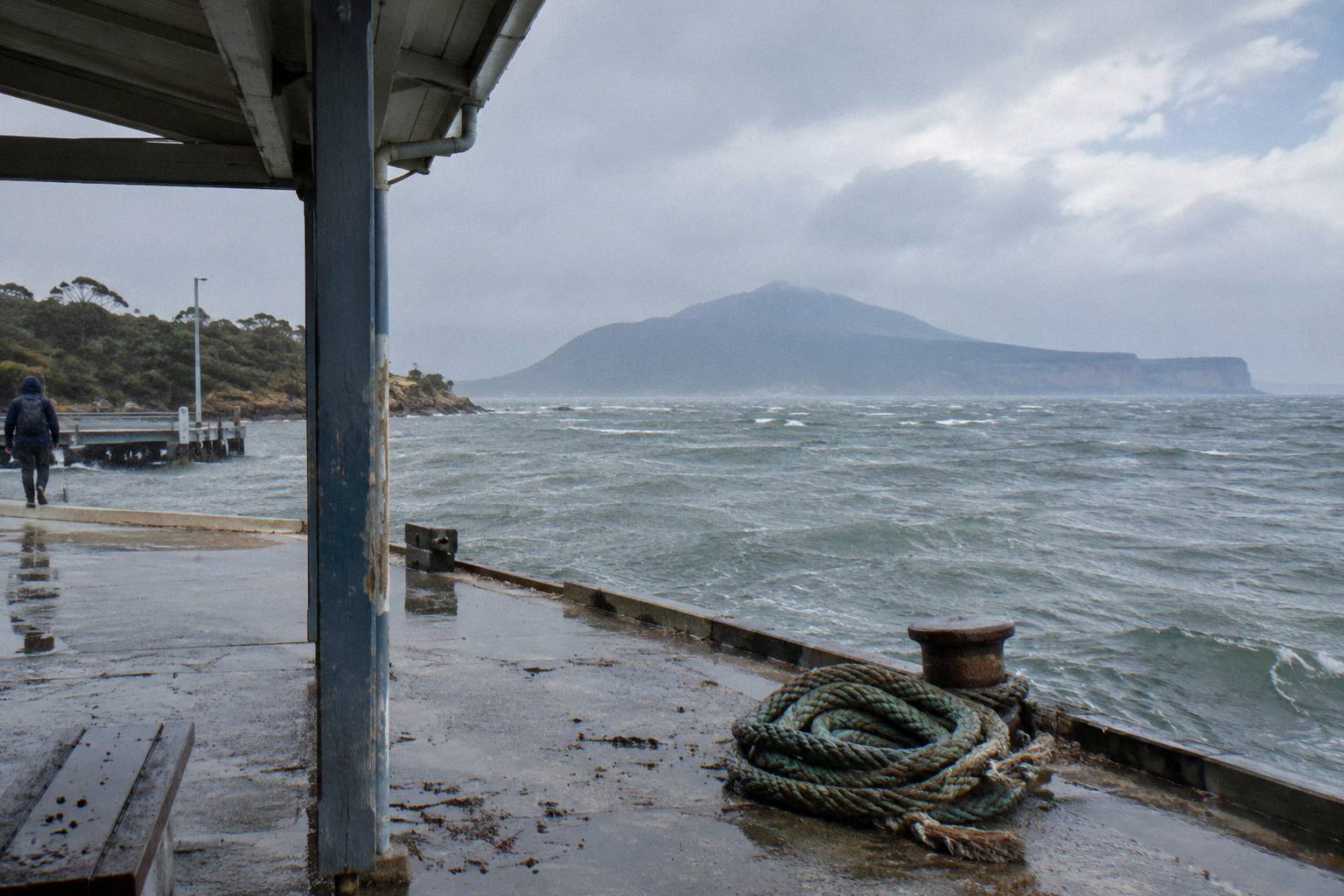
Some readers will read the sections above and feel their shoulders relax at the word trolley. Those are the campers, and the campground will reward them. Others will feel the first flicker of dread at "boil one minute", and for them the guided formats exist in genuinely varied shapes. The Cruise And Walk From Triabunna runs about 6 to 8 hours from 21 Vicary Street with the park fee and landing included and free cancellation up to 24 hours before start. The Cruise And Guided Walk With Picnic Lunch is a boat day from Triabunna between about 10:00 and 3:45pm, with a ploughman's-style picnic lunch included, rated 4.9 from 140 reviews, and free cancellation up to 24 hours before start.
There is even a hybrid worth naming twice. Camp at Darlington for the night, then walk into the guided world for a day: the two are not exclusive, and the island is generous to people who split their visit that way. Whatever the mix, book early: ferry passenger numbers can be limited at busy times, sold-out departures take no extras, the bunkhouse books up to six months ahead, and guided small groups cap at numbers that fill in peak season. Early booking is the one piece of advice that serves every version of this trip.
Whether the answer is a tent behind the dunes or a seat on a small-group bus from Davey Street, the decision is really about which hours of the island you want to own. For help either way, Maria Island Tours compares every guided format that runs to the island, and the campground's own details live on the Parks and Wildlife Maria Island page, with accommodation options described by the ferry operator's accommodation page.
Common Questions About Camping On Maria Island
How Much Does It Cost To Camp On Maria Island?
A tent site at the Darlington campground is A$18.00 per site per night for up to six people, and no camping booking is required, though fees apply. On top of that, an adult overnight return ferry ticket is A$70.00 and a daily park pass is A$24.55 per person arriving on foot. All amounts are Australian dollars and change over time.
Can You Camp On Maria Island For Free?
The ferry operator names free campsites at Frenchs Farm and Encampment Cove, which are 22 km and 26 km return walks from Darlington respectively. Camping at those sites carries no fee, but everything must be carried in and out on foot, and the Darlington campground itself is A$18.00 per site per night.
Do You Need To Book The Darlington Campground?
The ferry operator advises that camping bookings are not required but fees apply, so the site itself needs no reservation. The ferry crossing, by contrast, needs a booking, passenger numbers can be limited at busy times, and sold-out departures cannot take extras, so book the sailing early and confirm camping availability before finalising your trip.
Are There Showers And Shops When Camping On Maria Island?
There are no shops or cafes anywhere on the island, so carry in every meal, and showers at Darlington are unavailable while upgrade works run. Tap water must be boiled for one minute or purified before drinking, rubbish bins do not exist, and the covered barbecue area with free gas barbecues is the cooking facility at the campground.
How Much Luggage Can You Bring Camping On Maria Island?
An overnight return ferry ticket allows one carry-on plus two pieces of luggage up to 17 kg each, while a same-day ticket includes only one carry-on of about 7 kg. Extra luggage is charged per piece, a bicycle travels as freight from A$20.00 with a 15 kg limit and panniers checked separately, and e-scooters and cars are not permitted.
Is Camping Better Than A Guided Day Trip On Maria Island?
Camping gives you the island after the last ferry leaves and before the first one returns, for the difference between the A$70.00 overnight fare and the A$59.00 same-day fare per adult, but it demands full self-sufficiency. A guided day such as the Active Day Tour From Hobart includes ferry and park fees, walks about 10 km with a small group, and returns to Hobart the same night, with no tent, stove or water treatment to carry.