Maria Island Wildlife Beyond Wombats: Forester Kangaroos, Geese And Seals On A Walk Or Cruise
A field guide to the wildlife of Maria Island beyond its famous wombats: forester kangaroos, Cape Barren geese, endemic birds, fur seals at Ile des Phoques and migrating whales, and which walk or cruise puts you among them.
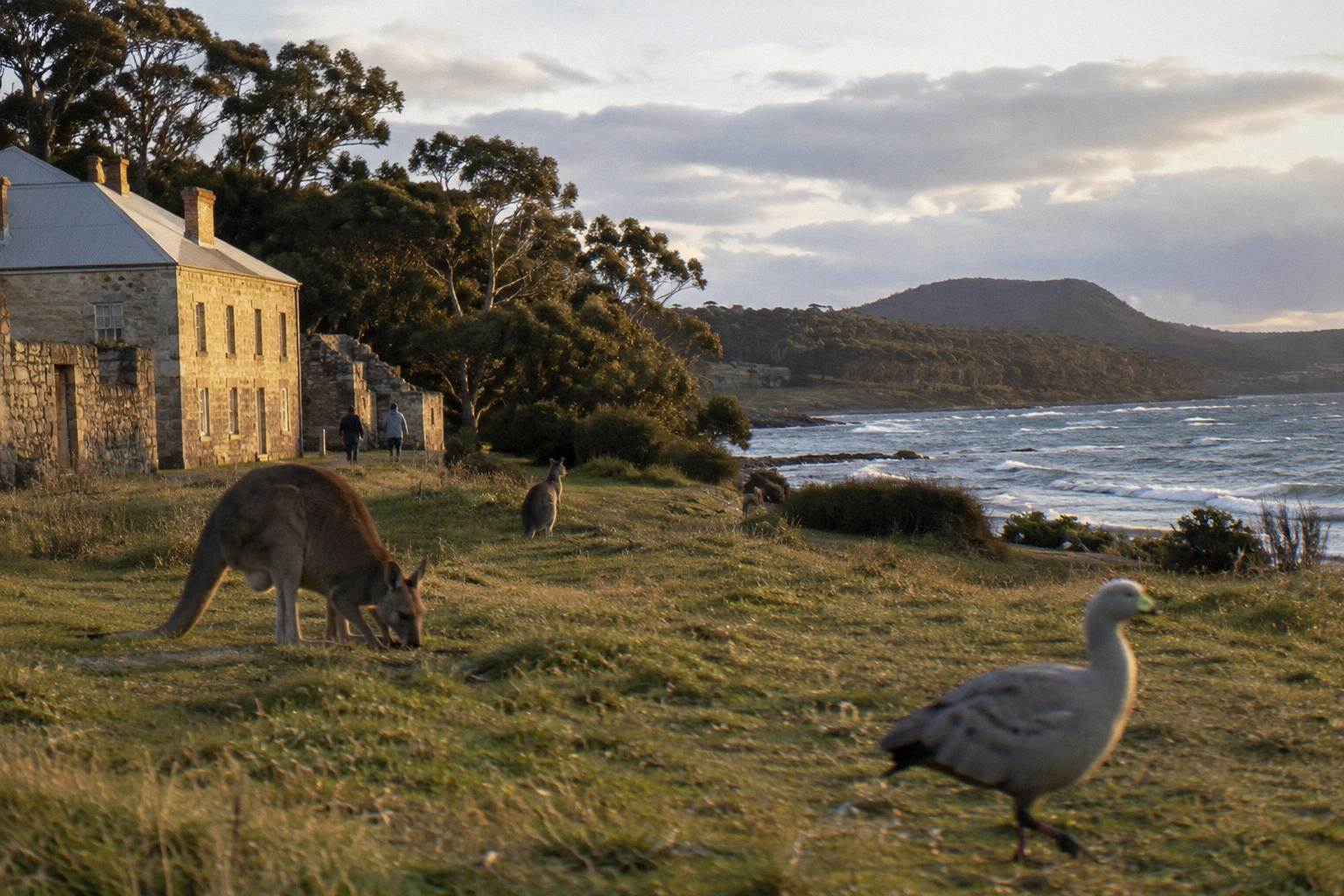
The wildlife beyond wombats includes forester kangaroos, Bennett's wallabies, pademelons, Cape Barren geese, Tasmanian native hens and eleven of twelve Tasmanian endemic birds on the island itself, plus thousands of Australian fur seals at Ile des Phoques and whales offshore during their migration windows. A day walk shows the land species; a cruise adds the seals and, in season, dolphins and whales. All of it is possible and none of it is promised.
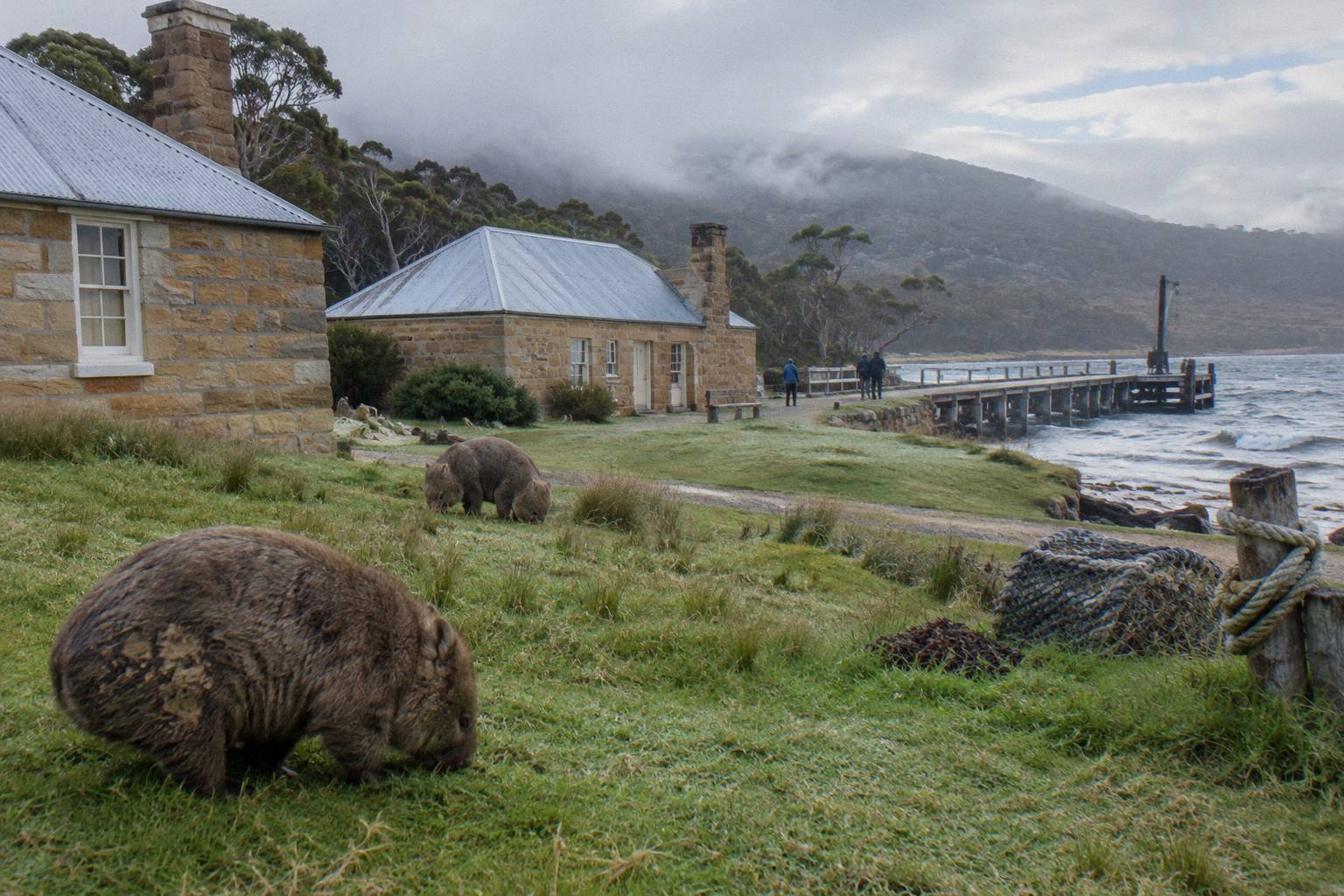
Wombats made this island famous on social media, and the Flinders Island wombats here are genuinely common around the Darlington campground and the Oast House paddocks at dusk. But a visitor who arrives fixated on wombats alone will miss the fuller picture. Maria Island is a national park with no cars, no shops and rangers as the only residents, which means the animals share the open ground with you rather than fleeing from it. The lawns around the old convict buildings function like a grazing commons, and the marine reserve off the north-west coast adds a whole second layer of wildlife that walkers standing on the jetty never see.
The practical split matters when you are choosing a trip. Land species, the kangaroos, wallabies, pademelons, geese, native hens and most of the birds, are seen while walking. Seals are seen from a boat, because Ile des Phoques is a rocky islet north-east of the island with no landing for day visitors. Whales and dolphins are seen from a boat, offshore, in their own seasons. So the question of which animals you meet is really a question of walk, cruise, or a day that combines both. The Ile Des Phoques Boat Day Trip, the Cruise And Walk From Triabunna and the Active Day Tour From Hobart cover those three approaches, and each is worth understanding before you book anything.
Parks and Wildlife Service maintains the authoritative species accounts for the island, and the Encounter Maria Island ferry operator keeps its own wildlife page; both are worth a look before you travel, at the official national park pages and the ferry operator's wildlife guide. What follows draws on those accounts and on what the cruise operators themselves say, with the important caveat repeated throughout: sightings vary daily, and nothing on or around the island is guaranteed.
The Grazing Marsupials You Will Probably Meet Before Lunch
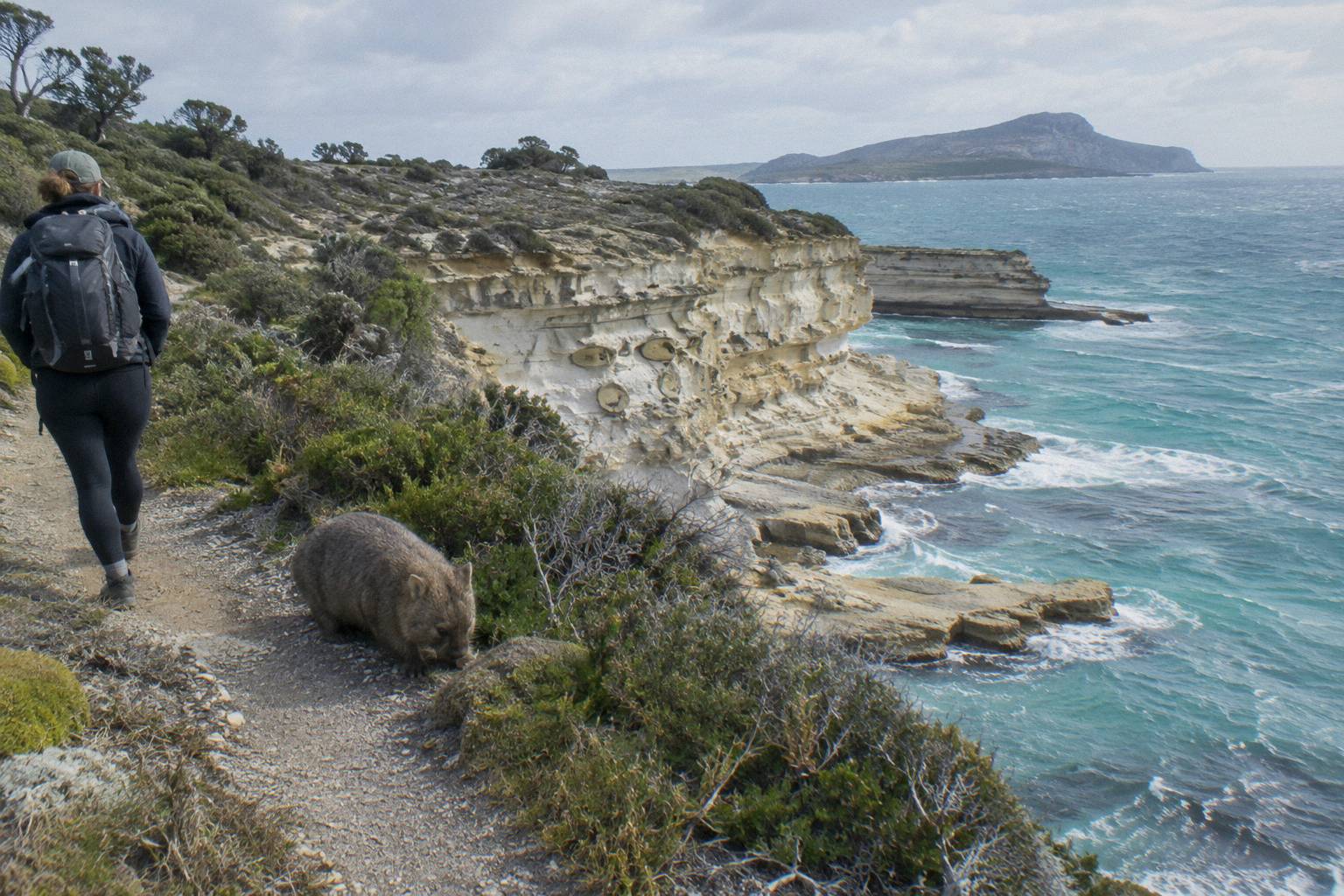
Forester kangaroos, Bennett's wallabies, pademelons and Flinders Island wombats are all resident on the island, and all four are listed by Parks as present. The forester kangaroo, Tasmania's largest marsupial, is the one most visitors underestimate: it is a large, grey, open-country kangaroo that grazes on the Darlington flats in plain view. Keep two metres from every animal and never feed any of them.
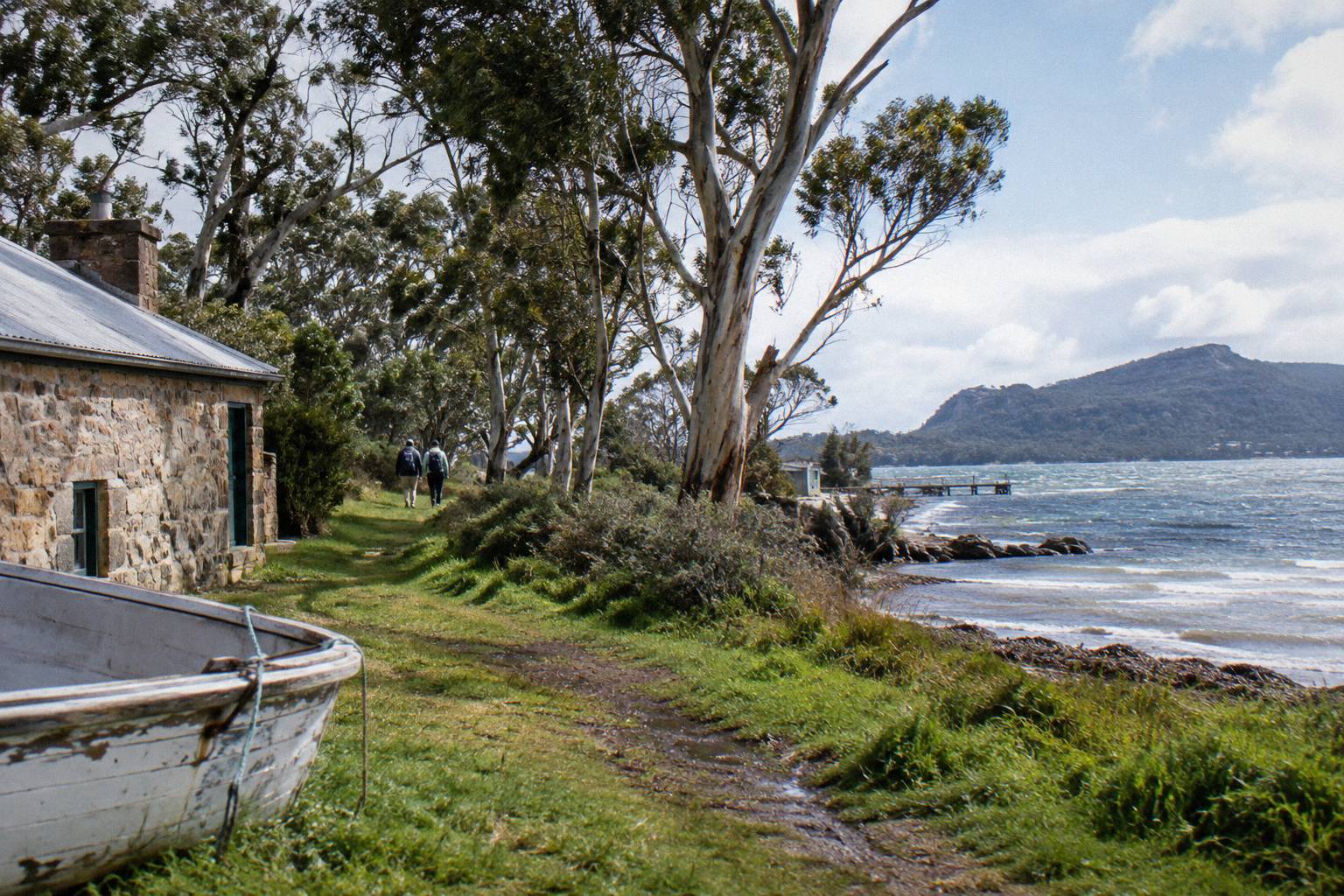
The forester kangaroo deserves top billing among the non-wombat residents. On the mainland of Tasmania the species has declined in many districts, but on Maria Island it thrives on the cleared ground left behind by the penal settlement, the cement works and the farms. The irony is that the convict landscape, grassland where forest once stood, is exactly what the kangaroos favour. Walk out from Darlington toward Fossil Cliffs or the Reservoir Circuit early or late in the day and you will pass through their feeding country.
Bennett's wallabies are the mid-sized cousins, darker and stockier, and they prefer the woodland edges where the grass meets the trees. Pademelons are smaller again, shyer, and mostly seen at the forest margin or along the quieter tracks; the Reservoir Circuit is a good place for them because the taller vegetation gives them cover. All three species, plus the wombats, are herbivores that do most of their feeding around dawn and dusk, which is why walkers who linger near Darlington in the late afternoon, waiting for a return ferry sailing, often see more animals than those who march straight up Bishop and Clerk at midday.
Two rules govern all of it. Parks asks visitors to stay two metres from wildlife and never to feed them, and feeding does real harm: animals that learn to approach people for food become problem animals. The second rule is expectation management. Wombats are common, kangaroos are common, wallabies are common, and every one of them can still decide to spend your particular afternoon behind a dune. Plan around the probability, not the guarantee, and the island will usually deliver.
Cape Barren Geese And Tasmanian Native Hens On The Lawns
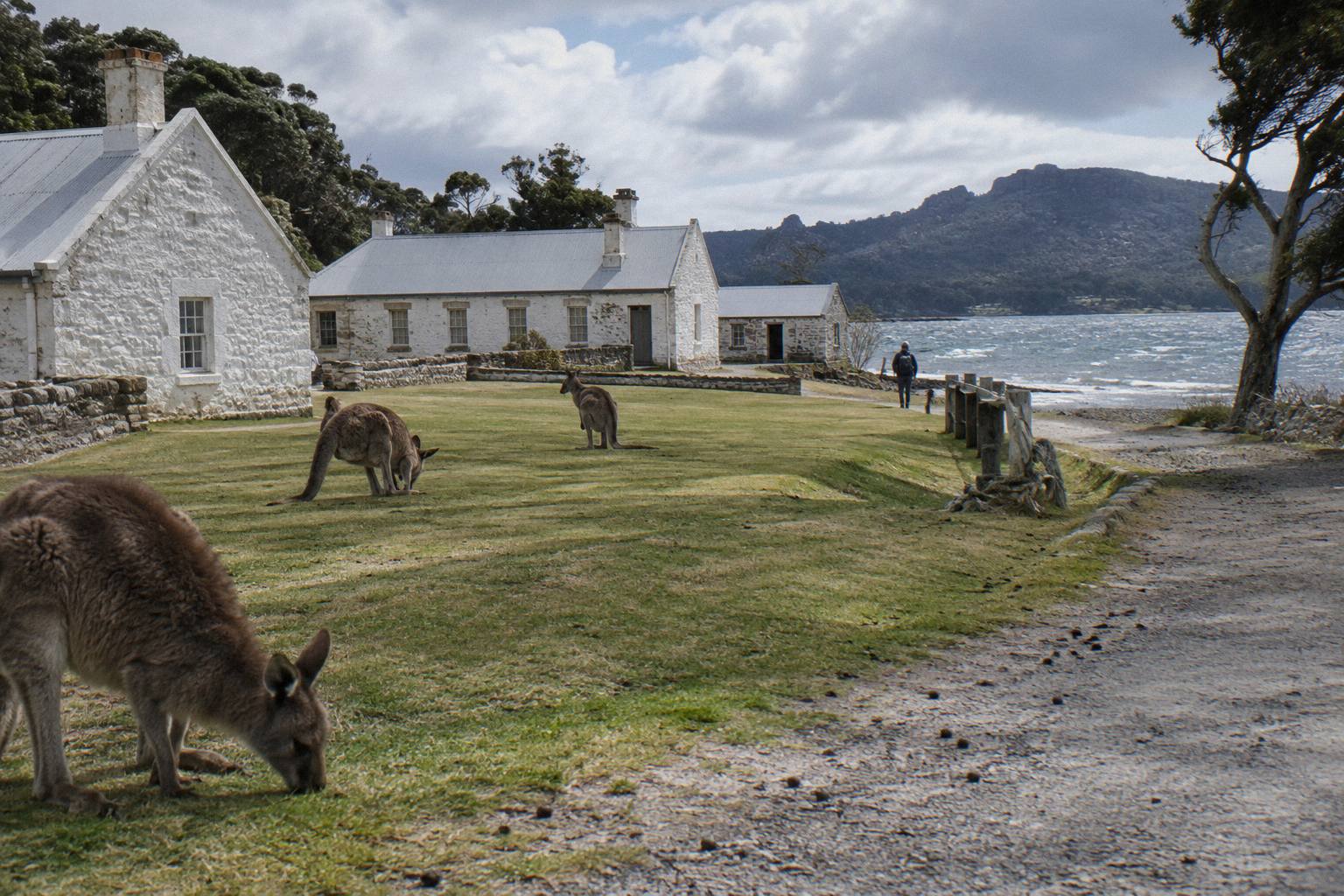
Cape Barren geese and Tasmanian native hens are both on the Parks species account for the island, and both are creatures of the open ground around Darlington. The geese are large, pale grey birds with conspicuous greenish bills that graze the lawns in pairs or family parties. Native hens are stocky, olive-brown rail relatives that scurry across the grass in loose groups.
Cape Barren geese are among the least photographed and most rewarding of the island's residents. They are large birds, conspicuous in the open, they pair for long periods, and in the breeding season the parents shepherd their goslings across the open ground with visible vigilance. Around Darlington they treat the mown and grazed areas near the old buildings as home range, so you can often watch a family party from a bench near the Mess Hall while you eat the lunch you carried in, because there is nowhere to buy food on the island and the tap water is not potable without boiling.
Tasmanian native hens are the comedians of the flats. They cannot fly well, they run in bursts with wings out, and their social groups move through the grass like small committees with somewhere to be. Because they are ground birds tied to open habitat, they benefit from the same cleared landscape the kangaroos favour, and you will meet them on the Darlington Township Walk and the Hills Walk as readily as on the longer routes. Both species are best watched from a seated, still position at a distance; both will go about their business if you give them the two metres the park asks for.
Neither species requires a guide or a boat, which makes them the quiet bonus of any walk-based day. If you are weighing a guided day against doing it yourself, the geese and hens are part of the case for the slower option: an itinerary with time sitting still near Darlington produces better encounters than one that only bags a summit. The wombats and wildlife walking routes guide on this site covers where the grazing lawns and the quieter corners are, and how to time a day around the animals rather than the kilometres.
The Birds: Eleven Endemics And A Very Small Pardalote
Eleven of Tasmania's twelve endemic bird species are recorded on Maria Island, including the forty-spotted pardalote, one of Australia's rarest birds. The Reservoir Circuit is specifically noted as a good place for the pardalote. The full endemic list means a day walk here can be a genuine birdwatching day, not just a mammal day with birds attached.
The forty-spotted pardalote is the headline. It is a tiny, canopy-feeding bird that survives in a small number of locations, and the white gum woodland on Maria Island is one of them. Parks notes the Reservoir Circuit, a four kilometre Grade 3 return walk taking about an hour and a half, as a good place to look. You will not always see one; it is small, high and unobtrusive, and its call is thin. But the habitat is right and the species is there, which is more than most day-trip destinations can say.
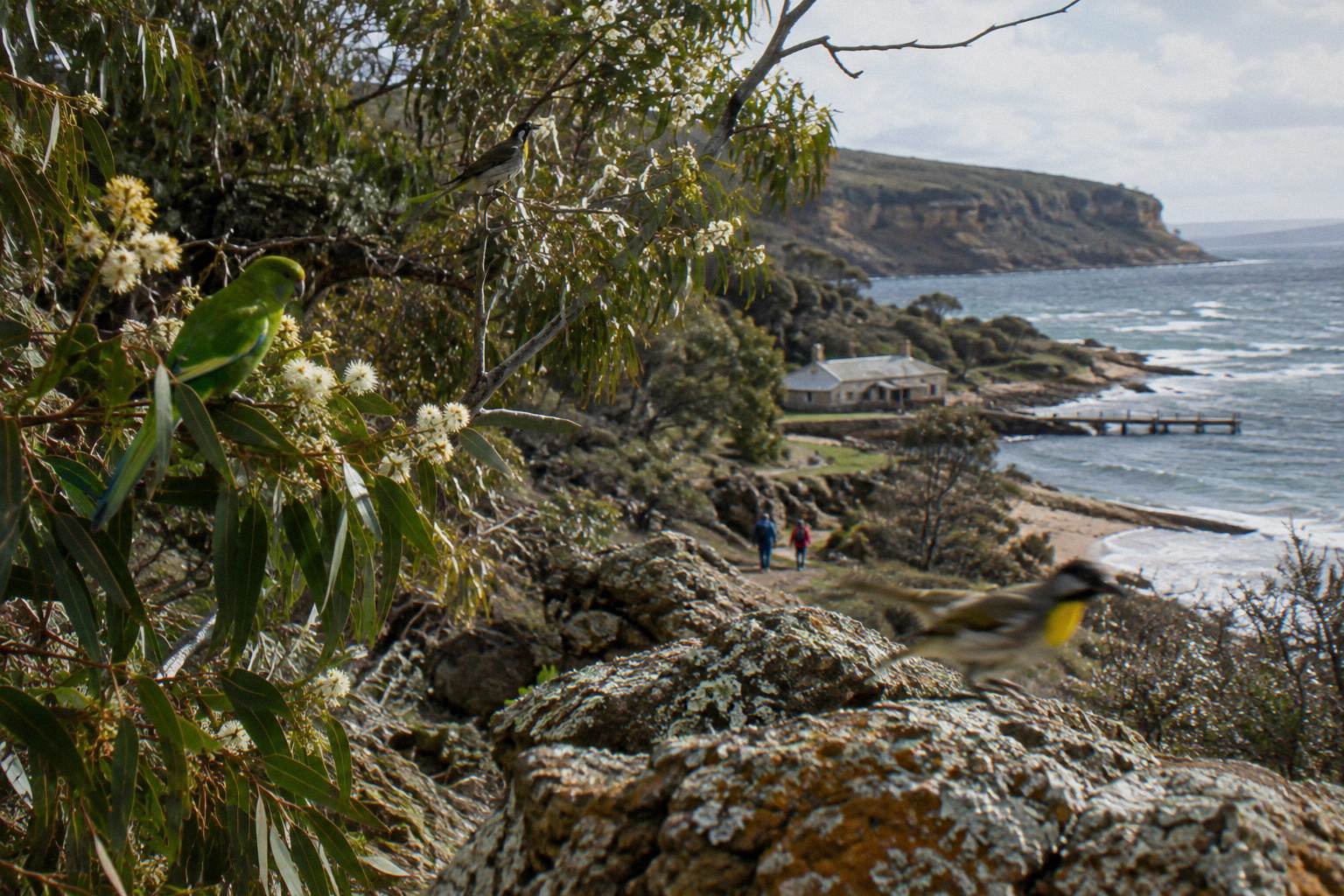
Around it sits the rest of the endemic set: birds found in the wild only in Tasmania and its islands, several of which are conspicuous in a way the pardalote is not. The walk from Darlington through the woodlands toward Fossil Cliffs or the Reservoir passes through the feeding territory of honeyeaters, robins and parrots, and the mix changes with the season. Spring brings the breeding noise; winter thins the flocks but leaves the residents, and the mild climate, with a July mean maximum of 12.8 degrees at the island's weather station, keeps the bush active year round.
For most visitors the birding is incidental, and that is fine: the endemic count is the reason serious birders put the island on an itinerary, and it costs a walker nothing to keep an eye on the canopy while doing so. Bring binoculars if you own them. If birds are the main reason for your trip, note that the longer tracks, Frenchs Farm at 22 kilometres return and Encampment Cove at 26 kilometres return, pass through more varied woodland than the short loops, but they are full-day commitments that do not pair with a same-day ferry return for a slow walker.
Tasmanian Devils: A Small Insurance Population, Rarely Seen
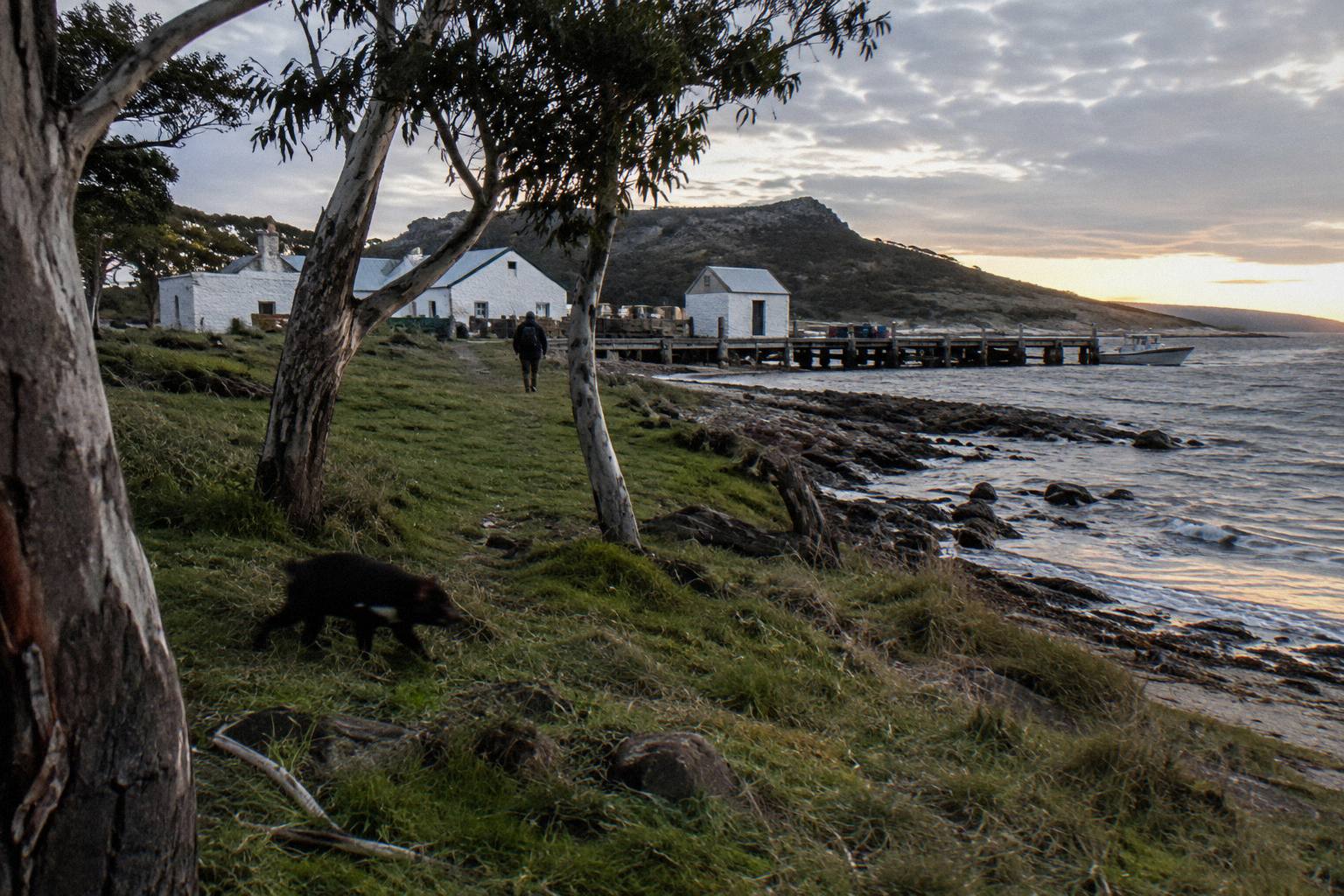
Fifteen Tasmanian devils were released on Maria Island in 2012 as an insurance population against devil facial tumour disease, and their descendants live on the island today. Sightings are genuinely rare: devils are nocturnal, shy, and number far fewer than the grazing species. No tour promises one, and a daytime visitor should treat a devil as a bonus, never a goal.
The devil story is conservation biology at work. Devil facial tumour disease devastated Tasmanian devil populations in recent decades, and Maria Island was chosen as a disease-free refuge where a captive-bred population could be established away from the mainland epidemic. The 2012 release of fifteen animals has produced an island population that Parks monitors, and the program is regarded as a significant step in securing the species' future. That is the real significance of devils here: the island is a lifeboat, not a zoo.
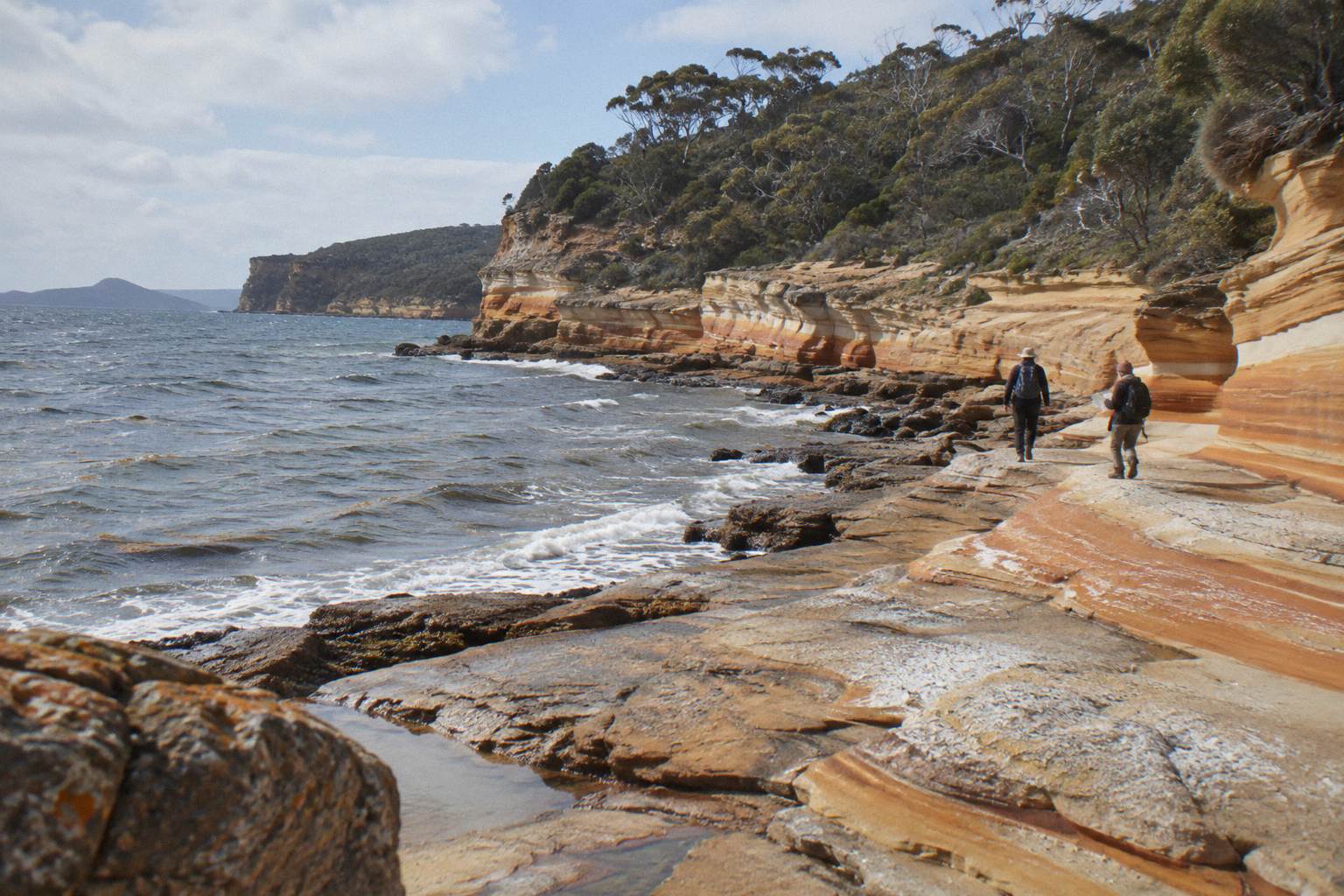
What that means for a visitor is modest odds. Devils are active at night, they avoid people, and a day walker on the Painted Cliffs or Fossil Cliffs track in the middle of the day has very little chance of an encounter. Rangers and overnight campers occasionally report animals near Darlington after dark, which is one quiet argument for sleeping in the Penitentiary bunkhouse or the campground if devils matter to you, since the bunkhouse rooms start at A$95 a night and the Darlington tent sites at A$18 a night, all amounts in Australian dollars and subject to change. Even then, nothing is guaranteed.
The honest framing, and the one Parks itself uses, is that Maria Island guarantees you nothing about devils and everything about habitat. If you see one, it will be because you were out at the right hour in the right place. If you do not, the island's role in saving the species is still something you have walked through, and that is a different kind of wildlife experience than a photo.
Seals At Ile Des Phoques: The Wildlife A Walk Cannot Reach
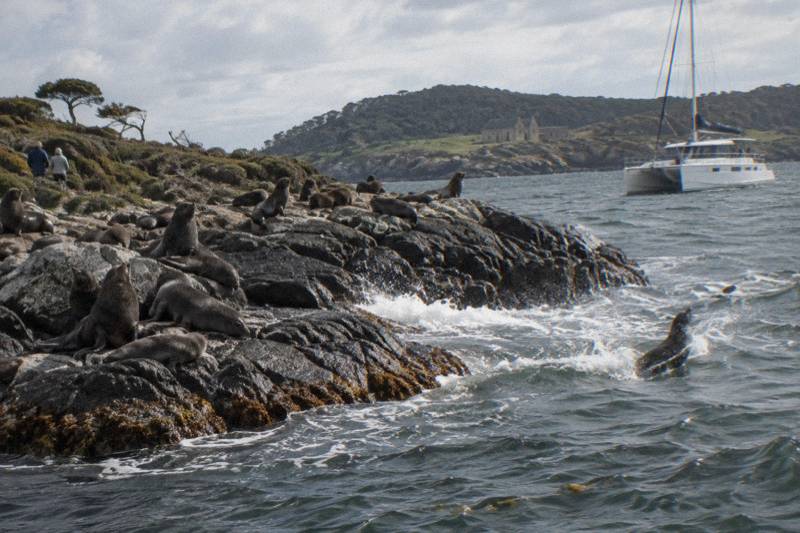
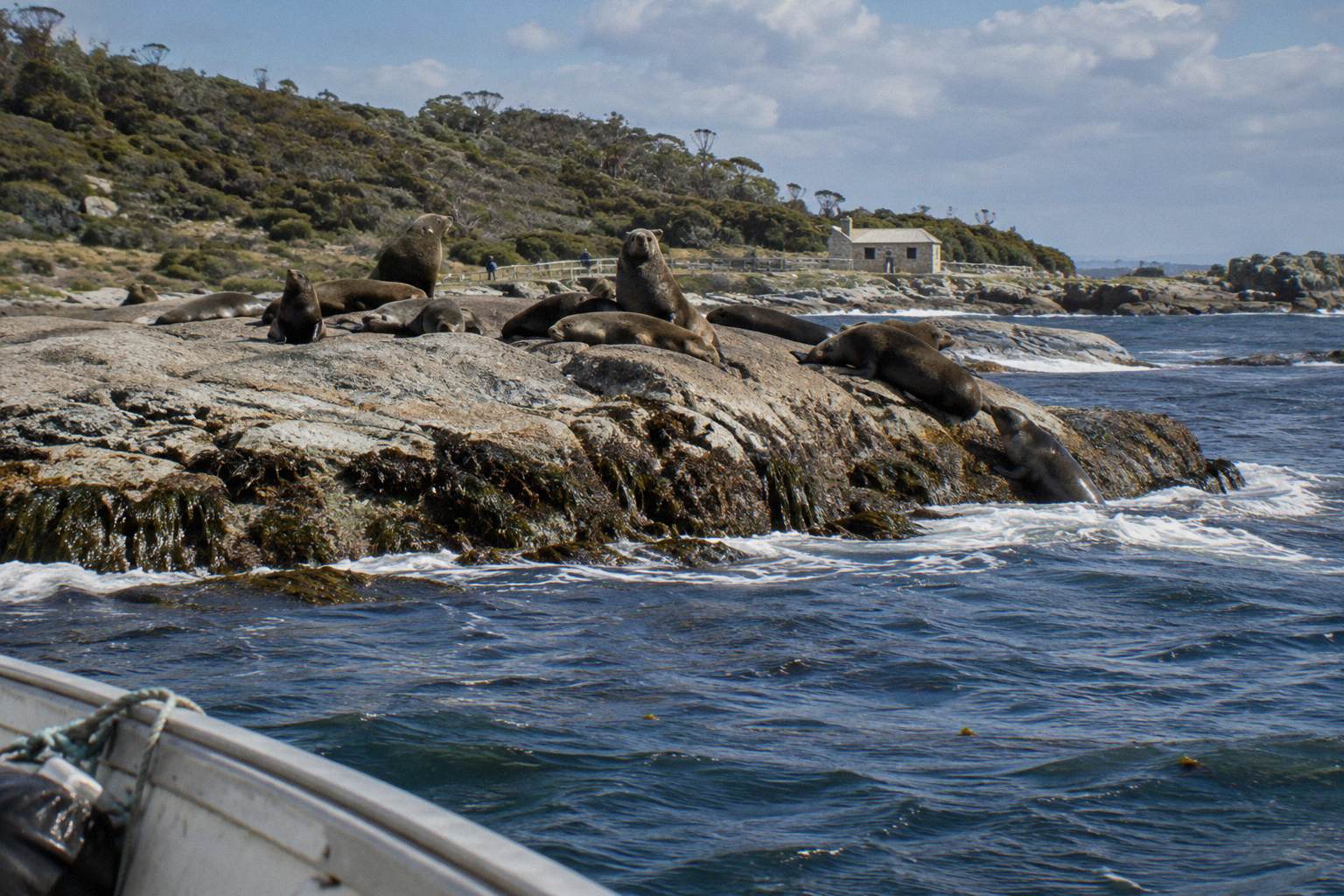
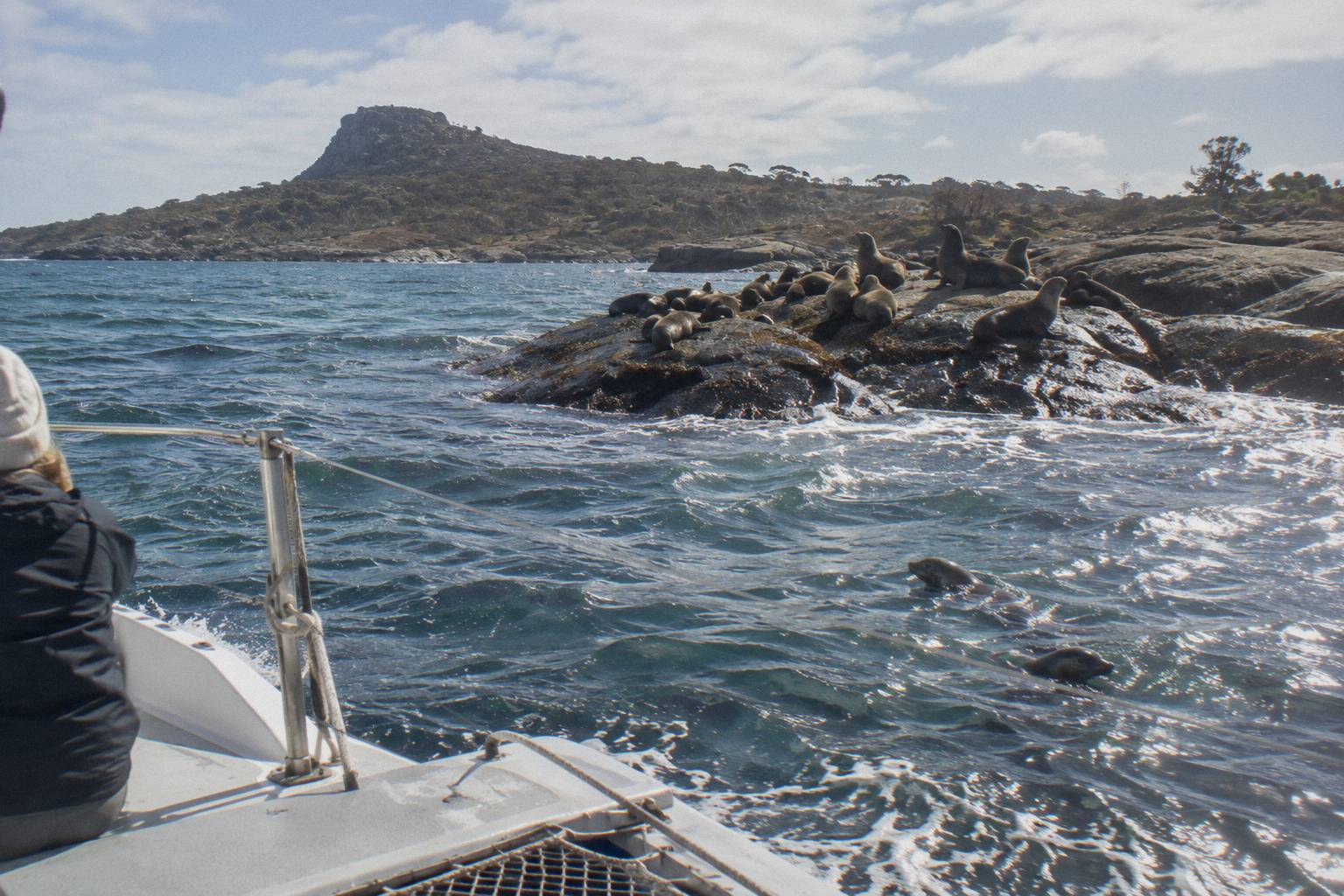
The Ile Des Phoques Boat Day Trip takes you to a rocky islet where the operator says you see thousands of Australian fur seals resting on the rocks and swimming in the surrounding waters. No walking trip reaches the seals: Ile des Phoques lies off the island's north-east and day visitors do not land there. If seals are your priority, a boat is the only format that delivers the opportunity.
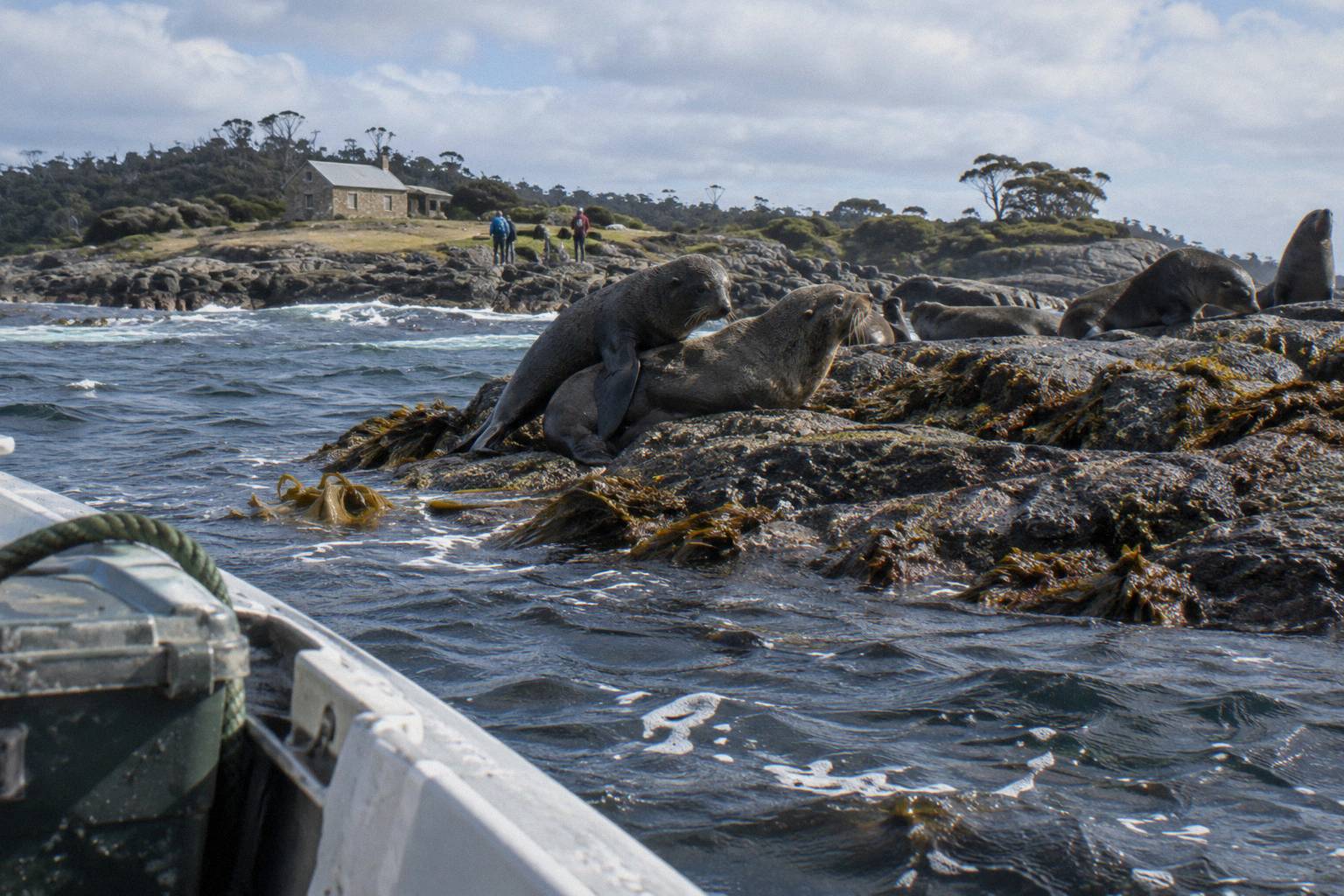
The operator's own wording is worth quoting directly because seal numbers invite exaggeration elsewhere: "At Ile des Phoques, see thousands of Australian fur seals resting on the rocks and swimming in the surrounding waters." Australian fur seals are large marine mammals, and a haul-out site like Ile des Phoques concentrates them in numbers that register as landscape rather than as individual animals. The islet is part of the same marine environment as the island's no-take reserve, and the boat approach keeps a respectful distance while still putting you close enough to hear and smell the colony.
The trip that does this is the Ile Des Phoques Boat Day Trip, about 7.5 hours from 21 Vicary Street in Triabunna, with morning tea, drinks and a salad-bowl lunch included, run by Maria Island Cruises, rating 4.9 from more than 50+ reviews. The price for your date shows on the booking page, and the trip can be cancelled free of charge. It is the wildlife-richest single format on the roster for marine species, because it exists specifically to reach the seals, and it pairs them with the coastline most walkers only see from the shore.
The alternative with a landing is the Cruise And Walk From Triabunna, about 6 to 8 hours, which includes the operator's own cruise, the landing and the park fee, starts with check-in around 9:30am at 21 Vicary Street, rates 5.0 from more than 230+ reviews, and offers free cancellation up to 24 hours before start. Its cruise leg passes coastline and caves, including Rainbow Cave, while the island leg gives about two hours ashore with a guided Darlington walk, so it splits your wildlife day between the marine viewing and the grazing species. The cruise and seal watching guide compares these formats in detail.
The seals are also the answer to a common planning mistake: booking a ferry-and-walk day expecting seals, or booking a cruise expecting a wombat photo session. The two wildlife worlds overlap only partially, and knowing which animals live where is the difference between a day that delivers and one that disappoints.
Whales And Dolphins: The Migration Windows
Southern right whales head northward past the island from June to September and back south from September to late October; humpbacks head northward from May to July and south from September. Dolphins, common and bottlenose, are described by the cruise operator as present around its trips. Whales are never promised; the windows simply tell you when the possibility is real.
The whale calendar comes from the Parks marine mammals account, and it is the single most useful piece of wildlife timing information for the region. It also maps neatly onto the trip calendar: the winter months, when southern rights are moving north, are exactly when the Winter Day Trip From Hobart runs its about-8-hour itinerary, and the shoulder months of May and September, when humpbacks are travelling, sit inside the operating seasons of the Triabunna cruises, which the operator says run daily except Christmas Day. A whale sighting from any of these boats is a matter of luck within the window, and the operator says plainly that sightings vary daily and nothing is guaranteed.
Dolphins are the more reliable marine bonus. The cruise operator describes both common dolphins and bottlenose dolphins around its routes, and dolphins, being resident and playful around boats, appear on trips well outside any migration season. For a family deciding between formats, dolphins are often the species that bridges the gap: a child who missed a devil may still get bow-riding dolphins, and the boats are enclosed with an onboard toilet, no age or height restrictions stated.
| Species | Window Or Presence | Direction Of Travel | Source |
|---|---|---|---|
| Southern right whale | June to September | Northward | Parks marine mammals |
| Southern right whale | September to late October | Southward | Parks marine mammals |
| Humpback whale | May to July | Northward | Parks marine mammals |
| Humpback whale | From September | Southward | Parks marine mammals |
| Common and bottlenose dolphins | Described as present on cruises | Resident, no window stated | Cruise operator |
| Australian fur seals | Thousands described at Ile des Phoques | Resident colony | Cruise operator |
Read the table as possibility, not schedule. Whales pass the island on their own business; a boat in the right month is simply positioned where the possibility exists.
Walk Or Cruise: Matching Each Trip To The Wildlife You Want
Choose by species. Kangaroos, wallabies, pademelons, geese, native hens and the endemic birds are walk wildlife, seen from the tracks around Darlington. Seals, dolphins and whales are boat wildlife, seen on the cruises from Triabunna. The Ile Des Phoques trip leans marine, the Active Day Tour leans land, and the Cruise And Walk splits the day between both.
The land-first option is the Active Day Tour From Hobart, run by Tours Tasmania: about 10 hours from a Davey Street start, ferry and park fees included, back in Hobart, with about 10 kilometres of walking at a moderate fitness level in a small group, and a 4.8 rating from more than 240+ reviews. Cancellation terms differ between its booking pages, so check the terms on the booking page you use. It maximises hours on the island, which is where the grazing species and the birds are, and it suits a visitor staying in Hobart who wants the logistics handled.
The marine-first option remains the Ile Des Phoques trip, and the middle path is the cruise-and-walk family out of Triabunna, which the operator says runs daily except Christmas Day, departing Triabunna at 10:00am and back about 3:45pm for the standard cruise and walk. A fourth angle, the scenic flight, covers Wineglass Bay and lands on the island itself, no ferry, though its park pass is not included, and it rates 4.7 from more than 50+ reviews; it is a perspective trip more than a wildlife trip. More detail on each format lives on the Ile des Phoques boat day trip page, including what the day includes and check availability for your dates.
| Wildlife | Where It Is Found | Trip Format That Reaches It |
|---|---|---|
| Forester kangaroos, Bennett's wallabies, pademelons | Darlington flats and woodland edges | Any walk-based day; Active Day Tour |
| Cape Barren geese, native hens | Open lawns near Darlington | Short walks; Darlington Township Walk |
| Flinders Island wombats | Campground and paddock edges, dusk | Walk-based days, best near day's end |
| Forty-spotted pardalote and endemic birds | White gum woodland, Reservoir Circuit | Walk-based days; independent walking |
| Tasmanian devils | Island-wide, nocturnal, rarely seen | No daytime format promises one |
| Australian fur seals | Ile des Phoques, by boat | Ile Des Phoques Boat Day Trip |
| Dolphins, whales in season | Offshore waters | Triabunna cruises within migration windows |
One caution from the roster: no whale-watching, kayak or snorkel product exists among the ten trips, so a wildlife plan built around those formats needs its own arrangements outside this island's tour set.
What Trips People Up When Wildlife Is The Goal
The recurring mistakes are promising yourself a devil, expecting seals from the ferry, treating migration months as a whale guarantee, timing walks for midday, and feeding or approaching the grazing animals. Each one turns a good wildlife day into a flat one, and each is avoidable with a little planning and the right expectations about which species lives where.
The devil expectation is the biggest. The 2012 insurance population is famous, and fame breeds the assumption that devils trot across the lawns. They do not; they are nocturnal and few, and a day visitor who bases the trip on them is setting up disappointment. The seals expectation runs second: the public ferry lands at Darlington and Ile des Phoques is not on its route, so booking a ferry ticket and expecting a seal colony is a formatting error, not bad luck.
Midday timing wastes the best light. The grazing marsupials feed at dawn and dusk, so a walker who structures the day around a late start and a late finish, within the ferry timetable of course, sees more animals than one who does the reverse. And the two-metre rule exists for the animals' sake and yours: a forester kangaroo is a large wild animal, and a wombat with a history of being fed is a wombat heading toward a bad outcome. Watch, photograph from distance, move on. The animals here are the attraction precisely because nobody has tamed them, and keeping it that way is part of the visit.
There is one more quiet advantage to planning around wildlife rather than around kilometres. The trips that build in stillness, a guided walk with a stop, a picnic lunch on a cruise day, an hour near Darlington before the sailing home, are the ones where the island's fuller cast gets time to appear. Maria Island is generous with its animals on its own terms. Meet it on those terms and the wombats become the opening act rather than the whole show, which is exactly what a wildlife-focused visitor should want. Whether you arrive by cruise, ferry day tour or a cruise-and-walk combination, the deeper list, kangaroos, geese, pardalotes, seals and passing whales, is the island's real story. If you are still choosing, Maria Island Tours keeps the full set of trip pages and planning guides in one place.
Common Questions About Maria Island Wildlife
Maria Island Wildlife Beyond Wombats: What Else Can I Actually See?
Forester kangaroos, Bennett's wallabies, pademelons, Cape Barren geese and Tasmanian native hens on the land, eleven of twelve Tasmanian endemic birds including the forty-spotted pardalote in the woodlands, a small insurance population of Tasmanian devils rarely seen by day, thousands of Australian fur seals at Ile des Phoques by boat, and dolphins and whales offshore in season. All are possible, none are promised.
Can You See Tasmanian Devils On Maria Island?
Fifteen devils were introduced in 2012 as an insurance population against devil facial tumour disease, and their descendants live on the island. They are nocturnal, shy and few in number, so daytime sightings are rare. No tour promises one, and overnight visitors have the better, though still unguaranteed, odds.
Where Do You See The Seals, And From Which Trip?
The seals are Australian fur seals at Ile des Phoques, a rocky islet reached only by boat. The Ile Des Phoques Boat Day Trip, about 7.5 hours from Triabunna, is built around that visit; the operator describes thousands of seals resting on the rocks and swimming nearby. Walking trips and the ferry do not reach the colony.
When Can You See Whales Near Maria Island?
Parks lists southern right whales heading northward from June to September and south from September to late October, and humpbacks heading northward from May to July and south from September. A cruise in those months puts you where the possibility exists, but sightings vary daily and nothing is guaranteed.
Is A Walk Or A Cruise Better For Wildlife?
Walks reach the land species: kangaroos, wallabies, pademelons, geese, native hens and the endemic birds. Cruises reach the marine species: seals, dolphins and whales in season. A cruise-and-walk day splits the difference with about two hours ashore, and the Active Day Tour From Hobart maximises island time for the land cast.
Are Wombats Guaranteed On Maria Island?
No. Wombats are common around the campground and paddock edges, especially near dusk, but no operator or authority promises a sighting. The same holds for every species on the island: the animals are wild, and the honest plan is built on probability, timing and a little patience rather than certainty.