Where To Stay When Visiting Maria Island: Triabunna, Or Hobart
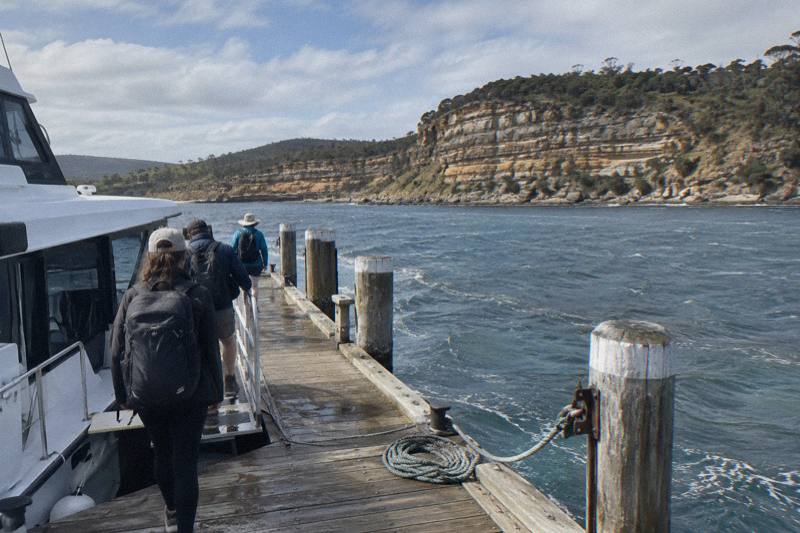
There is no hotel on Maria Island, so every visit starts from a base on the Tasmanian mainland. The real decision is Triabunna, the departure town for the ferry and the cruises, or Hobart, where the full-day tours and the shuttle bus begin.
Short answer
Stay in Triabunna if you are catching the ferry or a Triabunna cruise, since both leave from the wharf area with free parking nearby. Base yourself in Hobart if you have booked a Hobart-start tour or prefer the daily shuttle from Brooke Street Pier. The drive between them is 86 km, about 1 h 15 min.
There is no town, no shop and no hotel on Maria Island. The island is a national park with no vehicle access at all, so the only way onto it is by boat, and everything you do there depends on where you slept the night before. That makes the base decision the single most consequential choice in planning a visit, more than which walk you attempt or what you pack.
Two places matter. Triabunna is the small east-coast town where the public ferry and the cruise boats leave. Hobart is where the full-day guided tours start, where the daily shuttle bus to Triabunna departs, and where most travellers arrive into Tasmania in the first place. Choosing between them comes down to one question: what leaves from where, and at what time.
The Cruise And Walk From Hobart, for example, begins with a 7:45am check-in at Franklin Wharf in Hobart, then a bus to Triabunna and the operator's own cruise, so where you sleep barely changes your morning. The Active Day Tour From Hobart also starts in the city, on Davey Street. But if you are taking the public ferry or the Cruise And Walk From Triabunna, you need to be at the wharf by mid-morning at the latest, and the town you wake up in becomes the whole game.
Triabunna Or Hobart: Which Base Suits Your Trip?
Base yourself in Triabunna if your boat leaves from Triabunna, and in Hobart if your day starts in Hobart. That sounds obvious, but it decides your entire morning. The ferry checks in at the Maria Island Gateway beside the wharf, the Triabunna cruises meet at 21 Vicary Street, and the Hobart tours pick up in the city before driving the 86 km to the coast themselves.
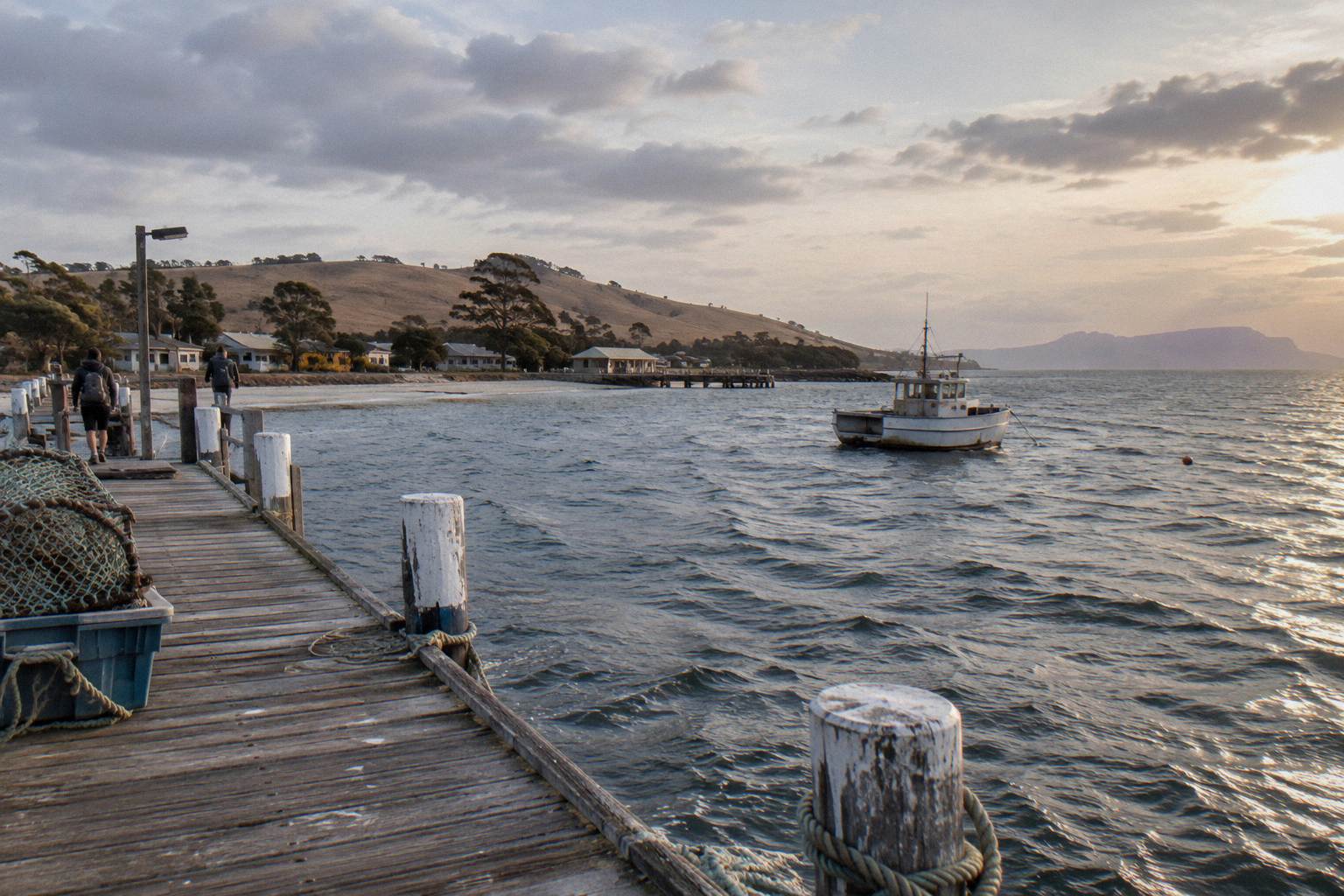
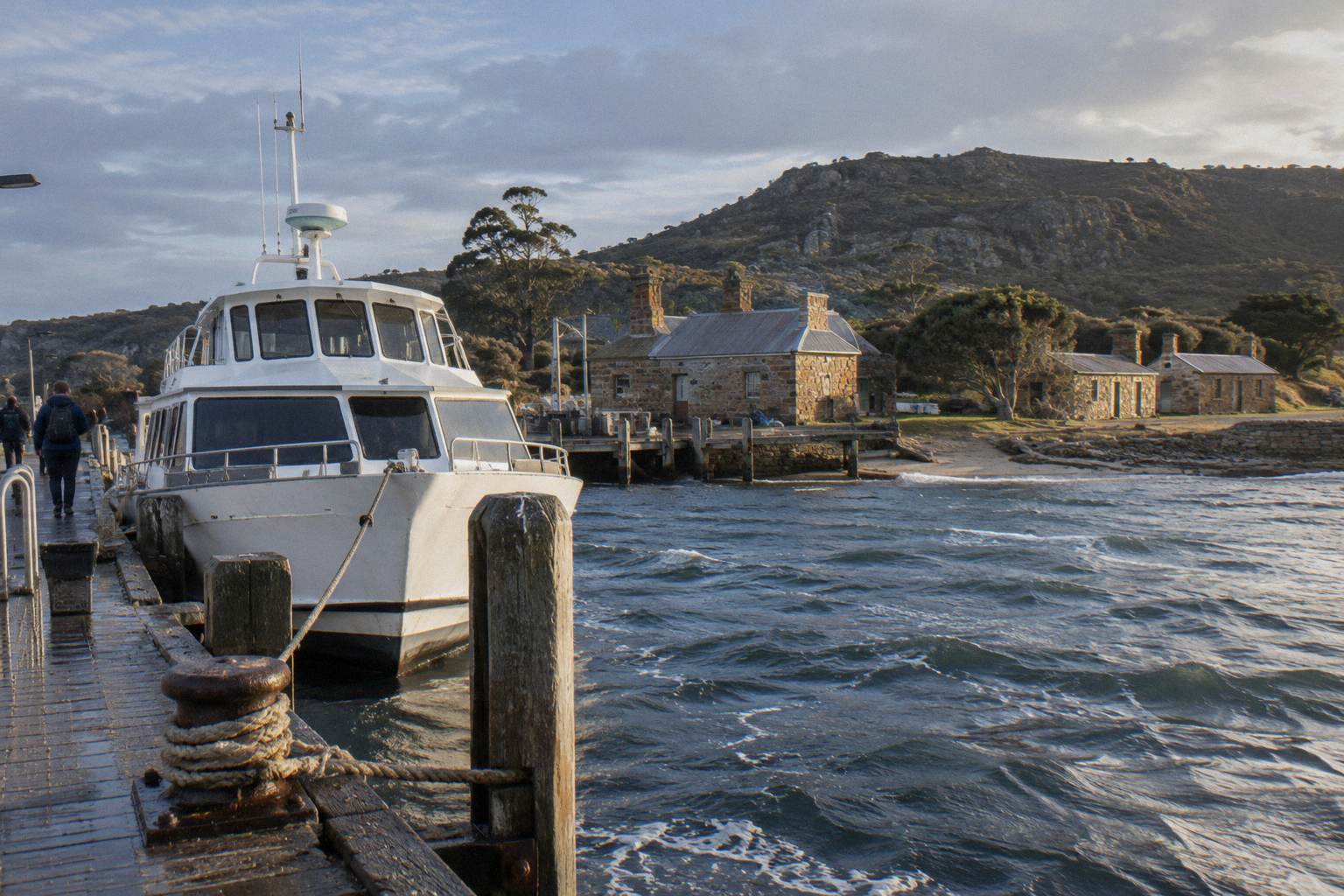
Triabunna is the departure town, full stop. The public ferry, run by Encounter Maria Island, the Parks and Wildlife Service's official ferry operator, leaves from Triabunna Wharf, and passengers check in at the Gateway building at least 45 minutes before departure. The cruise products that use their own boats, rather than the ferry, also leave from here: the Cruise And Walk From Triabunna meets at 21 Vicary Street with check-in around 9:30am, and the Ile Des Phoques Boat Day Trip leaves from the same address.
Hobart is the base for the guided days that bundle the whole journey. The Cruise And Walk From Hobart starts with a 7:45am check-in at Franklin Wharf in Hobart and a bus ride to the coast, park entry included, rated 5.0 from 630+ reviews and priced at A$365 per adult on the operator site. The Active Day Tour From Hobart, 4.8 from 240+ reviews, starts on Davey Street and returns to Hobart after about 10 hours and roughly 10 km of walking. If your day is one of these, a Hobart base means your transport is the operator's problem, not yours.
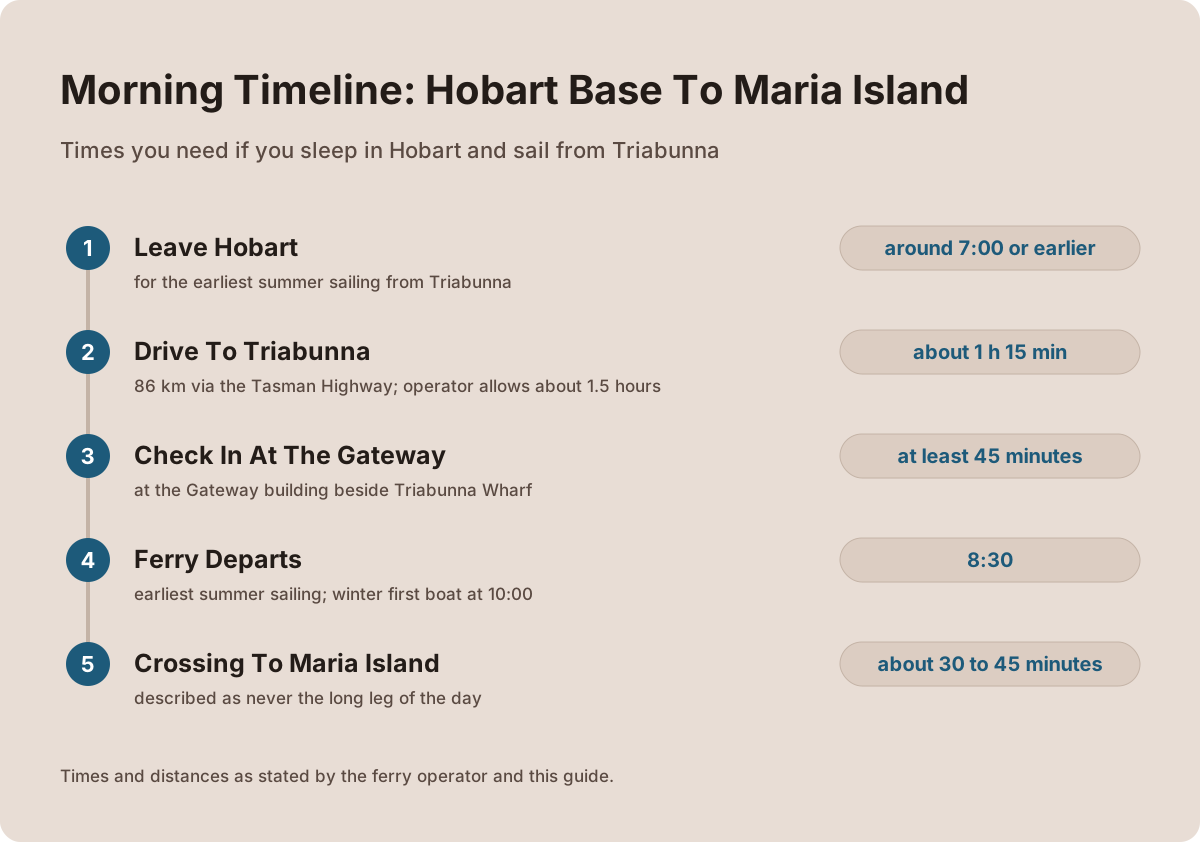
The mistake to avoid is sleeping in Hobart and booking a Triabunna departure without thinking through the drive. It is doable, at 86 km and about 1 h 15 min via the Tasman Highway, but an 8:30am ferry sailing means a very early alarm. The full picture of the crossing itself is in the guide to the ferry from Triabunna, which covers the timetable in detail.
| Your departure | Where you sleep | What your morning looks like |
|---|---|---|
| Public ferry from Triabunna Wharf | Triabunna is easiest; Hobart means an early drive | Check in at the Gateway at least 45 minutes before sailing |
| Cruise And Walk From Triabunna | Triabunna; 21 Vicary Street is walking distance from town | Check-in around 9:30am, boat departs about 10:00 |
| Cruise And Walk From Hobart | Hobart | Franklin Wharf check-in, bus to the coast, operator's own cruise |
| Active Day Tour From Hobart | Hobart | Davey Street start, back in Hobart |
| Hobart shuttle bus to the ferry | Hobart | Daily shuttle from Brooke Street Pier, times show at booking |
The three most common ways travellers structure this are the Hobart cruise day, the Triabunna cruise day and the Hobart active walking day.
Choosing A Base By Your Departure Point
Work backwards from your departure, not forwards from your hotel. The ferry and the Triabunna cruises anchor you to the east coast, while the Hobart tours and the shuttle bus let you stay in the capital. Roughly speaking: independent ferry travellers should sleep near Triabunna, and tour travellers should sleep wherever the tour starts.
If you are going independent, your whole plan hangs on the ferry timetable. From September to April, sailings run every day except Christmas Day: to the island at 8:30, 10:00, 11:30 and 3:15pm, and back at 9:15am, 10:45am, 2:30pm and 4:15pm. From May to August there is no Tuesday or Thursday service at all, and sailings drop to three each way: out at 10:00, 11:30 and 3:15pm, back at 10:45am, 2:30pm and 4:15pm. All sailings depend on demand and safe conditions, and live times show at booking.
That winter gap matters for the base decision in a second way. If there is no ferry on the day you want, a Hobart-start tour that includes its own transport becomes the fallback, because the bus runs on the operator's schedule rather than the ferry's. The wider logistics of the whole journey are covered in how to get to the island from Hobart.
Booking the ferry is essential, and early booking is advised: passenger numbers can be limited at busy times, and a sold-out departure cannot take extras. The skipper may also delay or cancel in bad weather, which is worth knowing before you commit to a rigid accommodation plan. The crossing itself takes about 30 to 45 minutes depending on which official figure you read, so it is never the long leg of the day; the drive to the wharf usually is.
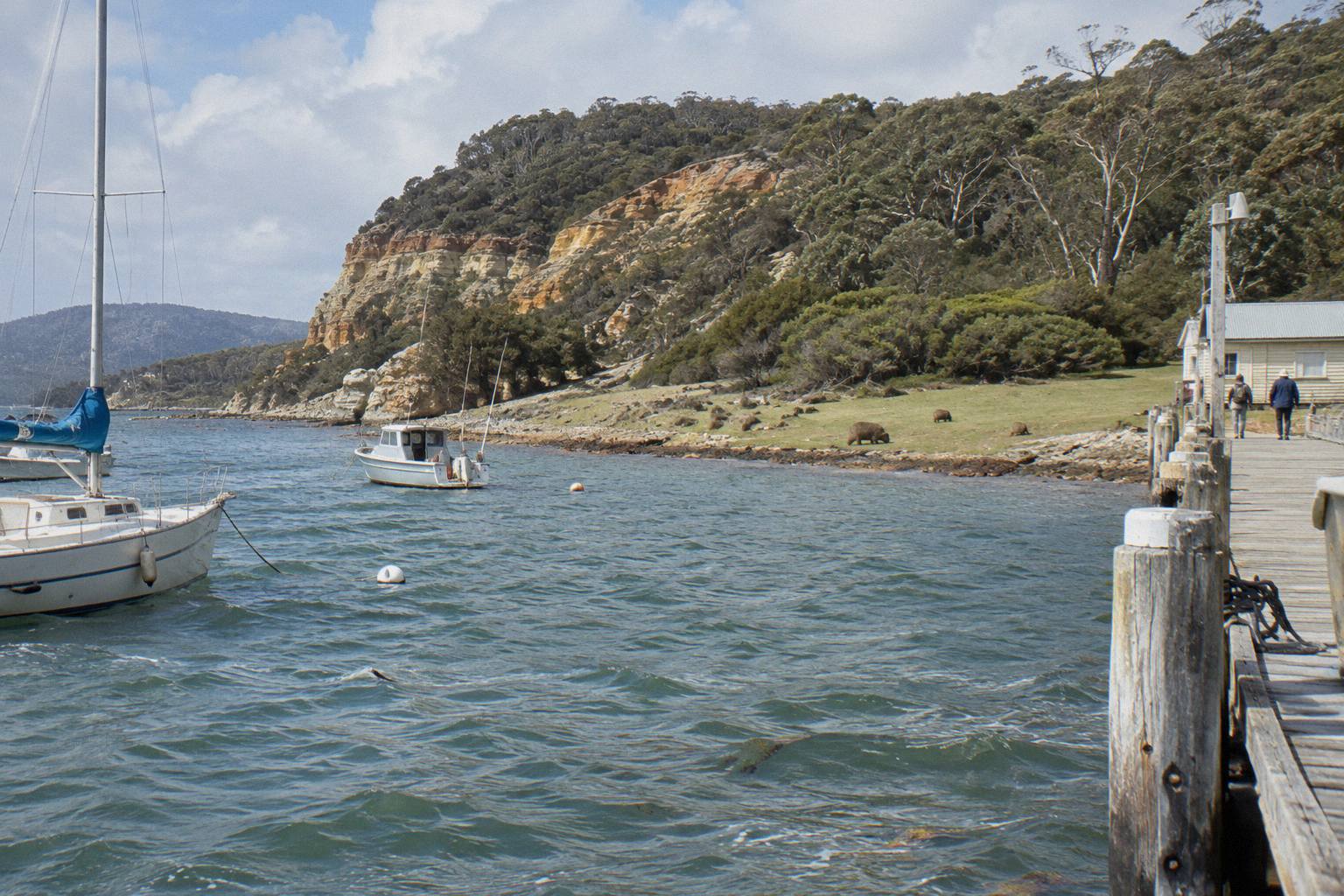
For cruise travellers the logic is simpler. The Cruise And Walk From Triabunna, rated 5.0 from 230+ reviews, runs about 6 to 8 hours with the landing and park fee included, and free cancellation up to 24 hours before start. Infants travel free with no minimum age stated. The price for your date shows on the booking page. Its sister product from Hobart, listed at A$365 per adult on the operator site, swaps the Triabunna start for a 7:45am check-in at Franklin Wharf in Hobart and returns you there in the evening.
If you want the full comparison of the guided and independent approaches before locking in a base, the day trip from Hobart guide walks through both.
The Drive And The Shuttle: Getting To Triabunna From Hobart
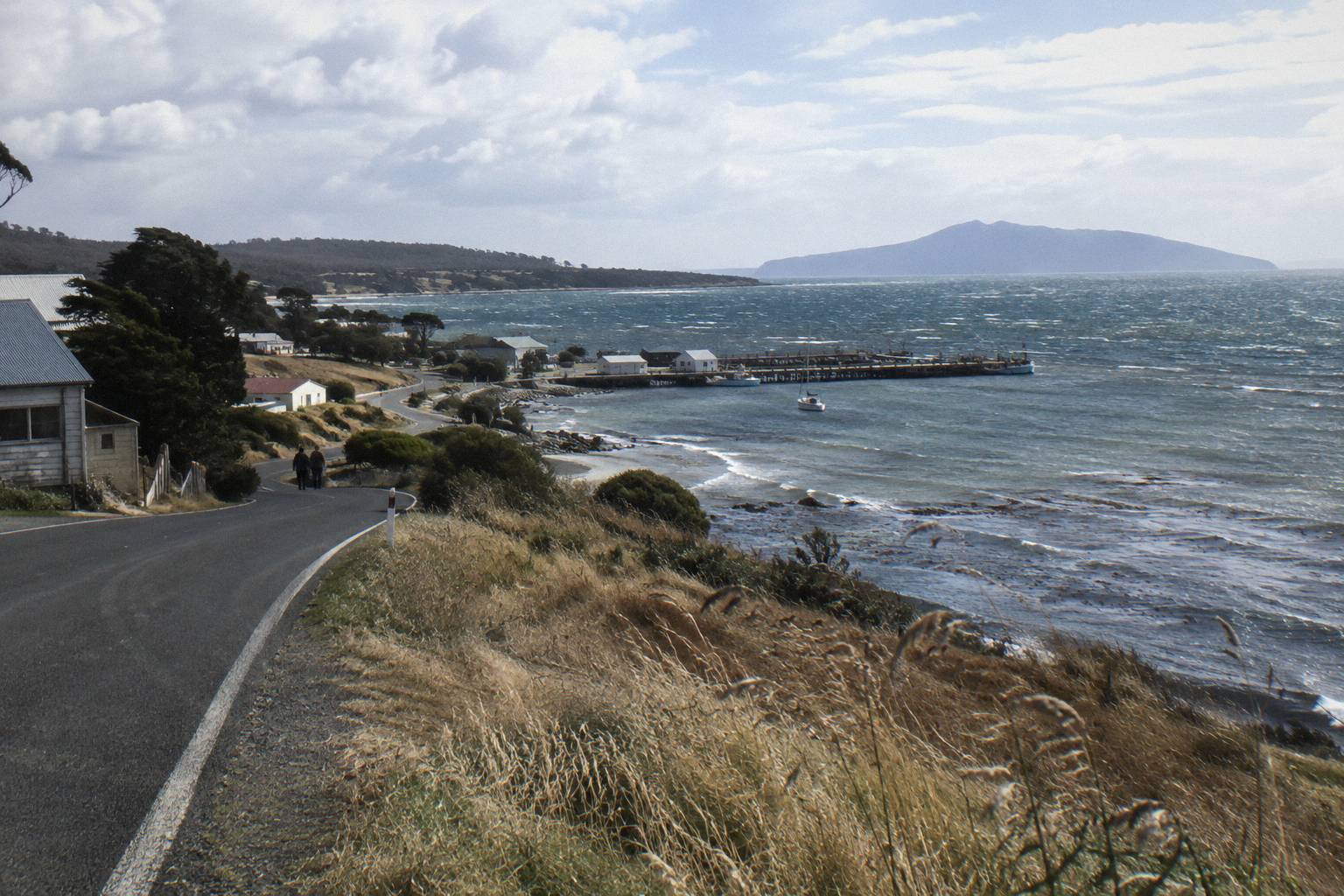
Driving yourself takes about 1 h 15 min for the 86 km via the Tasman Highway, though the ferry operator allows about 1.5 hours. The alternative is the dedicated daily shuttle bus from Brooke Street Pier in Hobart, whose times and price show at booking. Parking at Triabunna is free, according to the operator.
The drive is the flexible option. You leave when you like, stop when you like, and the ferry operator notes free parking in Triabunna, which removes the usual coastal-town parking anxiety. Launceston is also workable as a base at 186 km and about 2.5 hours, though it is a long day doubled up with a ferry crossing and a walk. Full directions, including the Gateway check-in process, are in the ferry and driving directions from Hobart.
The shuttle is the hands-off option. It runs daily from Brooke Street Pier for most months of the year, and because the times and price only show at booking, you need to check them against your ferry sailing before you rely on it. The operator's own shuttle bus page carries the current schedule, and the getting to Triabunna guide covers driving times and parking in the operator's own words.
Neither option is better in the abstract. The shuttle suits travellers without a car who are basing themselves in Hobart anyway; the drive suits anyone whose itinerary bends around the east coast, or who wants the margin of leaving earlier than a fixed bus departure allows. What both share is the same hard deadline at the other end: check-in closes at the Gateway, and the ferry does not wait.
| Option | Distance Or Route | Time | Notes |
|---|---|---|---|
| Self-drive from Hobart | 86 km via the Tasman Highway (A3) | About 1 h 15 min | Operator allows about 1.5 hours; free parking at Triabunna |
| Shuttle bus from Hobart | Brooke Street Pier to Triabunna | Times show at booking | Daily, most months of the year; price shows at booking |
| Drive from Launceston | 186 km | About 2.5 hours | Long but workable as a very early start |
If reading that table makes you want the whole transport question handled for you, there is a clean way out.
The Cruise And Walk From Hobart takes the drive, the parking and the check-in deadline off your plate entirely, and with free cancellation up to 24 hours before start it is a low-commitment way to structure the day around a Hobart base.
Ferry Timings And How They Shape Your Morning
The earliest summer sailing leaves Triabunna at 8:30, which is the number that should drive your accommodation choice. From a Triabunna base that is a relaxed walk to the wharf; from Hobart it means leaving the city around 7:00 or earlier. Winter mornings are gentler, with the first boat at 10:00, but only five days a week.
Check-in at the Maria Island Gateway, beside the wharf, opens 45 minutes before departure and staff check both park passes and luggage there. The Gateway itself is open 7 days, 7:45am to 3:30pm from September to April and 9am to 3:30pm from May to August, at the corner of Charles Street and Esplanade West. Get the timing wrong here and the nicest hotel in either town is worthless, because the boat leaves without you.
The fare structure also nudges the base decision. A same-day return is from A$59.00 for an adult, A$47.50 concession, A$36.50 for a student or a child 4 to 16, with infants 0 to 3 free. An overnight return is from A$70.00 per adult, and it is the overnight ticket that pairs with an on-island stay. The same-day ticket includes one 7 kg carry-on; the overnight ticket allows a carry-on plus two pieces up to 17 kg each. All amounts are Australian dollars and fares change.
One more luggage wrinkle for cyclists: a bicycle travels as freight from A$20.00, with a 15 kg maximum and panniers removed and checked as luggage. Extra luggage is A$11.00 per piece up to 17 kg. If a cycling day is on your list, the cycling and bike hire guide covers the on-island side.
| Period | Sailings to the island | Sailings back to Triabunna | Days |
|---|---|---|---|
| September to April | 8:30, 10:00, 11:30, 3:15pm | 9:15am, 10:45am, 2:30pm, 4:15pm | Every day except Christmas Day |
| May to August | 10:00, 11:30, 3:15pm | 10:45am, 2:30pm, 4:15pm | No Tuesday or Thursday sailings |
Staying Overnight On The Island Itself
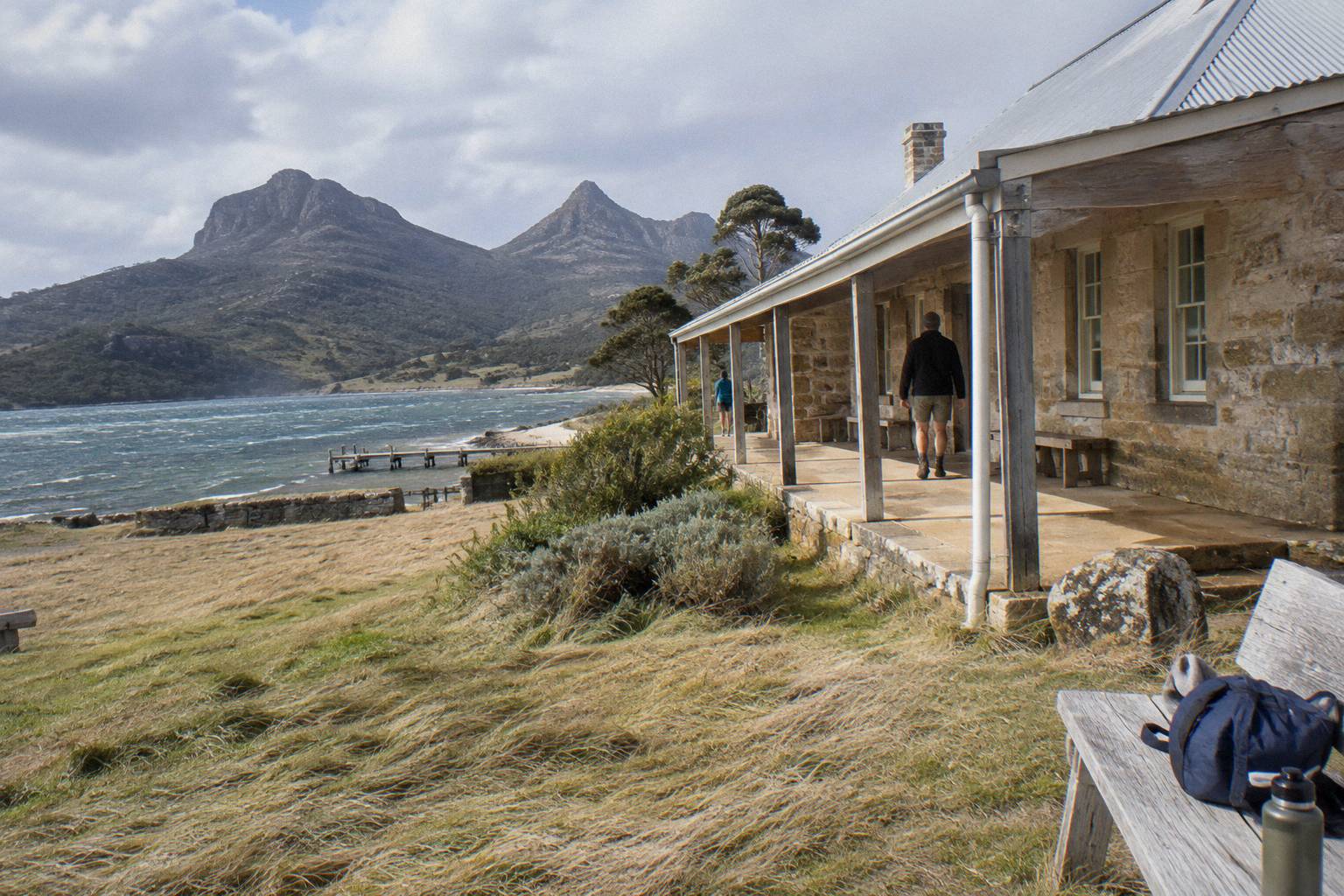
The only roofed accommodation on Maria Island is the Penitentiary bunkhouse in Darlington, with nine rooms of six bunks from A$95 per night per room and one room of 14 from A$150 per night. There is no electricity, check-in is after 2pm and checkout is by 10am, and you bring your own food, bedding and torch. A tent site at the Darlington campground is A$18.00 per site per night.
The bunkhouse is the closest thing the island has to a hotel, and it is a grand piece of convict-era fabric rather than a conventional one. Booking opens up to six months ahead, online or through the Sheffield Visitor Information Centre, and it fills for summer weekends well before the ferry does. Gas hobs in the Mess Hall cover cooking, but everything else, including every meal, is carried in: there are no shops on the island at all, a point the what to pack guide treats at length.
Camping is the budget alternative, behind the dunes at Darlington, with a covered barbecue area, free gas barbecues, toilets and trolleys at the jetty. The ferry operator also lists free campsites at Frenchs Farm and Encampment Cove further afield. A seasonal campfire ban applies, and showers at Darlington are unavailable while upgrade works run, so do not plan around them.
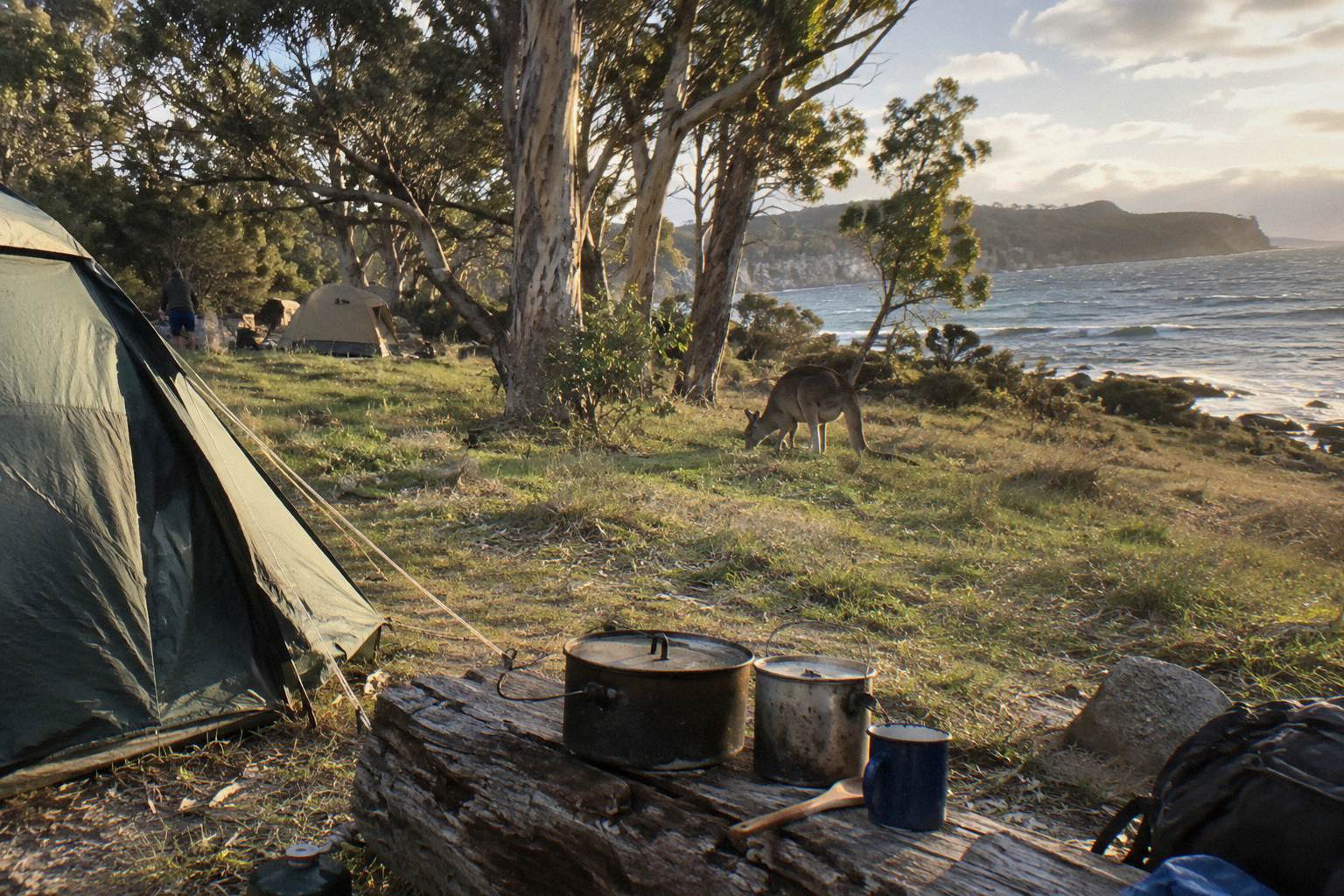
An overnight stay also changes your ticket. The overnight ferry return, from A$70.00 per adult, carries a carry-on plus two pieces up to 17 kg, which is what makes hauling in food, bedding and a tent practical. And an overnight base unlocks the walks a day return cannot fit: Mount Maria, 16 km return to 711 m, generally needs a second day, which the multi-day walking guide explains.
| On-island option | Price | What to know |
|---|---|---|
| Penitentiary bunkhouse, rooms 1 to 9 | From A$95 per room per night | Six bunks, no electricity, book up to 6 months ahead |
| Penitentiary bunkhouse, room 10 | From A$150 per night | 14 bunks, same conditions |
| Darlington tent site | A$18.00 per site per night | Maximum 6 people per site, per Parks |
| Frenchs Farm and Encampment Cove | Free camping | Listed by the ferry operator, far from the jetty |
For context, the island's best-known multi-day product, The Maria Island Walk run by a separate company, is a four-day guided walk with two wilderness camps and a final night at Bernacchi House, with transfers, meals and the park pass included. Its three-day Winter Escape runs from A$1,955 per person twin share. It is a different animal from a bunkhouse night, but it belongs in the same conversation for travellers deciding how long to stay.
What It Costs To Base Yourself In Each Place
Count the park pass on top of the bed. A daily parks pass is A$24.55 per person arriving on foot, by bus or by cycle, children under 5 are free, and a Seniors Card concession takes 20 percent off. The ferry does not include the pass, but the cruise and tour products listed here all include park entry, which quietly closes part of the price gap between independent and guided days.
This is where the two-base comparison gets interesting. An independent day from Triabunna is ferry fare plus pass plus whatever your bed cost. A guided day from Hobart is one price that already contains the transport and the entry: the Cruise And Walk From Hobart is A$365 per adult on the operator site with park entry included, and the Active Day Tour From Hobart includes both the ferry crossing and park fees, with its price showing on the booking page.
The holiday pass, A$49.20 per person for all Tasmanian parks for up to two months, can beat the daily pass if Tasmania is more than a one-day stop on your itinerary. Passes can be added at online booking or bought at the Gateway before departure, and proof is checked at check-in. The full breakdown is in the national park pass guide.
The cancellation terms deserve a glance before you prepay anything. The Cruise And Walk From Hobart and the Cruise And Walk From Triabunna both allow free cancellation up to 24 hours before start. The Active Day Tour From Hobart is different: its two booking pages show different terms, one free up to 2 days before and one non-refundable, so check the terms on the booking page you use before relying on a refund.
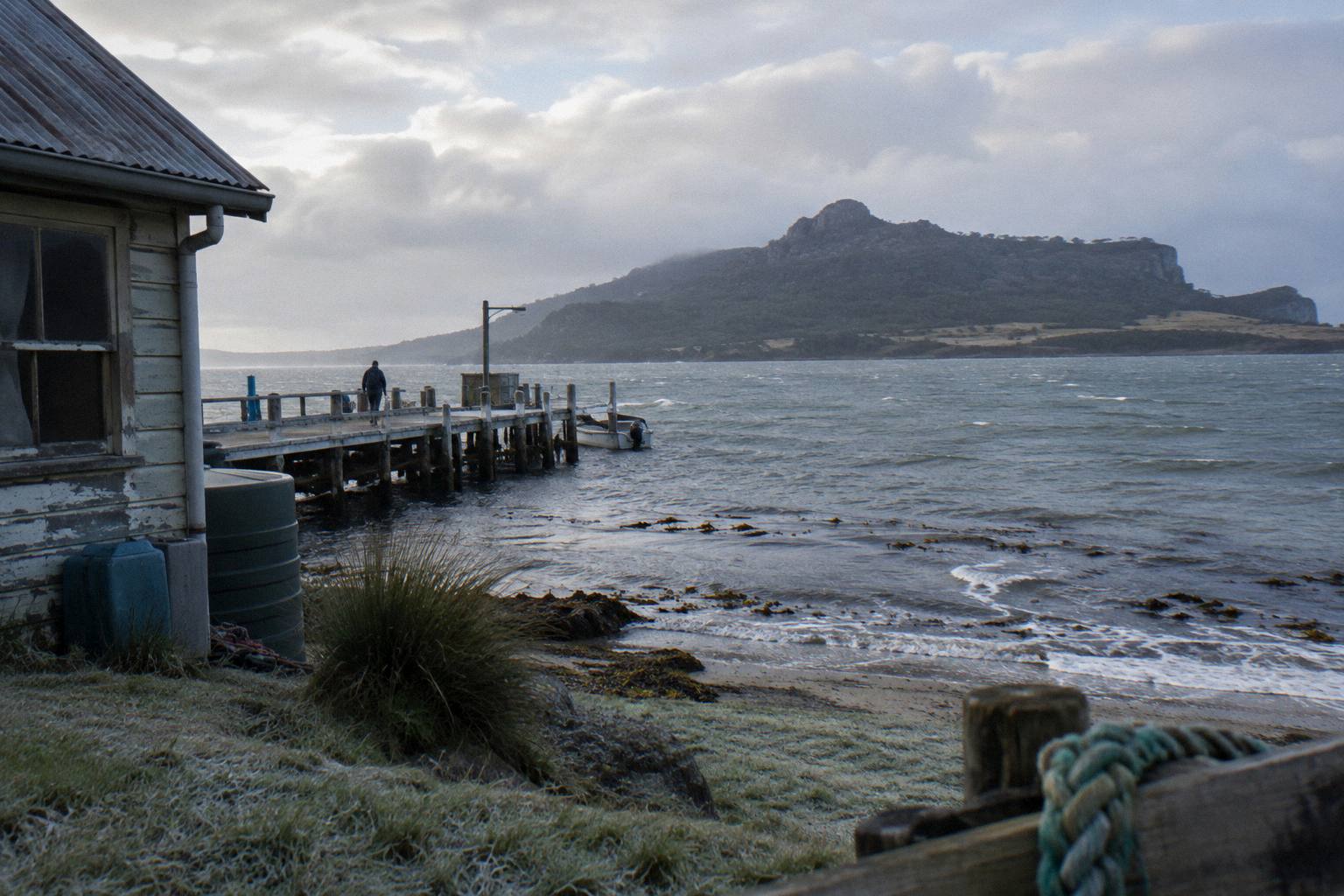
What Trips People Up When Picking Where To Sleep
The three recurring mistakes are underestimating the check-in deadline, forgetting the winter sailing gap, and assuming the island has supplies. Each one turns a well-planned day into a missed boat, and each is avoidable with a calendar, a clock and a packed lunch.
The first is timing. Gateway check-in closes 45 minutes before sailing, and luggage and passes are checked there, so arriving at the wharf at 8:25 for an 8:30 boat is not cutting it fine, it is missing it. Travellers basing themselves in Hobart and driving should build the 86 km, plus that margin, into their alarm.
The second is the calendar. From May to August there are no Tuesday or Thursday sailings at all, and only three departures a day when the boats do run. A long weekend booked around the wrong weekday can end with no ferry and no plan B, unless a Hobart-start tour happens to be running that day.
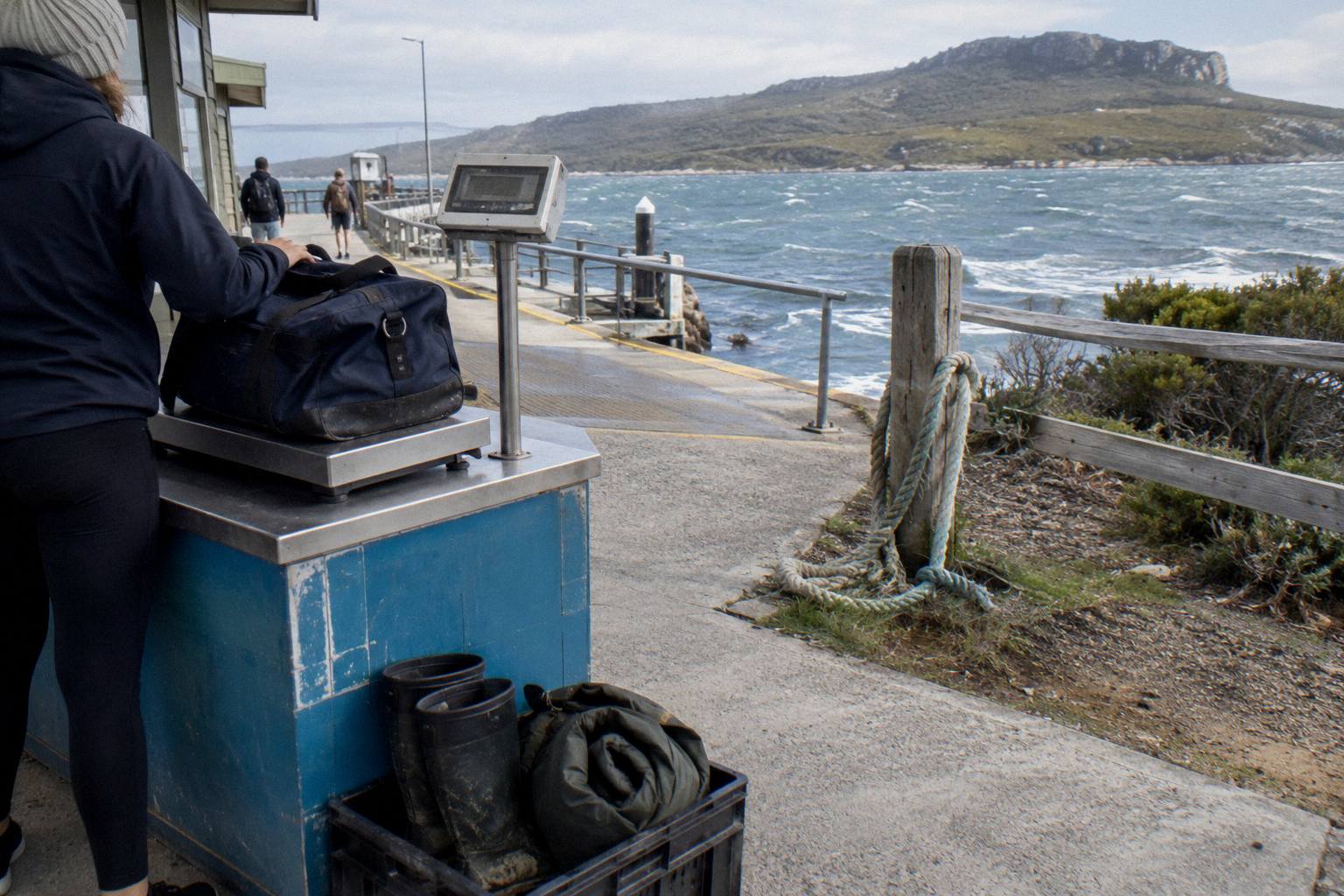
The third is assuming the island will feed you. There are no shops or cafes on Maria Island; the building called the Coffee Palace is a museum. Food, drink and water treatment all travel with you, though the ferry does sell food, drinks, coffee, local beer and wine on board, which softens the morning leg. The water on the island is not potable without boiling for one minute or purifying. Parks covers the island's facilities and rules on its official Maria Island page.
A fourth, quieter trap: upgrade works are under way at Darlington, with water, wastewater and electrical works affecting the township, and showers unavailable while they run. Anyone booking the bunkhouse or campground should plan around no showers rather than being surprised by them.
When A Tour From Hobart Beats Basing Yourself In Triabunna
A Hobart-start tour wins when you have no car, when you are in Tasmania for only a night or two, or when the winter ferry schedule does not fit your dates. It also wins on simplicity: one booking covers transport, entry and the walk, and you sleep in the same bed on both sides of the day.
The clearest case is the short stay. If you fly into Hobart, have two nights, and want the island without a rental car, the Cruise And Walk From Hobart is close to purpose-built: a 7:45am check-in at Franklin Wharf in Hobart, bus to the coast, the operator's own cruise rather than the public ferry, park entry included, and a 5.0 rating from 630+ reviews. The price for your date shows on the booking page.
The Active Day Tour From Hobart suits the same profile with more walking: about 10 km of it, at moderate fitness, in a small group, with the ferry crossing and park fees included and a return to Hobart. Its 4.8 rating comes from 240+ reviews. It is the pick for travellers who measure a day in kilometres rather than boat hours.
Winter visitors have a third option in the same family of Hobart starts: a Winter Day Trip of about 8 hours with hotel pickup, a Davey Street start around 9:00am, ferry and park fees included, and lunch with a glass of wine, from the same operator that runs the Grand Picnic Day Walk in the warmer months. When the ferry runs only five days a week in July, a guided day that bundles everything becomes more than a convenience.
For travellers who do want to base themselves on the coast, the Triabunna cruise is the mirror image: a 9:30am check-in at 21 Vicary Street, about 6 to 8 hours on and around the water, landing and park fee included, and a 5.0 rating from 230+ reviews. You can also check availability for your dates on the tour page.
Putting It Together: A Decision In Three Questions
Ask yourself three things: what leaves from where, how early is check-in, and what happens if the weather turns. Your base follows from the answers almost automatically, and the whole planning puzzle collapses into a single morning you can picture before you book anything.
If your answer is a guided day from the capital, book the tour, sleep in Hobart, and let the operator own the clock; Maria Island Tours exists to make exactly that comparison easy. If your answer is independence, book the ferry first, confirm the sailing time, then choose your bed within reach of the wharf. If your answer is the island itself, book the bunkhouse or a campsite up to six months ahead, buy the overnight ticket, and start planning meals rather than mornings.
Whichever way you lean, the same three products come up again and again as the cleanest ways to structure a first visit.
Common Questions About Staying Near Maria Island
Can You Stay Overnight On Maria Island?
Yes, in the Penitentiary bunkhouse at Darlington, with nine rooms of six bunks from A$95 per room per night and one room of 14 from A$150, or camping at the Darlington campground at A$18.00 per site per night. There is no electricity in the bunkhouse, and there are no shops, so you carry in food, bedding and a torch.
Is It Better To Stay In Triabunna Or Hobart?
Stay in Triabunna if you are catching the public ferry or a Triabunna cruise, both of which leave from the wharf area. Stay in Hobart if you have booked a Hobart-start tour with a 7:45am check-in at Franklin Wharf in Hobart, or if you plan to use the daily shuttle bus from Brooke Street Pier. The drive between them is 86 km, about 1 h 15 min.
How Early Do You Need To Arrive For The Ferry?
Check in at the Maria Island Gateway building beside Triabunna wharf at least 45 minutes before departure. Park passes and luggage are checked there. The earliest summer sailing is 8:30am, which from a Hobart base means leaving the city around 7:00 or earlier.
Does The Ferry Ticket Include The Park Pass?
No, the park pass is extra and can be added at online booking or bought at the Gateway. A daily pass is A$24.55 per person arriving on foot, by bus or by cycle. The cruise and tour products from Hobart and Triabunna do include park entry.
Are There Shops Or Restaurants On The Island?
No, there are no shops or cafes on Maria Island, and the water there needs boiling for one minute or purifying. You carry in everything you need. The ferry sells food, drinks, coffee, local beer and wine on board.
What Happens If The Ferry Is Cancelled For Weather?
The skipper may delay or cancel sailings in bad weather, and all sailings depend on demand and safe conditions. Booking is essential and sold-out departures cannot take extras. If your ferry day is weather-affected, a Hobart-start tour that includes its own transport is the usual fallback.