How To Get Around Maria Island: Walk, Cycle Or Join A Guided Day
On foot or by bike, with no vehicles on the island: walking times, bike hire costs and guided day options that handle all transport from Hobart.
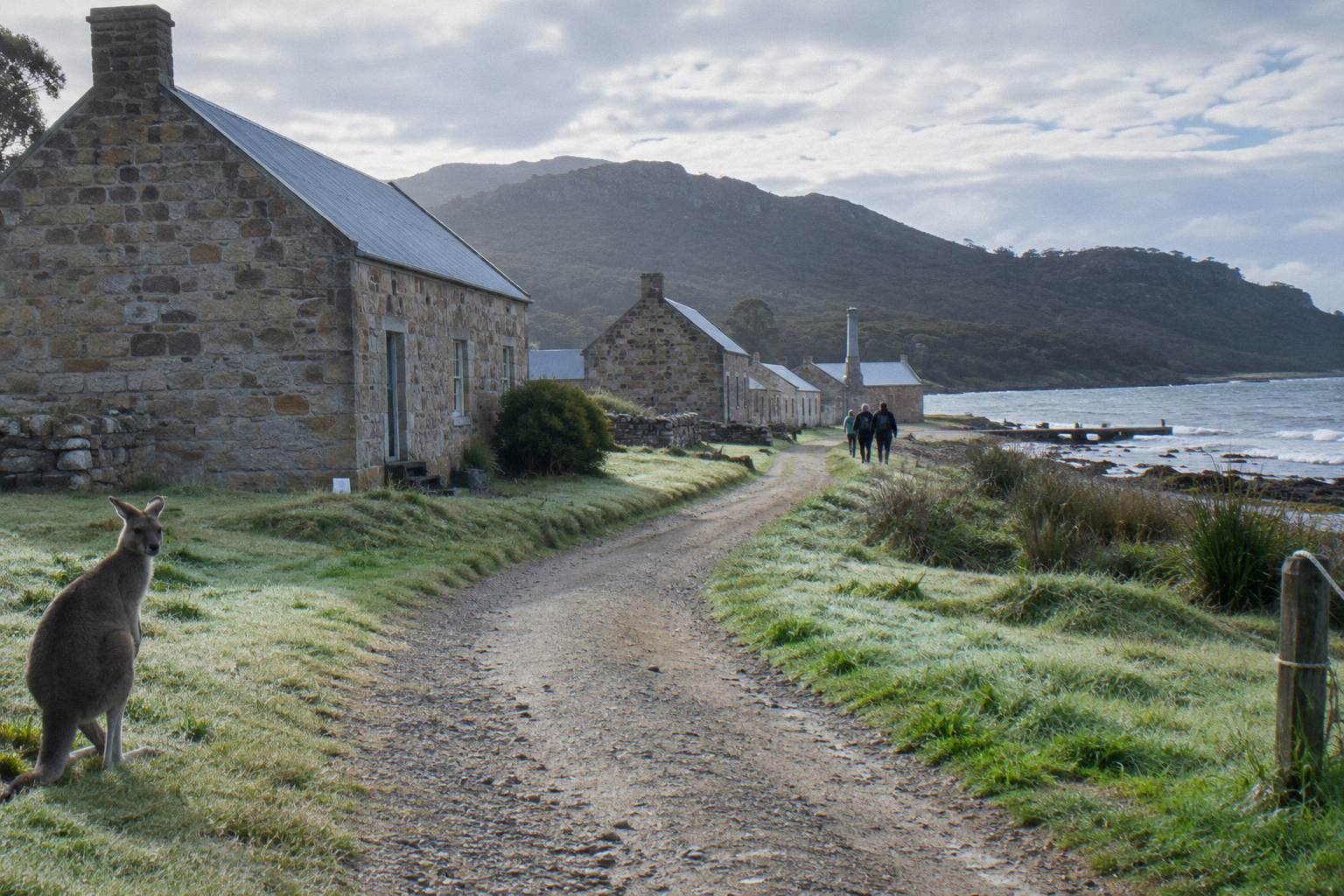
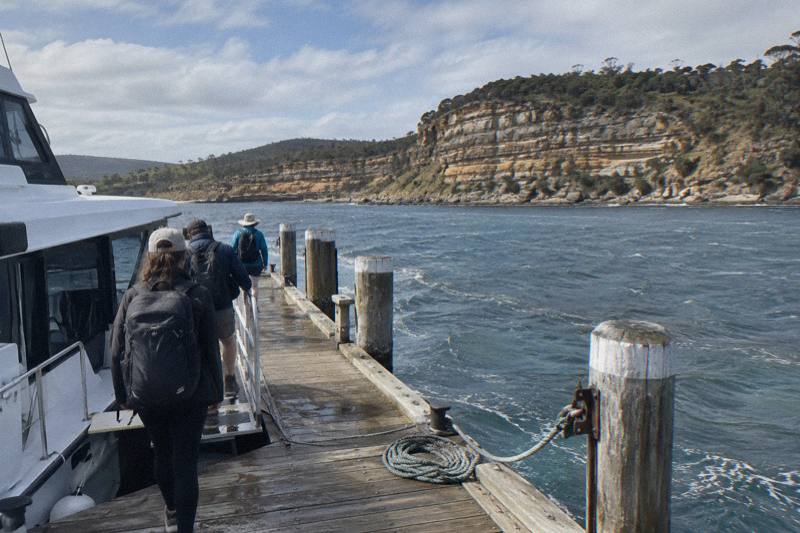
Maria Island has no cars, no shuttle buses and no taxis, and it has been that way since the national park was declared in 1971. Once the ferry ties up at the Darlington jetty, there are exactly two ways to move: your own legs or a bicycle. That constraint sounds limiting until you look at the map, because the walks most visitors want, the Painted Cliffs, the Fossil Cliffs and the Darlington township itself, all start within a short stroll of where everyone steps ashore. The island runs 20 km tip to tip and covers 115.5 square kilometres, with Mount Maria at 711 m as the high point, so the real decision is not whether you can get around but how far you want to go in the hours a day trip gives you.
For most people the answer is a mix: walk the near-Darlington tracks in the morning, hire a bike if the longer legs call, or skip the logistics completely by joining a guided day from Hobart that bundles the ferry, the park entry and the route planning into one booking.
The Active Day Tour From Hobart is the walk-heavy option: about 10 hours door to door, around 10 km of walking at a moderate fitness level, ferry and park fees included, back in Hobart, rated 4.8 from 240+ reviews. The Grand Picnic Day Walk covers similar ground with a small group capped at eight. The Cruise And Walk From Hobart takes a different route to the island entirely, with a 7:45am check-in at Franklin Wharf in Hobart, a bus to Triabunna and then the operator's own cruise instead of the public ferry, listed at A$365 per adult on the operator site, rated 5.0 from 630+ reviews. All amounts on the site are Australian dollars, and fares and prices change with review cycles.
Why The Island Has No Vehicles And What That Means For You
Maria Island has no vehicles of any kind, with no exceptions for visitors, which means your own two feet are the only way to explore. The island also has no shops or cafes, so everything you need for the day must travel with you from the moment you arrive. The island became a national park in 1971, and access is by ferry or by the tour boats only. What that means in practice is simpler than it sounds: Darlington, where everyone arrives, sits at the centre of a network of tracks that fan out to the cliffs, the reservoir and the peaks, and every one of them is a walking track or a shared route where bikes are permitted on the vehicle-free gravel roads but banned from the walking tracks themselves. If you want a fuller picture of the vehicle ban and what it covers, the companion piece on whether cars are allowed on Maria Island works through the detail.
The absence of vehicles also shapes what you carry. There are no shops, so food and water for the whole day come with you, and the tap water on the island is not potable: the advice is to boil it for one minute or purify it, with a few signed taps at the Darlington barbecue shelter and the Mess Hall. There are no rubbish bins either, so whatever you bring in leaves with you. None of this is a hardship on a day trip, it is just planning, and it is the difference between a relaxed loop of the cliffs and a hungry afternoon.
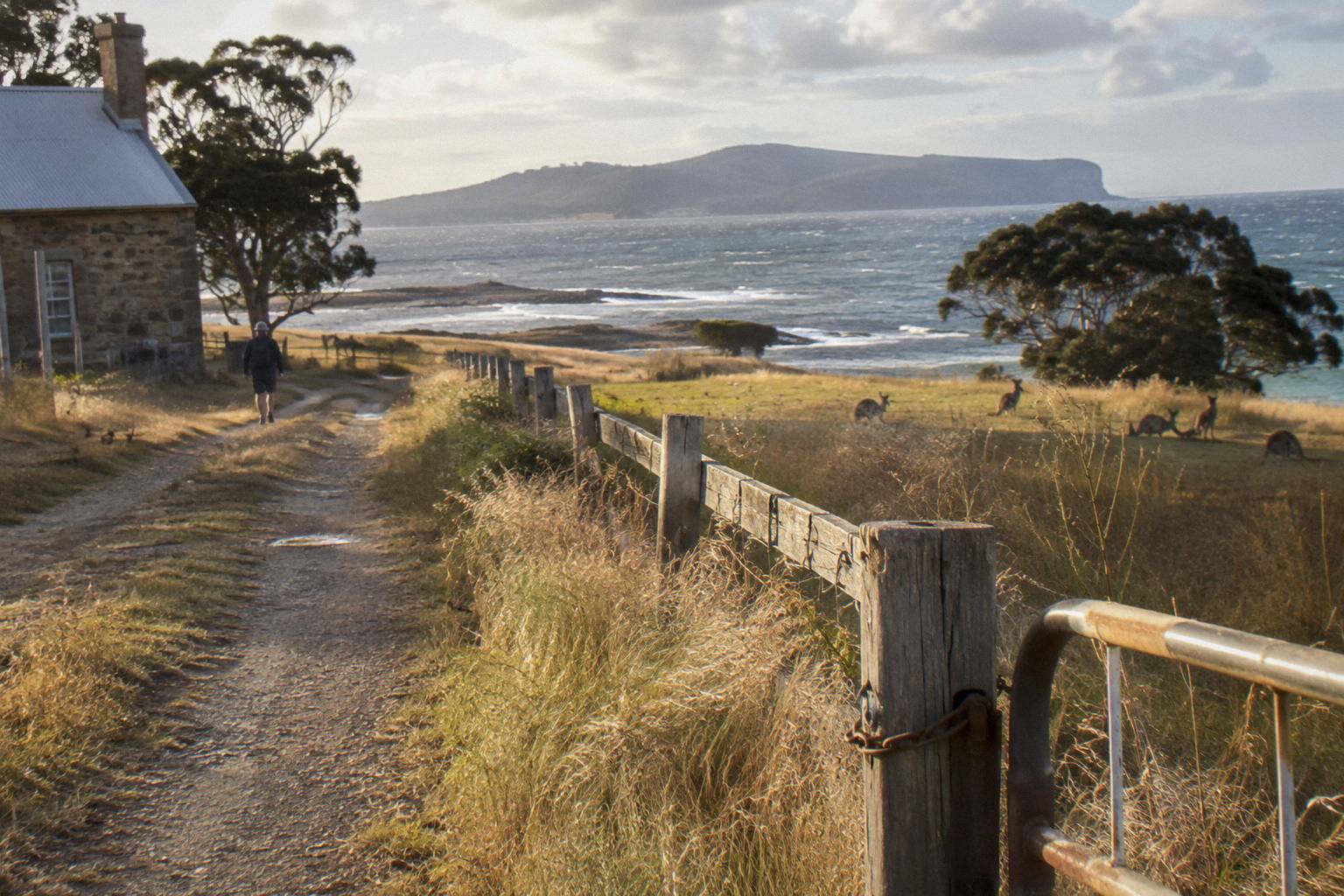
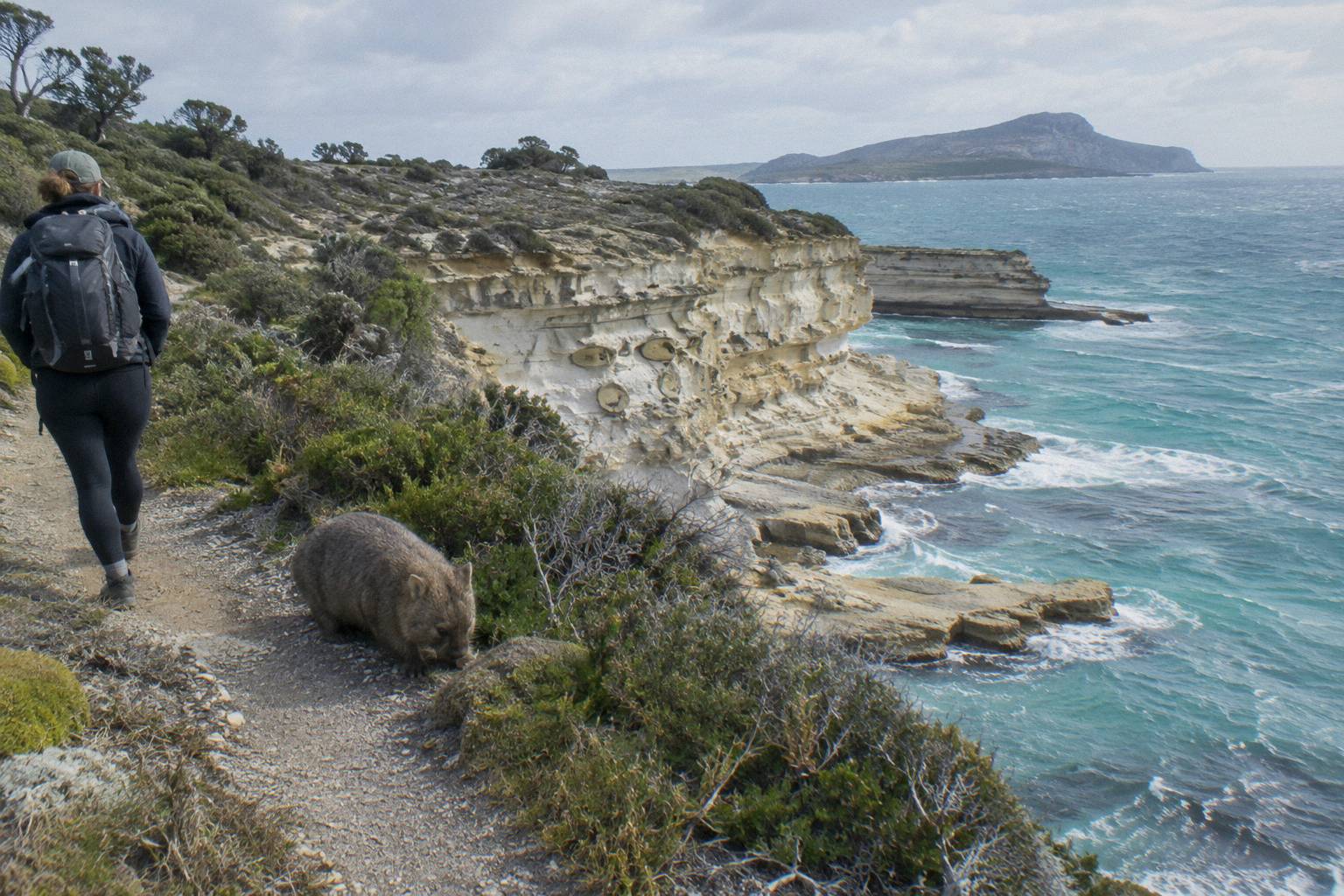
Wildlife moves through the same open ground you do. The parks guidance is to keep 2 m from all animals and never feed them, and on a car-free island the animals are not dodging traffic, they are grazing beside the track. Nothing about a sighting is ever guaranteed, wombats included, but the walking pace gives you the time to notice what is there.
Walking: The Default Way To Cover Darlington And Both Cliffs
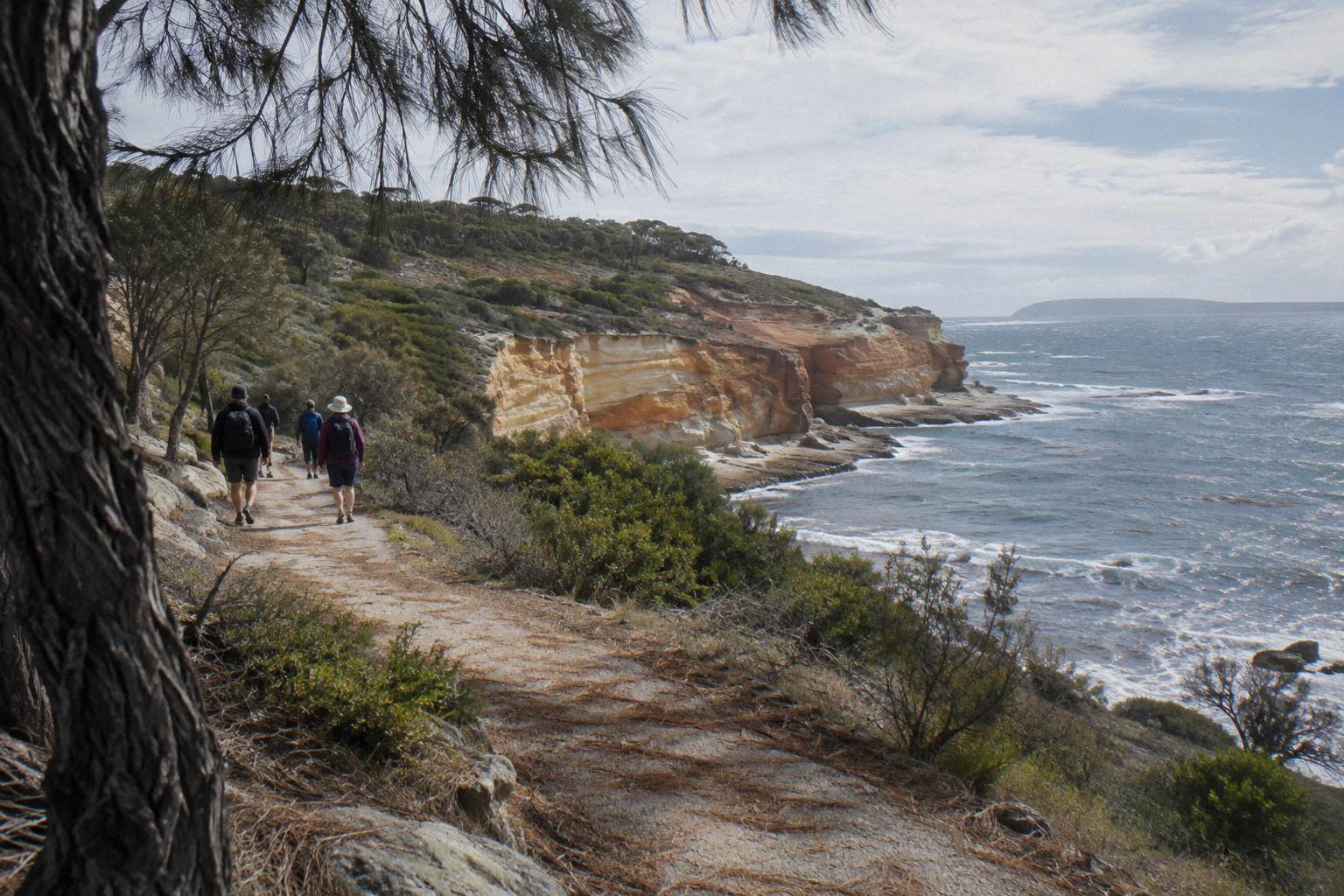
Walking is the default way to cover Maria Island, and for good reason: the island's three most-visited destinations, Darlington and both cliffs, all sit within easy walking distance of the jetty. Even the shortest loop takes well under an hour, so you can comfortably take in the main sights entirely on foot. The Darlington Township Walk is 1 km, Grade 2, and takes 30 minutes to 2 hours depending on how long you linger at the convict buildings, which carry World Heritage inscription from 2010 as part of the Australian Convict Sites. The Painted Cliffs track is 4.3 km return, Grade 3, and takes 1 to 2 hours. The Fossil Cliffs circuit is 4.5 km, Grade 3, and takes 1 to 2.5 hours, past fossils about 300 million years old. A day visitor who walks steadily can do the township, both cliff walks and a long lunch, and still make the afternoon ferry with time in hand.
Two conditions matter more than fitness. The Painted Cliffs rock platform is safest within two hours of low tide and only in calm seas, and the cliffs themselves are unstable, so they cannot be climbed or reached from above. The tides do not care about the ferry timetable, so check the low tide for your date before you plan the day around that walk, and remember the beaches are unpatrolled. The Fossil Cliffs circuit has no such constraint and is the safer bet when the tide or the swell does not cooperate.
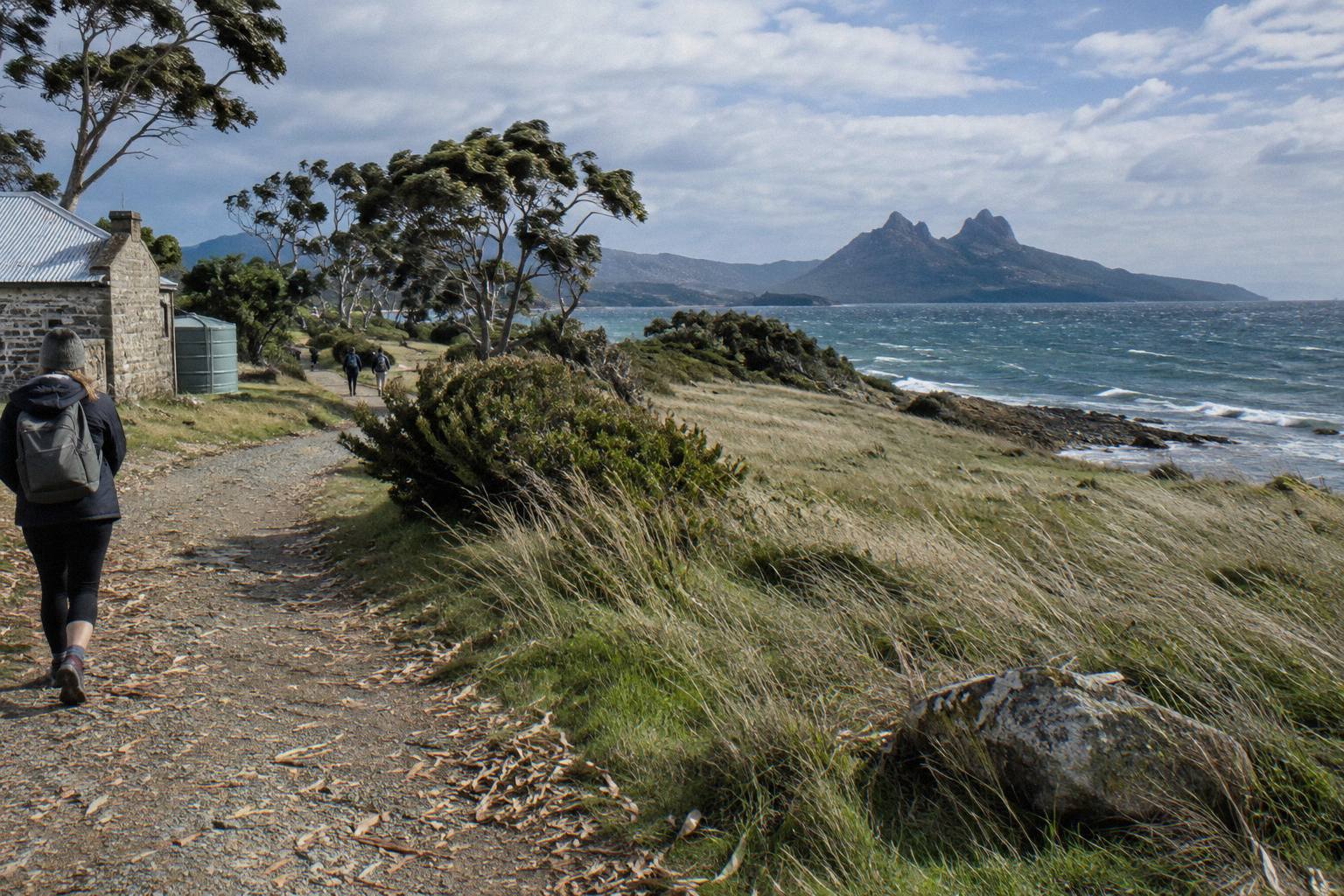
Beyond the cliffs, the walks get serious. Bishop and Clerk is 11 km return, Grade 4, 4 to 5 hours of walking with scrambling and exposure to a 620 m summit. Mount Maria is 16 km return, Grade 4, 8 hours of walking to 711 m, and it is generally not possible to return on the same-day ferry, so it belongs to overnight visitors. The long cross-island routes, Frenchs Farm at 22 km return and Encampment Cove at 26 km return, are bike territory for anyone on a day trip. If you are weighing which of these fits your fitness and your ferry times, the guide to guided and self-guided walks on the island grades every option in one place.
Cycling: Hire Costs, Booking Lead Times And Where Bikes May Go
Bikes are the only way to compress the long routes into a day trip: hire starts from A$40 per adult per day, dropping to A$30 per day for two or more days, with children's bikes at A$30 and A$20 on the same terms. Hire is booked online at least 24 hours ahead, and the bikes are collected up to 3:15pm next to the penitentiary in Darlington. They are hard-trail mountain bikes in sizes to fit riders from 7 years, a helmet is supplied, and there are no child seats. If you prefer your own bike, it travels on the ferry as freight from A$20, with the operator's luggage rules on weight and panniers applying at check-in. The full picture, including the rules for e-bikes, sits in the cycling and bike hire guide, and the official ferry operator's bike hire page carries the current rates and the booking form.
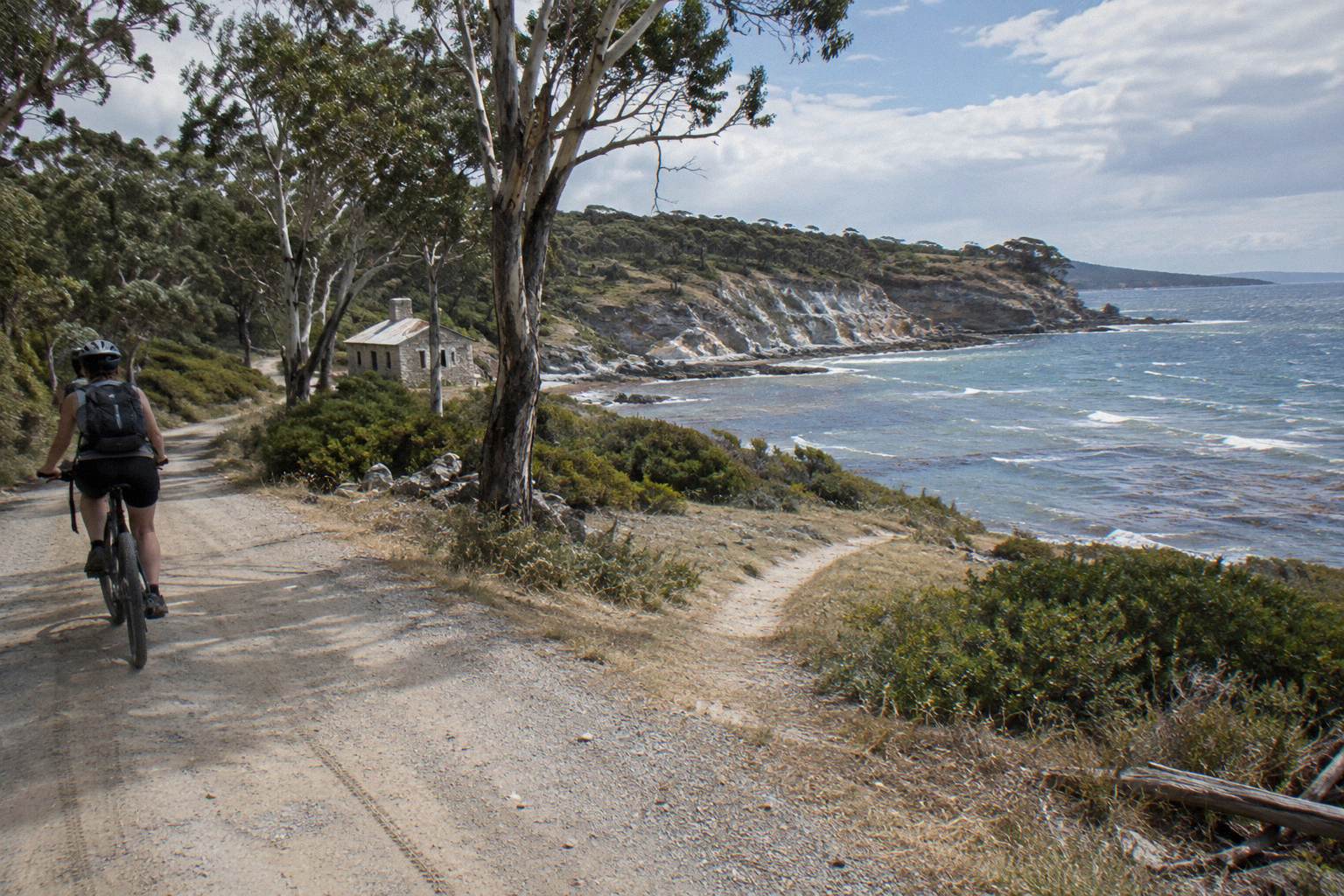
The single rule that shapes a cycling day: bikes are not allowed on walking tracks. They belong on the vehicle-free gravel roads, which is exactly where the far destinations sit. Riding times from the parks notes: Painted Cliffs 0.5 to 1.5 hours, Fossil Cliffs 1 to 1.5 hours, the Reservoir Circuit 0.5 to 1 hour, and both Bishop and Clerk and Mount Maria 3 to 5 hours. A rider of average fitness can reach Frenchs Farm or Encampment Cove and return inside a day trip window, distances that are simply not realistic on foot between ferry sailings.
Cycling also changes what a day trip can include. A walker chooses between the cliffs or the reservoir; a rider can do the township, both cliff lookouts and the reservoir circuit with hours to spare, or spend those hours pushing out toward the remote northern blocks where the crowds thin to nothing. The trade-off is surface and effort: the gravel roads are rideable but rough in places, and the 3 to 5 hour rides to the peaks carry real climbing alongside the walking-track ban near the summits themselves.
Guided Days That Handle Every Leg From Hobart
A guided day truly does handle every leg from Hobart: your pickup in the city, the crossing, park entry and the route itself are all taken care of, and the day walks are led by a guide rather than left for you to work out on your own. All you do is turn up, walk, and ride home. The Active Day Tour From Hobart starts on Davey Street, earlier in summer than in winter, includes the ferry and park fees, runs about 10 hours, and returns to Hobart. It is a small group day with about 10 km of walking at a moderate fitness level, rated 4.8 from 240+ reviews. Its cancellation terms differ between its two booking pages, one shows free cancellation up to 2 days before and the other is non-refundable, so check the terms on the booking page you use before you commit. The price for your date shows on the booking page.
The Grand Picnic Day Walk covers the same transport chain with a smaller cap: about 10 hours, Hobart hotel pickup with a Davey Street start around 8:15am, land and sea transport and park fees included, a maximum of 8 travellers, and free cancellation up to 24 hours before start. For travellers who want the walking day without the ferry-and-timetable homework, either format does the job, and both leave the heavy planning to the operator.
The third format skips the public ferry altogether. The Cruise And Walk From Hobart takes a 7:45am check-in at Franklin Wharf in Hobart, a bus to Triabunna, then the operator's own cruise to the island rather than the scheduled ferry, with park entry included, free cancellation up to 24 hours before start, and a price of A$365 per adult on the operator site, rated 5.0 from 630+ reviews. The meeting point shows at booking, and no duration is printed because the booking pages disagree. For a full comparison of the Hobart day trip options for the island, the live itinerary and date availability carry the detail, with Buffet Lunch Cruise, 11 Hours showing current dates.
Guided days also answer the food question. There are no shops on the island, so a self-guided day means carrying everything, while the guided formats build the meal stop into the itinerary. That alone swings the decision for families and for anyone who would rather not plan a picnic around a ferry sailing.
Walk Times Versus Ride Times, Side By Side
Set the two modes side by side and the difference is immediate: on the near routes, riding a bike roughly halves the time those walks would take, while the far routes change in character entirely, shifting from overnight propositions on foot into genuine day-trip possibilities once you travel by bike. The table below sets the parks walking times against the riding times for the same destinations. Read it with your ferry sailing in mind: a day visitor has a fixed window ashore, and the difference between 2 hours and 40 minutes at the Painted Cliffs is the difference between one destination and three.
| Destination | Distance | Grade | Walking Time | Riding Time |
|---|---|---|---|---|
| Darlington Township Walk | 1 km return | Grade 2 | 0.5 to 2 h | not a bike route |
| Painted Cliffs | 4.3 km return | Grade 3 | 1 to 2 h | 0.5 to 1.5 h |
| Fossil Cliffs | 4.5 km circuit | Grade 3 | 1 to 2.5 h | 1 to 1.5 h |
| Reservoir Circuit | 4 km return | Grade 3 | 1.5 h | 0.5 to 1 h |
| Bishop and Clerk | 11 km return | Grade 4 | 4 to 5 h | 3 to 5 h |
| Mount Maria | 16 km return | Grade 4 | 8 h | 3 to 5 h |
| Frenchs Farm | 22 km return | Grade 3 | 6 h | day-trip feasible by bike |
| Encampment Cove | 26 km return | Grade 3 | 8 h | day-trip feasible by bike |
Two footnotes to the numbers. Mount Maria is generally not possible to return on the same-day ferry even at riding pace, so treat it as an overnight objective however you travel. And the Painted Cliffs figure comes with the tide caveat regardless of wheels: the rock platform is safest within two hours of low tide and in calm seas only, a condition that applies to cyclists and walkers identically.
The bike hire costs sit alongside those times like this:
| Hire Item | 1 Day | 2 or More Days |
|---|---|---|
| Adult bike | from A$40 | from A$30 per day |
| Child bike (riders from 7 years) | from A$30 | from A$20 per day |
| Own bike, ferry freight | from A$20 | from A$20 each way |
Helmets are supplied with every hire, bookings need 24 hours' lead, and rates change, so confirm current amounts at the booking step. The official national park pages hold the track grades and times that these figures come from.
What Trips People Up When Planning Island Movement
Most planning mistakes fall into four predictable patterns: visitors bank on seeing the Painted Cliffs without checking the tide, assume bikes can be taken anywhere, underestimate how much food and water they will need, and misread which tours actually use the ferry. Each error is avoidable with simple advance planning. The tide error is the most common. Visitors plan the cliffs as the centrepiece of the day, arrive to find the platform unsafe at high water or in swell, and lose the headline stop. The fallback is simple: the Fossil Cliffs circuit has no tide dependency, and the township walk fills any gap.
The second error is treating a bike as an all-access pass. Bikes are banned from walking tracks, which includes the final approaches to the cliff lookouts and the summit scrambles, so every far destination still ends on foot. Riders from 7 years are catered for but child seats do not exist, so a family with a toddler is a walking family no matter what the hire page suggests. The third error is food: with no shops and no bins, the day's meals, water and rubbish all travel with you, and the tap water needs boiling or purifying.
The fourth error is mixing up the transport. The ferry sails from Triabunna, and the cruise-based days depart from Triabunna or Hobart on the operators' own boats: the Cruise And Walk From Hobart, for instance, never uses the public ferry. If a Hobart start matters to you, the guided days are the formats that provide it, as the piece on a day trip from Hobart to the island lays out option by option. Planning the movement well is most of the day won, and it is why Maria Island Tours keeps the transport detail and the walking detail side by side rather than treating the island as one undifferentised destination.
Common Questions About Getting Around Maria Island
How To Go Around Maria Island?
On foot or by bike. There are no vehicles on the island, so everyone arrives at the Darlington jetty and moves from there under their own power, either walking the tracks or riding a hired or own bike on the vehicle-free gravel roads.
Can You Hire Bikes On Maria Island?
Yes. Hire runs from A$40 per adult per day, or A$30 per day for two or more days, with children's bikes from A$30 and A$20 on the same terms. Book online at least 24 hours ahead and collect the bike next to the penitentiary in Darlington, up to 3:15pm.
Is Maria Island Walkable In A Day?
The near-Darlington walks, yes: the township walk, the Painted Cliffs at 4.3 km return and the Fossil Cliffs circuit at 4.5 km all fit inside a day-trip window. Bishop and Clerk at 11 km return is possible for strong walkers, while Mount Maria at 16 km return generally needs an overnight stay.
Are Bikes Allowed On All Tracks?
No. Bikes are not allowed on walking tracks, which covers the cliff approaches and the summit scrambles. They are for the vehicle-free gravel roads, which is where the long routes to Frenchs Farm and Encampment Cove run.
Do Any Tours Handle Getting Around For You?
Yes. The guided days from Hobart, such as the Active Day Tour and the Grand Picnic Day Walk, include the ferry crossing, the park entry and a planned walking route, while the Cruise And Walk From Hobart reaches the island on the operator's own cruise rather than the public ferry.
Can You Take Your Own Bike To Maria Island?
Yes, as freight on the ferry from A$20, with the operator's luggage rules on weight and panniers applying at check-in. E-bikes are also accepted as freight, and there is no charging on the island, so arrive with a full battery.