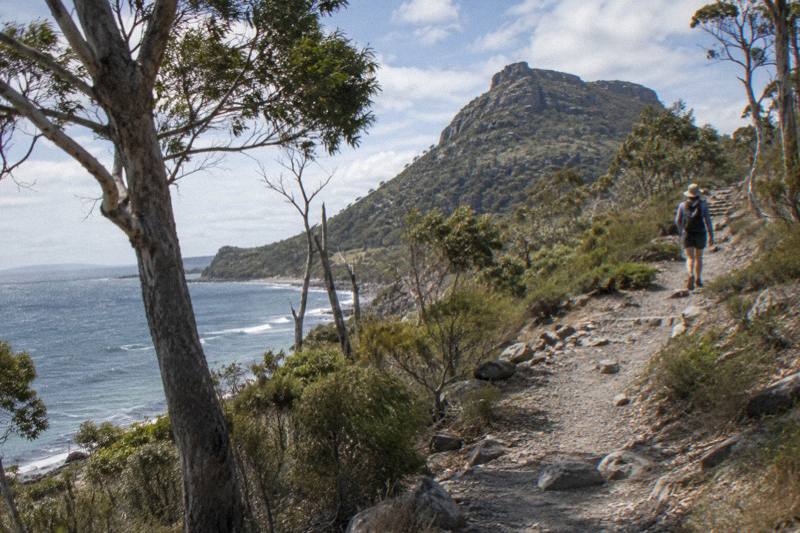
Do You Need Low Tide For The Painted Cliffs Walk On Maria Island?
Low tide and calm seas decide whether the Painted Cliffs rock platform on Maria Island is safe to walk. Here is how to time a ferry, cruise or tour departure around the tide.
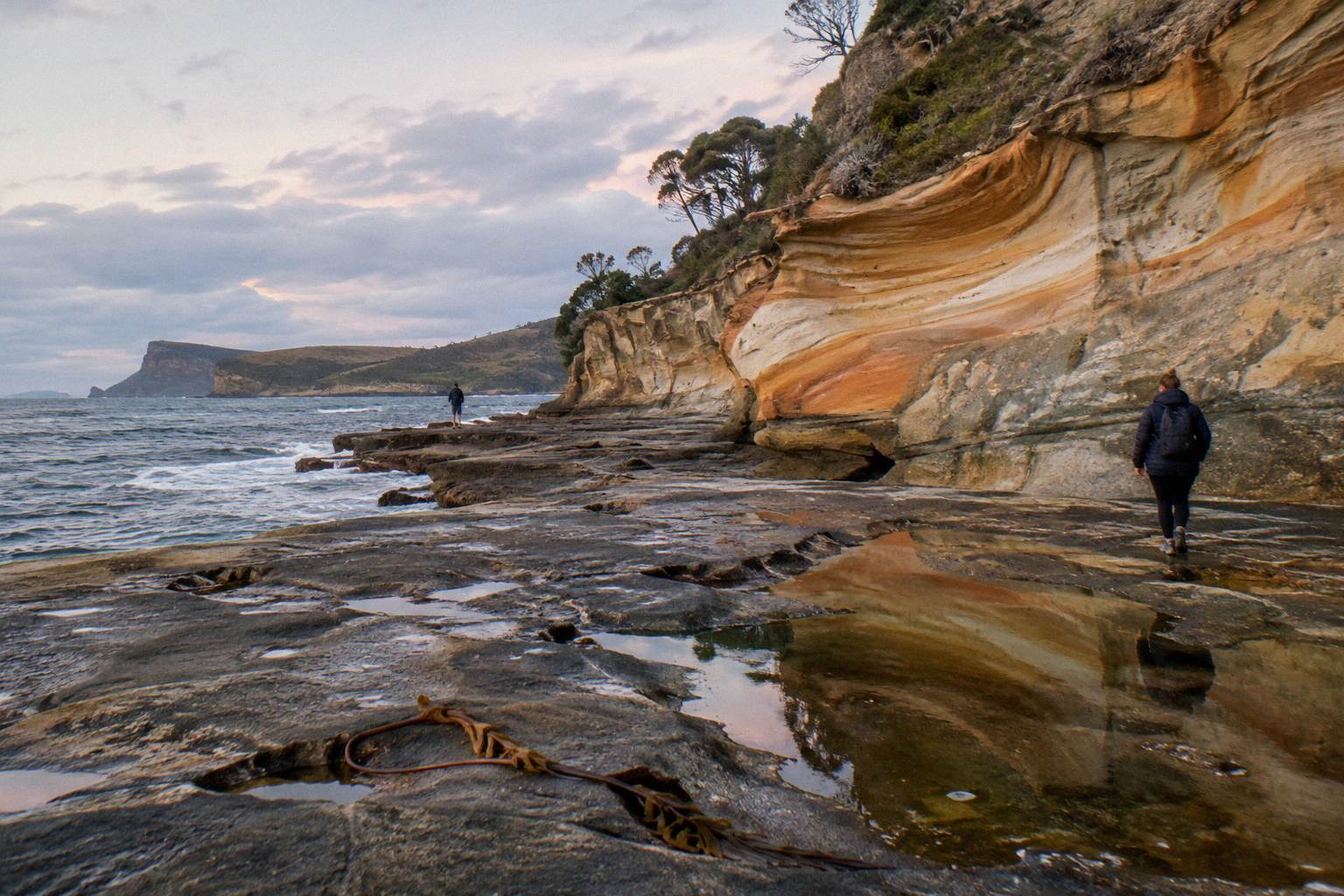
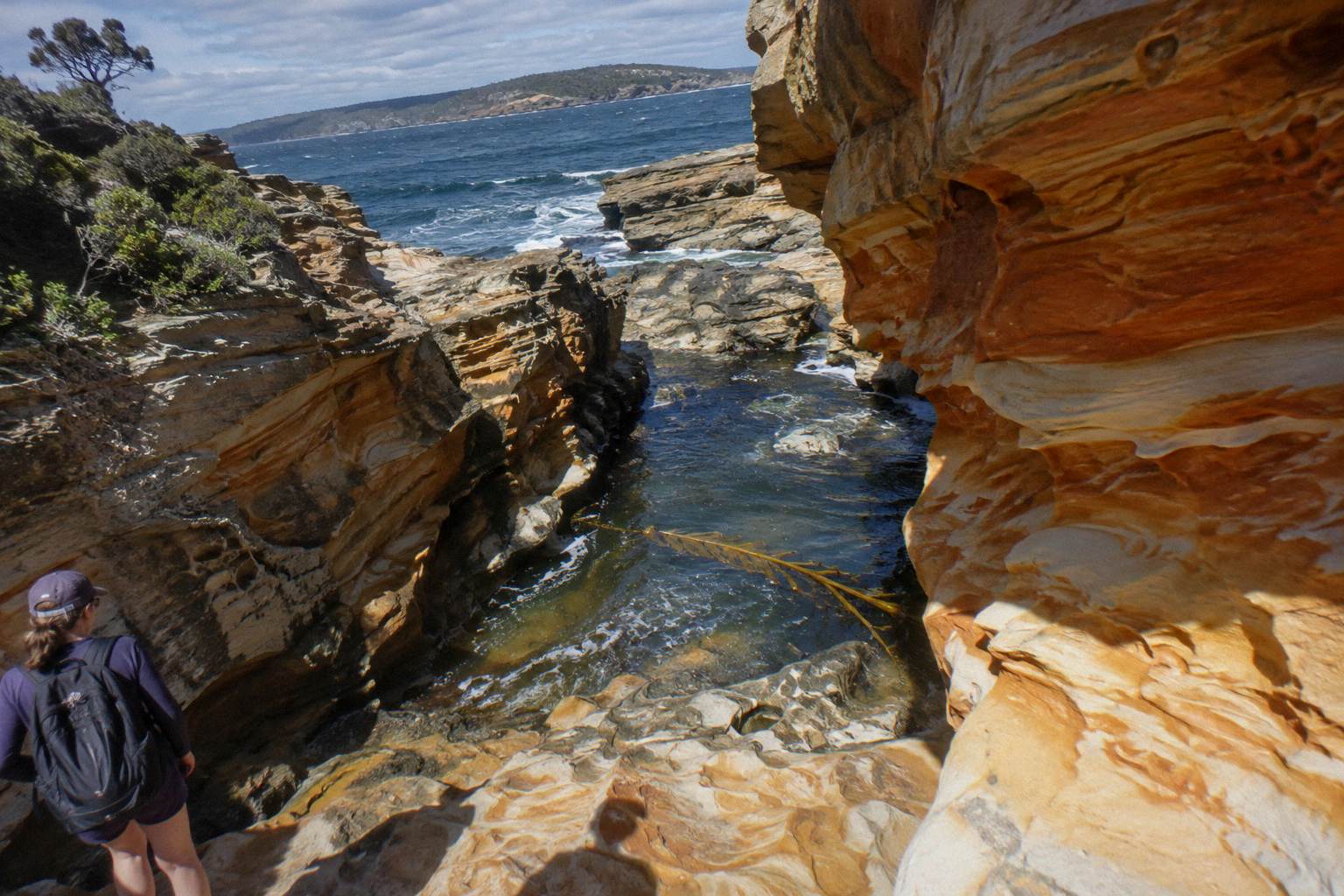
The Painted Cliffs sit at the southern end of Darlington Bay, a 4.3 km return walk of Grade 3 standard from the township. The cliffs themselves are always there. The part that changes is the rock platform at their base, the stretch of patterned sandstone most photographs are taken from, and that platform is a tidal zone. Parks and Wildlife guidance is specific: the platform is safest within two hours of low tide, and only in calm seas. Nothing on the ferry timetable or any tour schedule tells you when that window falls, because tides follow the moon, not the timetable.
Yes, if you want to stand on the rock platform below the cliffs, time your visit within roughly two hours of low tide and pick a calm sea, because higher water covers the platform and surging waves make the rocks dangerous. You can still walk to the cliffs above at any tide, but the patterned sandstone at the base is a tidal feature, so the tide decides the experience.
The distinction matters, and it is where a lot of day trip planning goes sideways. The 4.3 km return walk from Darlington to the cliffs is Grade 3, takes one to two hours on foot, and is not tide dependent as a track. You can walk it at any hour the island is open. What you cannot do at any hour is step onto the rock platform, the flat, water-scoured shelf where the swirling bands in the stone are most visible. Parks and Wildlife states plainly that the platform is safest within two hours of low tide, and that it should only be attempted in calm seas. When the tide is high, the platform is underwater. When the sea is running with swell, waves sweep across it even near low water.
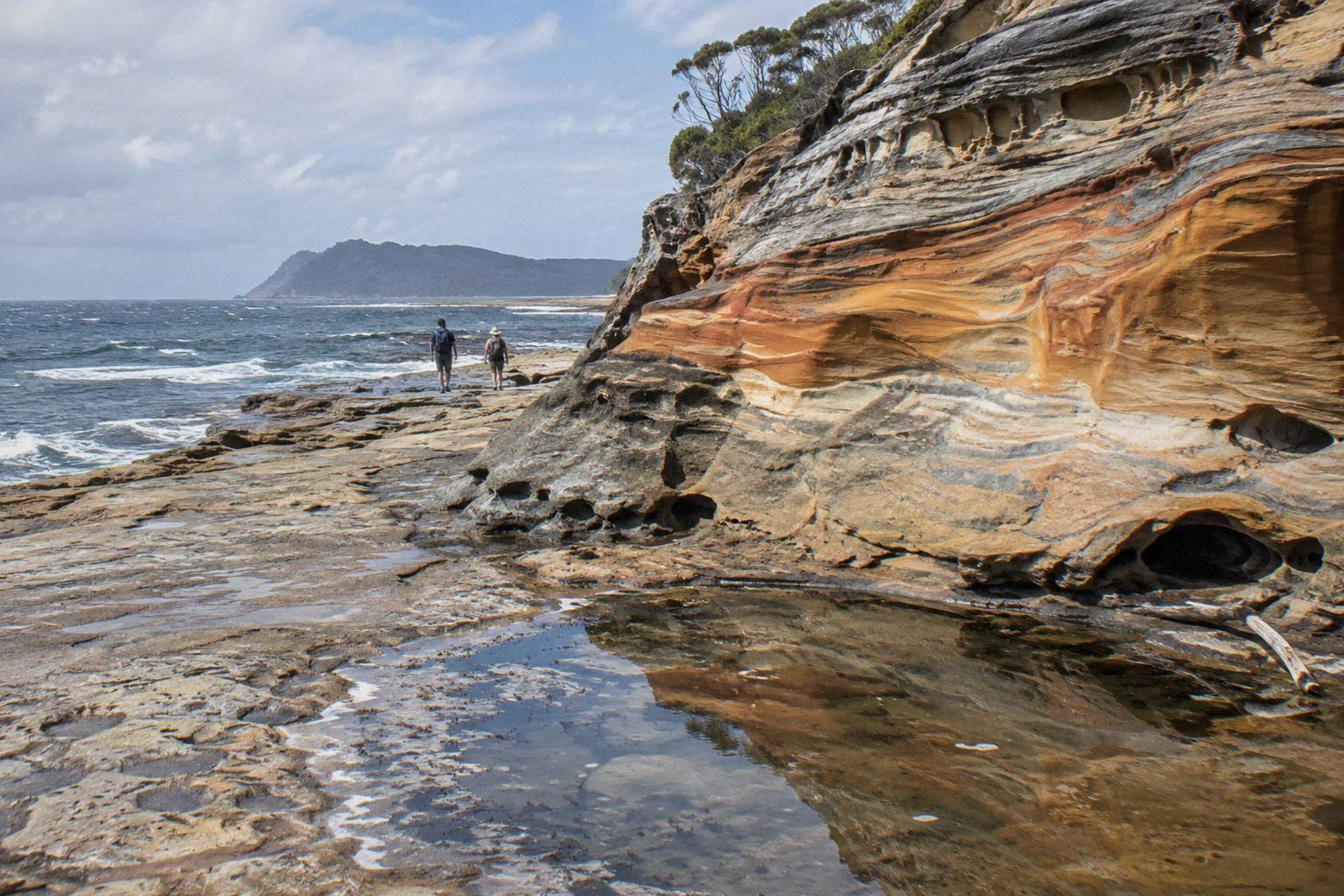
That makes the Painted Cliffs different from the island's other headline walk. The Fossil Cliffs circuit, 4.5 km and Grade 3, sits above the shoreline and does not depend on the tide in the same way. The Painted Cliffs do. If the platform is the reason for the visit, the planning question is not just "which departure do I take" but "which departure puts me on the island while the tide is low". For a fuller route description see the Painted Cliffs walk guide.
For travellers who would rather have the logistics handled, the guided options all run to fixed times and none of them can promise a tide-aligned platform on any given day. The Cruise And Walk From Triabunna, the Cruise And Walk From Hobart and the Active Day Tour From Hobart each give you several hours on the island, and each leaves at a set hour regardless of where the tide sits.
When Exactly Is The Rock Platform Safest To Walk On?
The safest window is roughly two hours either side of low tide, on a day with calm seas and no swell running into the bay. Within that window the platform is exposed and the water has pulled back from the patterned stone. Outside it, the shelf floods, waves can surge across it, and the surface becomes slick and hazardous underfoot, so the tide table and the swell forecast both need checking the day before.
Two hours either side is the guidance, which sounds generous until you lay it against a day trip schedule. A four hour safe window has to overlap with the hours you are actually on the island. Miss the overlap and the choice becomes an above-the-waterline look at the cliffs, which is still a genuine sight, or a skip of the platform leg entirely and a reallocation of time to other tracks.
Calm seas are the second half of the condition and they are independent of the tide. A low tide with a big swell still sends waves across the platform. Parks and Wildlife also notes that the cliffs themselves are unstable, that they cannot be climbed, and that there is no access from above. The beach is unpatrolled. None of this is administrative fine print; it is the difference between a careful short walk on flat sandstone and standing in the wrong place when a set arrives.
Weather cancellations are a related risk on the same day. If swell or wind is forecast, the ferry or cruise itself may be delayed or called off, which is covered in detail in what to do if the ferry or cruise is cancelled by weather. The short version: check the forecast, not just the tide.
For anyone weighing a guided day against going alone, the tide question affects both equally. The guided walks overview on guided and self-guided walks on Maria Island explains how the island's tracks divide up and which ones have conditions attached.
Which Departure Times Line Up With The Tide?
None of them is tied to the tide. The ferry runs to fixed seasonal times, the Maria Island Cruises departures from Triabunna and Hobart run to fixed times, and the Tours Tasmania day tour leaves at a set hour, so whether a given departure gives you a low tide on the island is luck of the calendar, checked by comparing the trip's island hours with a tide table for your date.
The practical method: find the low tide time for the day, mark the two hours either side of it, then compare that window with the hours each departure actually puts you on the island. The table below gathers the start times that are stated for the trips on Maria Island National Park access options and the operators' own schedules.
| Trip | Where It Starts | Stated Times | What It Gives You |
|---|---|---|---|
| Public ferry (Encounter Maria Island) | Triabunna wharf | Seasonal timetable, four sailings each way September to April, three in winter | Island hours set by the sailing pair you choose |
| Cruise And Walk From Triabunna | 21 Vicary Street, Triabunna | Check-in around 9:30am, about 6 to 8 hours total | Boat trip plus time ashore |
| Cruise And Walk From Hobart | Franklin Wharf check-in, bus to Triabunna | Duration varies between booking pages | City-to-island day with park entry included |
| Active Day Tour From Hobart | Davey Street, Hobart | About 10 hours, back | Longest island window of the day tours |
A few things follow from that table. The summer ferry timetable's four return combinations let a DIY walker pick a longer or shorter island window, which is the one lever a tide-aware planner actually controls. The winter timetable drops to three sailings and has no Tuesday or Thursday departures at all between May and August, which shrinks the options further. The guided trips are single-departure products: you get the window they give you, and the tide either cooperates or it does not.
The public ferry crossing itself takes about 30 to 45 minutes each way. A same-day adult ferry fare is from A$59.00 return, with fares subject to change, and the park pass is separate. All amounts on Australian schedules here are in Australian dollars. By comparison, the Cruise And Walk From Hobart is A$365 per adult on the operator site with park entry included, rated 5.0 from 630+ reviews, with free cancellation up to 24 hours before start, and the price for other trips shows on the booking page for your date.
Can You Visit The Cliffs At High Tide At All?
Yes, in a limited sense. The track to the cliffs and the view of the banded stone from the beach above the platform are available at any tide, and the walk itself, 4.3 km return and Grade 3, is not restricted. What high tide removes is the platform at the base, which is submerged, and attempting it then is unsafe, so the visit becomes a lookout rather than a walk onto the formations.
Travellers who arrive to find the tide high still have options. The cliff face is visible from the sand, and the patterned stone is striking even from a distance. The return walk passes through country worth slowing down for, and Darlington's other short tracks, the 1 km Township Walk and the 2 km Hills Walk, fill an hour comfortably. The Fossil Cliffs circuit is the natural swap: it is the same grade, a similar length at 4.5 km, and its fossil beds sit on a shoreline ledge that does not demand the same low tide window.
The mistake to avoid is treating the platform as accessible at any hour because other people are near it. The water depth on the shelf changes across the tide cycle, and a platform that was dry at midday can be under a foot of water two hours later. If the plan is built around the platform, the plan needs the low tide time written into it before anything is booked.
Guided trips cannot steer around this. The Cruise And Walk From Triabunna, from East Coast Cruises, rated 5.0 from 230+ reviews, includes its landing and park fee and checks in around 9:30am at 21 Vicary Street; its ashore hours are what they are on the day, and the tide table for the date is the only way to know whether the platform falls inside them.
How Do You Check The Tides Before You Go?
Look up a tide table for the east coast of Tasmania for your specific date, find the low tide time, and treat the two hours either side of it as the workable window, then match that window against the island hours of whichever departure you are taking. No timetable, tour page or booking confirmation carries the tide times, so this is a separate check done the day before travel.
Tide tables for Tasmanian coastal waters are published by the Bureau of Meteorology and reproduced across maritime and fishing references; any current table for the east coast will do, provided it is checked close to the travel date, since tide times shift by roughly an hour across a fortnight. The low tide that suits a morning walk one week will sit at mid-afternoon the next. This is why a single "best time to visit" answer does not exist for the Painted Cliffs, and why any fixed departure sometimes lands the window and sometimes misses it.
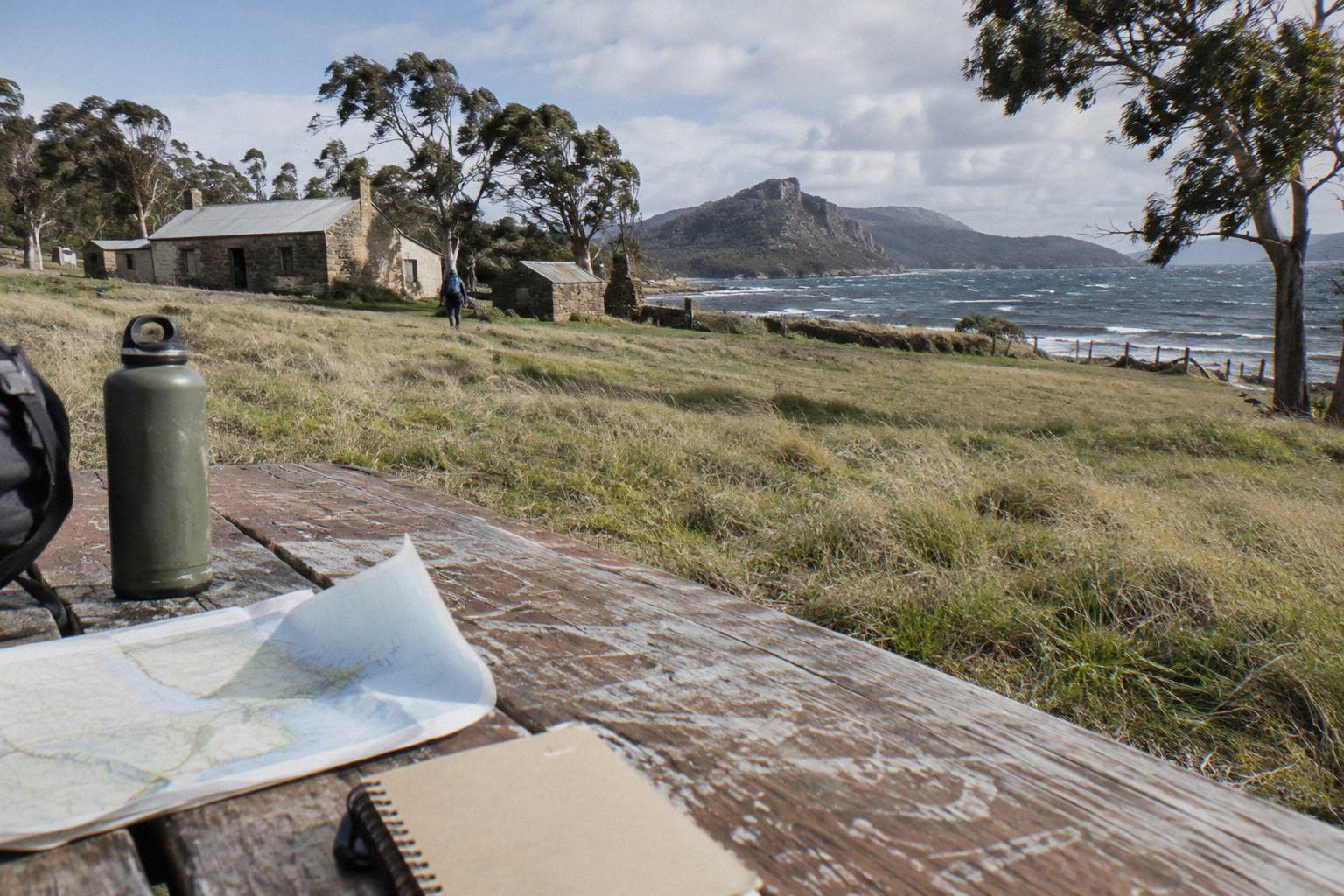
The swell forecast is the companion check. A tide table tells you when the platform is dry; a marine forecast tells you whether calm conditions will hold while you are on it. The two checks together take five minutes and they are the difference between a confident plan and a hopeful one. Conditions guidance for the island generally is maintained by Parks and Wildlife Service for Maria Island National Park.
For tide-driven planners, flexibility has real value. The Active Day Tour From Hobart, run by Tours Tasmania and rated 4.8 from 240+ reviews, covers about 10 hours with roughly 10 km of walking and returns to Hobart; its cancellation terms differ between its two booking pages, so check the terms on the booking page you use.
The longer island window a 10 hour day gives you is the closest thing to tide insurance a guided trip offers: even if the morning tide is wrong, an afternoon low can still fall inside your hours ashore. The trade is a long day on your feet.
What Trips People Up When Timing The Platform
Most timing failures come from assuming the schedule knows about the tide. It does not. The recurring errors are trusting a departure time to deliver a low tide, checking a tide table weeks early and not again, ignoring swell because the tide is right, and expecting to reach the platform from above or from the cliff top, none of which is possible.
The first error is the most common. A departure that worked perfectly for a friend in March will not work in April, because the low tide has moved. Word of mouth about "the best ferry to catch" is worthless without the date attached, and even then it expires with the fortnight.
The second is the stale tide table. Tides drift forward day by day, so a table read a month before travel describes a different sea than the one on the day. The check belongs in the 24 hours before the trip, alongside the weather.
The third is swell blindness. A perfect low tide under a running swell is not a safe platform. The guidance pairs low tide with calm seas, and the pairing is the condition, not either half alone. The fourth is geometry: the cliffs are unstable, cannot be climbed, and have no access from above, so there is no high tide workaround route. There is only the window, or a view from the beach.
Putting The Tide And The Timetable Together
Build the day backwards from the low tide. Pick the date, read the low tide time, define the two hour window either side, then choose the ferry sailing pair or guided departure whose island hours cover that window, keeping a fallback walk, such as the Fossil Cliffs circuit, in reserve for a miss. That sequence turns a matter of luck into a matter of arithmetic.
For independent travellers the summer ferry timetable is the friendliest instrument, because four sailings each way allow a long day, a short day or an afternoon-weighted day. In winter the three-sailing timetable and the missing Tuesday and Thursday departures narrow the field, and a tide that falls badly can leave no workable combination at all on some dates. That is not a failure of planning; it is how the arithmetic lands sometimes, and the honest response, the reasoned response, is to swap the platform for another walk and enjoy the island anyway.
Guided travellers should ask a simpler question: how many hours does the trip give me ashore, and where does low tide fall inside those hours? The Cruise And Walk From Triabunna and the Cruise And Walk From Hobart both deliver a cruise, a landing and a guided element, with park entry included, at A$365 per adult on the operator site for the Hobart version. The Active Day Tour From Hobart stretches the day to about 10 hours. Whichever holds the booking, Maria Island Tours keeps the departure details together, and availability for a date is one 6-8 Hour Lunch Cruise click away.
The last word on the platform belongs to the conditions, not the calendar. Low tide, calm seas, two hours, and a plan B in the pocket. The cliffs have been keeping their pattern for millions of years; they will keep it for the next available window too.
Common Questions About The Painted Cliffs And Tides
Do You Need Low Tide For The Painted Cliffs Walk On Maria Island?
For the walk itself, no; the 4.3 km return track is available at any tide. For the rock platform below the cliffs, yes: it is safest within two hours of low tide and only in calm seas, and it is submerged at high tide.
Where Do People Find Painted Cliffs Maria Island Tide Information?
Tide times are not carried on any ferry timetable or tour page. Check a current tide table for the east coast of Tasmania for your date, in the day before travel, and match the low tide window against your departure's island hours.
Can You Walk On The Platform At High Tide If The Sea Looks Calm?
No. At high tide the platform is covered by the sea regardless of how calm it looks, and waves can surge across it. The view from the beach above remains available, but the platform itself is a low tide feature.
Do The Tours Time Their Departures To The Tide?
No. Ferry sailings and guided departures run to fixed times, so whether a low tide falls within your island hours depends on the date. Comparing the trip's ashore hours with a tide table is the only way to know.
Is There A Way To Reach The Cliffs From Above?
No. Parks and Wildlife states the cliffs are unstable, cannot be climbed, and have no access from above. The platform at the base, around low tide in calm seas, is the access.
What Is A Good Fallback Walk If The Tide Is Wrong?
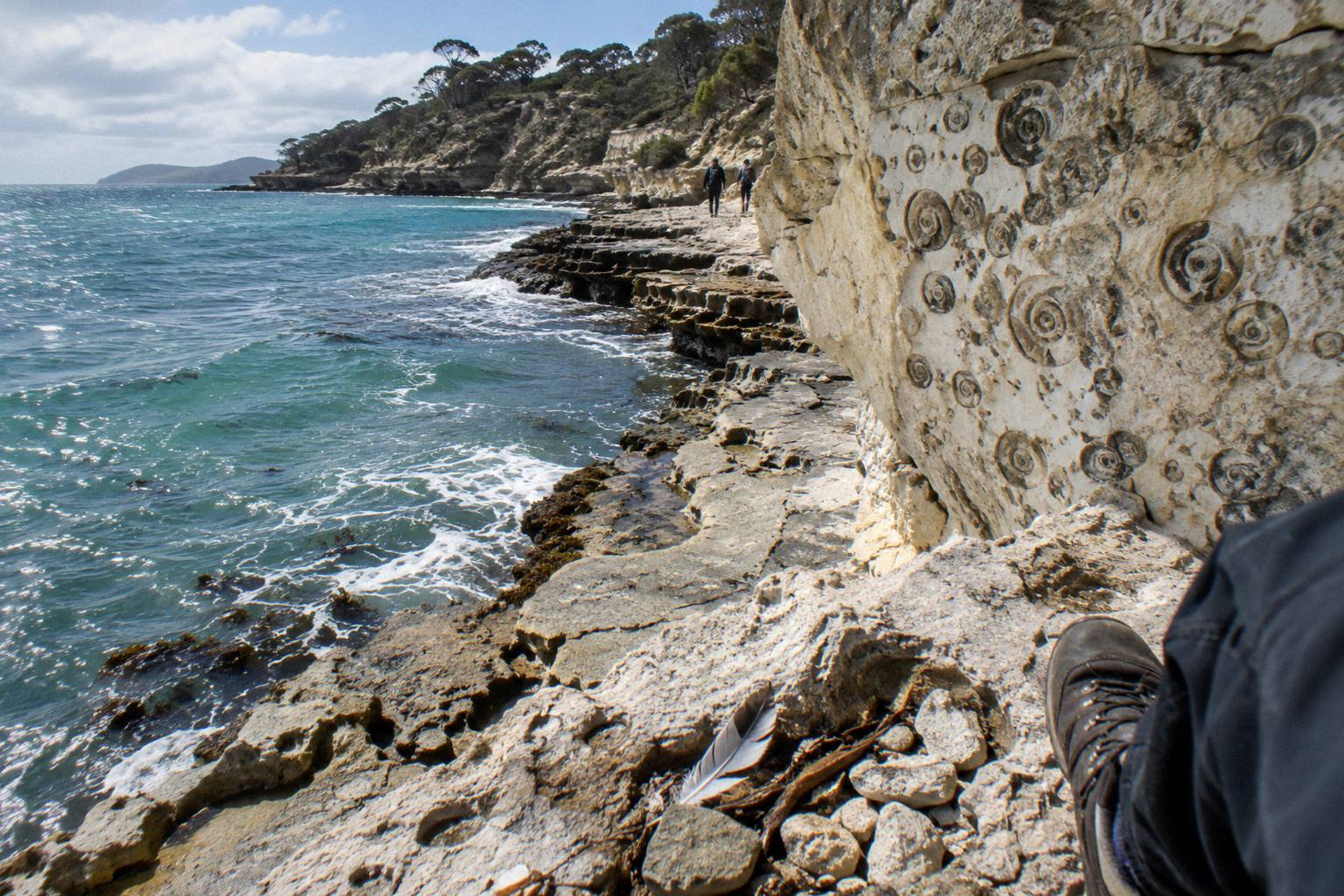
The Fossil Cliffs circuit is the natural swap: 4.5 km, Grade 3, with fossil beds about 300 million years old along a shoreline stretch that does not depend on the same low tide window.